March 2021 (IFAD)* — Like other women on Santiago, the largest island of Cabo Verde, Maria Lizita Varela used to rely on sand extraction as a source of income. It was thankless, dangerous work.
.
“We have to go deeper into the sea nowadays,” she recalls. “We go over where water reaches our head. We can spend as much as three hours in the water with sand getting into our eyes, mouth, ears. Oftentimes, I felt like I might drown.”
Despite the dangers, sand extraction produces an average monthly income of only US$110. Many women thus have to rely on their partners and families for housing and other basic needs.
New grants support conservation and restoration of marine habitats
Reuters / 25 Mar 2021
1 April 2021 (UNEP)* — Coral reefs, mangroves and sea grasses are crucial for life above and below water. These aquatic habitats do everything from house fish, to store carbon to protect communities from storm surges.
But all three are under threat from a combination of climate change, coastal development and pollution.
New fund leverages nature to adapt to climate change
UNEP / Duncan Moore / 25 Mar 2021
(UNEP)*— Did you know nature is one of humanity’s best defences for adapting to climate change? A new funding opportunity is scaling up ecosystem-based adaptation across the world. The call for proposals is now open.
The UN Decade on Ecosystem Restoration is launching in June this year. The goal is ambitious – to trigger a global movement for restoring the world’s ecosystems. This is not merely for nature’s sake, say experts. Mounting evidence shows that a global re-greening could help humanity adapt to climate change.
1 April 2021 (Wall Street International)* — The Internet is a material world, not just a virtual reality. Worldwide, we have 3.5 billion smartphones1. The Internet of Things (IoT) connects more objects to the Internet than human beings.
34 billion devices produce tons of non-recycled electronic waste | Image fromWall Street International.
We humans now use about 34 billion digital devices1—including desktop computers, tablets, smartphones, smart TVs, smart appliances, video game consoles, computers in cars, telecommunications network devices, and data center servers.
The telecom industry predicts we will have 50 billion IoT-connected objects2 within a few years.
The climate crisis is fueling inequality around the world and in particular racial injustice. For generations, inequality has exacerbated the impacts of the climate emergency for racial communities, and here is why:
Colonialism
“The excessive exploitation of natural resources would not have been possible without slavery, which allowed Western countries to accumulate significant wealth … This grabbing of wealth continued with colonisation, in Africa, South America, and Asia.
.
Indigenous rights and environmental justice activist Chihiro Geuzebroek looks at what we mean by ‘environmental racism’ and how we can fight against it
1 April 2021 (UNEP)* — For much of the last three weeks, the Flipflopi, a dhow made from recycled plastic, including a helping of old sandals, has been calling into ports across Lake Victoria. The crew of the 10-metre-long vessel is on a mission to raise awareness about a tide of plastic choking Africa’s biggest lake – and to demonstrate that trash can be turned into treasure.
UNEP / Stephanie Foote / 31 Mar 2021
“Flipflopi was built to show the world that it is possible to make valuable materials out of waste plastic,” said Ali Skanda, co-founder of the Flipflopi.
The boat’s voyage, which is supported by the United Nations Environment Programme (UNEP), comes at a critical time for both Lake Victoria and Kenya, says Llorenç Milà I Canals, the head of UNEP’s Life Cycle Initiative.
A recent report by UNEP found that 27 per cent of plastic waste in Kenya is collected and, of that, only 7 per cent is recycled in the country.
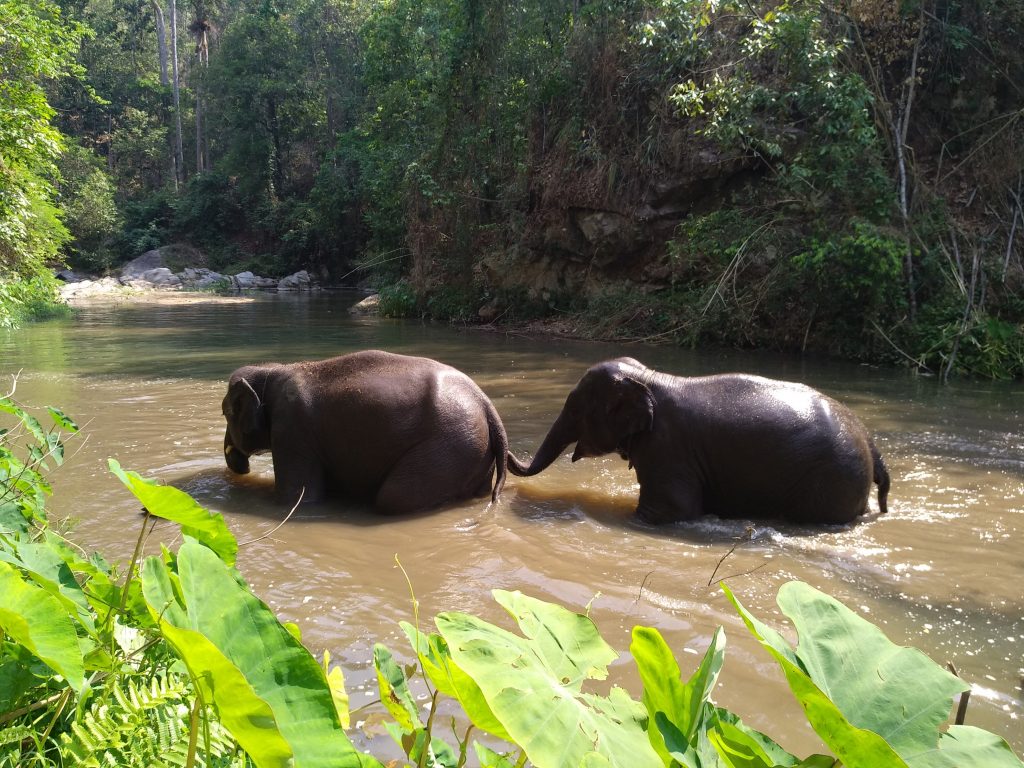
HYDERABAD, India, Apr 1 2021 (IPS)* – As the sun sets over the canopy of Albizia amara trees, a thin blanket of fog begins to descend over the forests of the Malai Mahadeshwara Hills Wildlife Sanctuary, which lies roughly 150 km south of the Indian city of Bangalore.
.
Two elephants cross a stream in Malai Mahadeshwara Hills Wildlife Sanctuary. Thanks to a number of conservation projects run by various government agencies, non-government organisations and the International Union for Conservation of Nature (IUCN), the wildlife population is thriving again. The forest is now home to an estimated 500 elephants and several other big game animals, including bison and tigers. Credit: Stella Paul/IPS
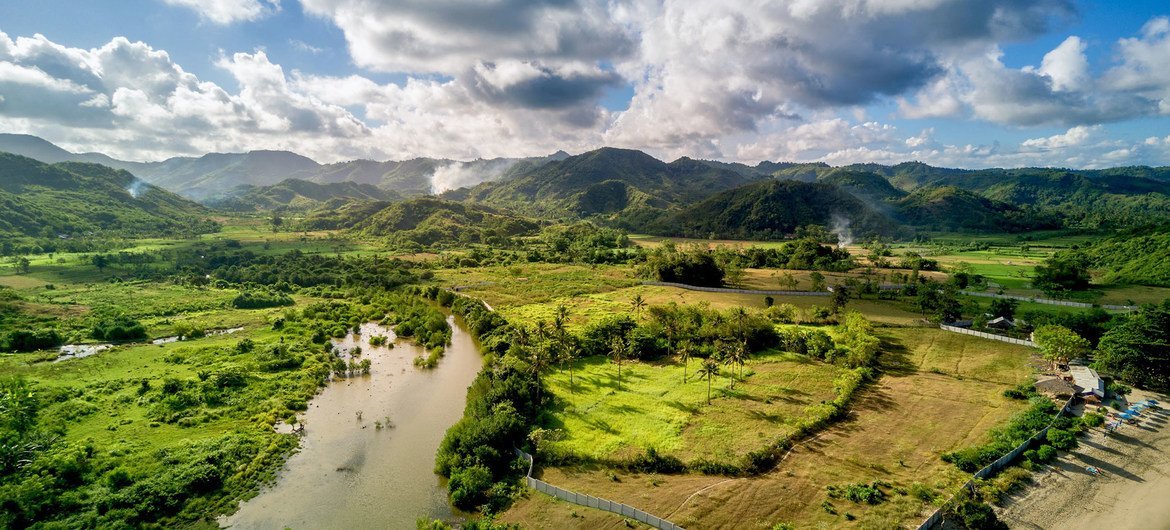
(UN News)* — UN rights experts, on 31 March 2021, raised alarm over forced evictions of locals and indigenous peoples, and threats against human rights defenders, to make way for a $3 billion tourism project on the Indonesian island of Lombok.
Unsplash/Atilla Taskiran | A $3 billion tourism project is set to go ahead on Lombok island in Indonesia.
In a joint statement led by Olivier De Schutter, UN Special Rapporteur on extreme poverty and human rights, the experts highlighted expulsions of local communities and destruction of houses, fields, water sources, cultural and religious sites, as the Indonesian Government and the country’s Tourism Development Corporation (ITDC) “groomed Mandalika to become a ‘New Bali’.”
“Credible sources have found that the local residents were subjected to threats and intimidations and forcibly evicted from their land without compensation. Despite these findings, the ITDC has not sought to pay compensation or settle the land disputes”, the experts said.
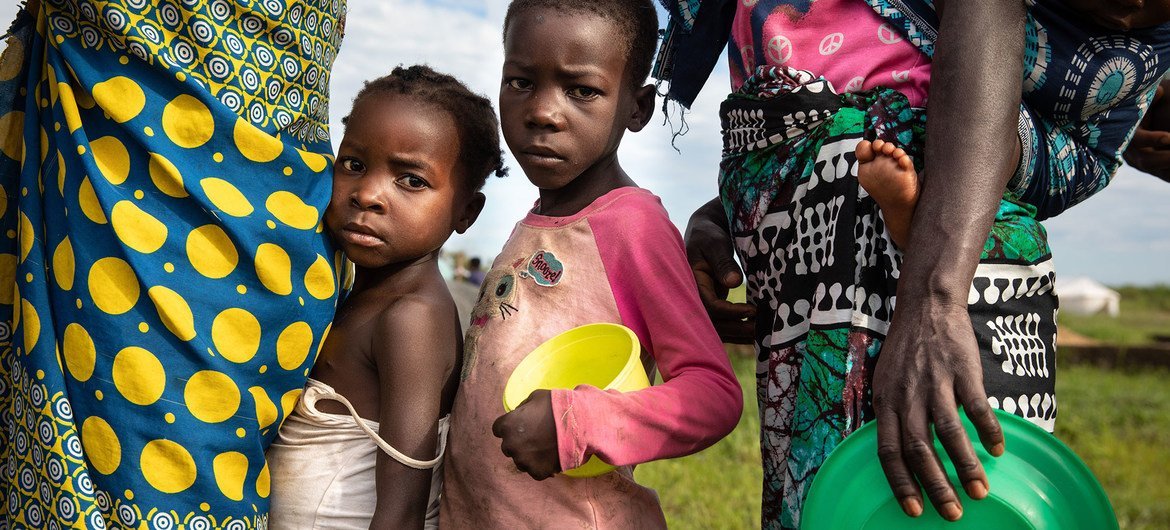
(UN News)* — Around one in eight nations spends more on debt than on social services, according to a new report from the UN Children’s Fund (UNICEF) launched on Thursday [1 April 2021], calling for debt service relief and restructuring to enable countries to bounce back from the pandemic.


 HUMAN WRONGS WATCH