Governments should move the discussions of a treaty on autonomous weapons systems, also known as “killer robots,” away from meetings of an existing weapons treaty, where they are stalled.
Such weapons systems operate without meaningful human control, delegating life-and-death decisions to machines. Several countries are investing in the technology to develop them.
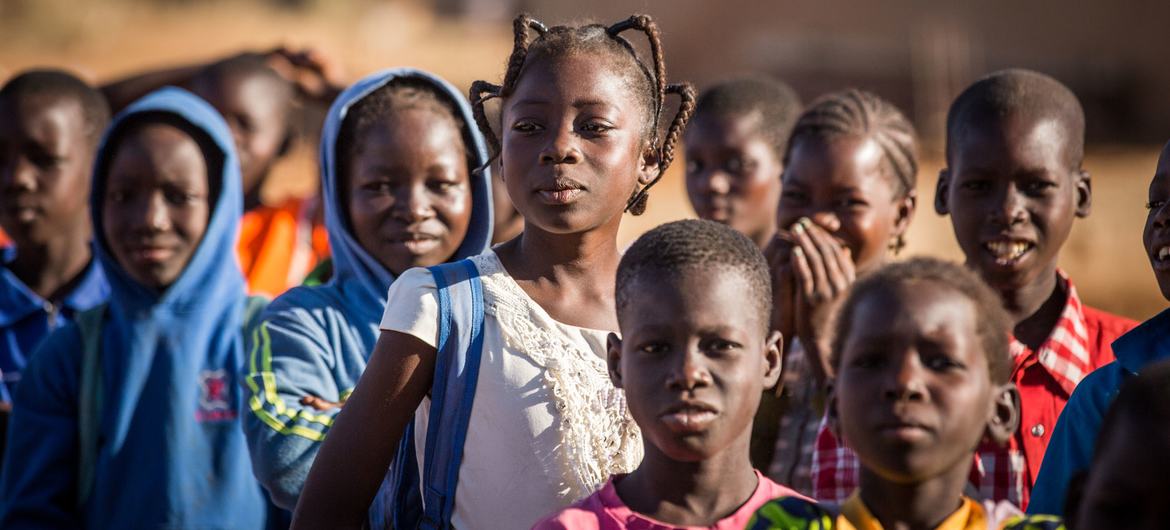
(UN News)* — In a report issued on Tuesday [], UN human rights experts outline how discrimination affects black boys and girls worldwide to the extent that they are not considered children, even in the eyes of the law.
They said unresolved legacies of trade and trafficking in enslaved Africans, as well as colonialism, post-colonial apartheid and segregation, continue to harm these children today.
The report by the Working Group on people of African descent highlights discrimination in areas that include the administration of justice, law enforcement, education, and health. It has been presented to the UN General Assembly in New York.
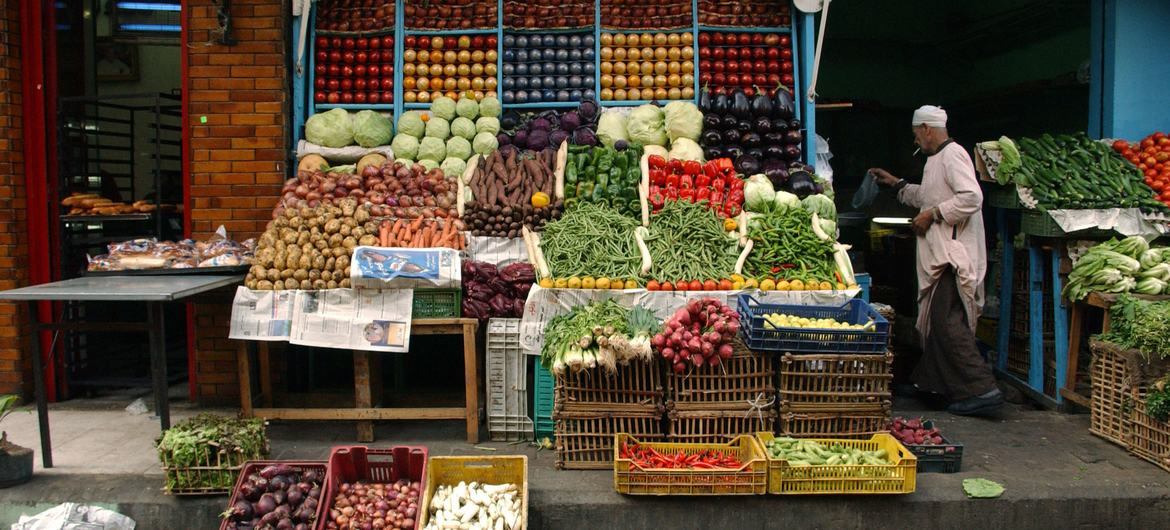
(UN News)* — Food import costs globally are projected to reach nearly $2 trillion this year, or higher than previously expected, the UN Food and Agriculture Organization (FAO) said in a report published on Friday [].
FAO/Ami Vitale | Conflict, rapid population growth and a heavy reliance on food imports pose serious challenges for food security in the Near East and North Africa.
The new forecast of $1.94 trillion would represent an all-time high and a 10 per cent increase over the record level of 2021.
.
However, the pace of increase is expected to slow down in response to higher food prices and the depreciation of currencies against the United States dollar, according to the latest Food Outlook report.
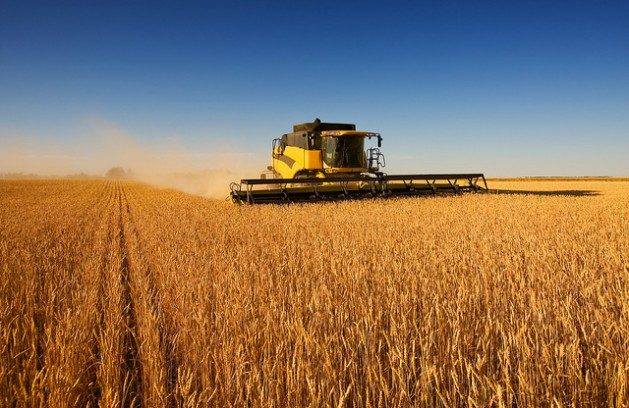
MADRID, Nov 11 2022 (IPS)* – While grain exports continue to regularly flow to world’s markets since the July 2022 Turkey-brokered agreement between Russia and Ukraine to resume cereals and fertilisers shipments from both countries, food prices are still skyrocketing everywhere. How come?
.
In each of the three global food crises studied, financial speculation has caused steep increases in prices, making food inaccessible to hundreds of millions of people. Credit: Bigstock
The handiest answer by establishment politicians and media is that it’s all about the Russian invasion of Ukraine last February.
Another argument they use is that it is Russia who interrupted its gas and oil exports, omitting the fact that it is West US-led sanctions that have drastically cut this flow to mostly European markets, causing a steady rise in energy costs, food transportation, etcetera.
While we are inundated with reports of varying credibility about the war instigated by US/NATO against Russia being fought in Ukraine, evoking justifiable hand-wringing over needless loss of life, threat of nuclear Armageddon and ever-growing windfall profits to weapons makers, we would do well to pay closer attention to Haiti, ground zero for resistance against Western colonialism and exceptionalism.
.
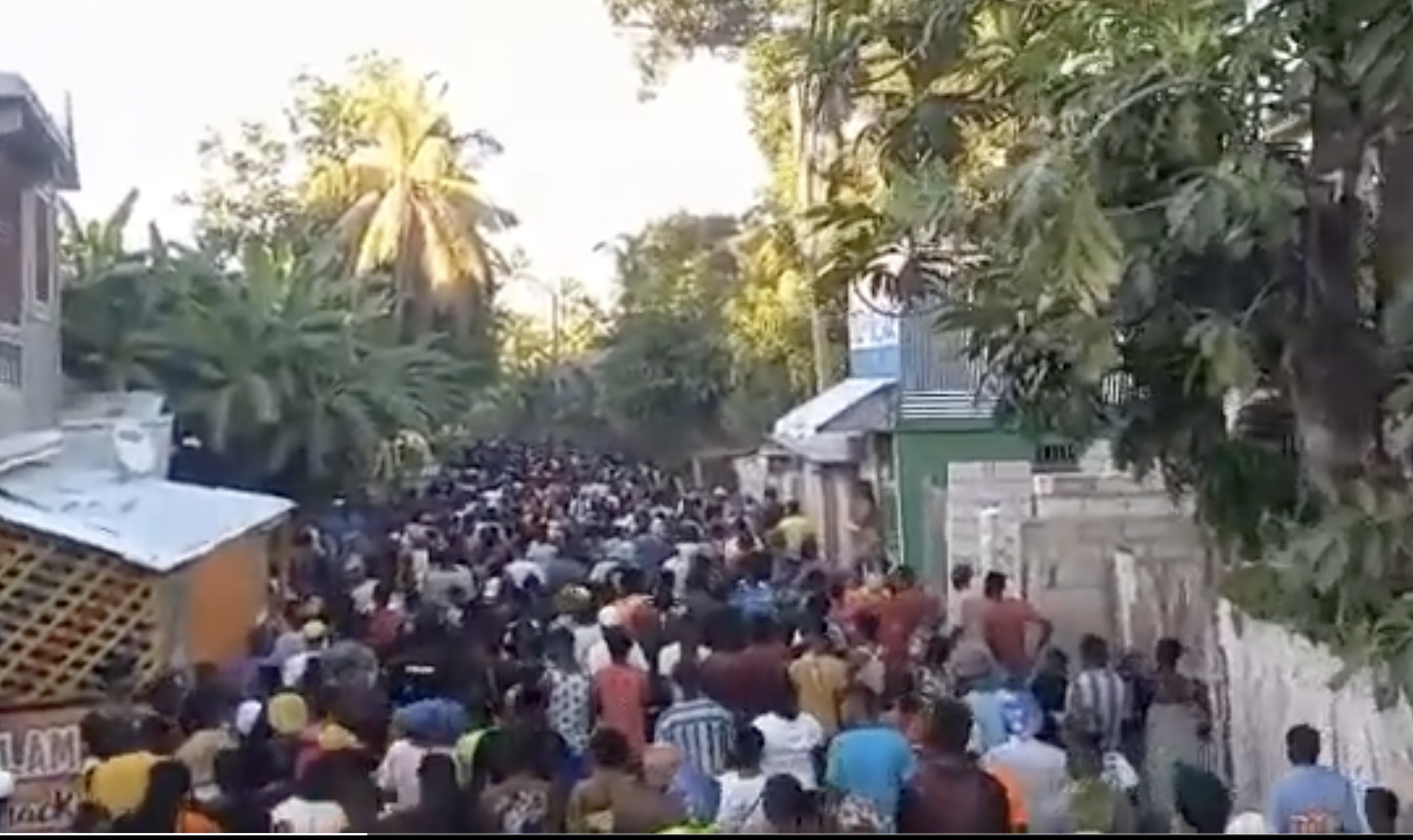
Demonstration in Ti Gwav, Haiti, against US occupation, Oct. 2022. (Photo by Haiti Information Project)
Barely a blip on the radar of mass media, we’re occasionally seeing brief reports of unrest in Haiti that belie the true scope and nature of the current uprising.
(UN News)* — Although the global cost-of-living crisis will be an obstacle to eradicating poverty by 2030, countries can still make significant progress towards this Sustainable Development Goal (SDG), UN-appointed human rights expert Olivier de Schutter has said.
Marwan Tahtah | the UN Special Rapporteur on extreme poverty and human rights, Olivier De Schutter during his visit to Lebanon from 1-12 Novemeber 2021.
He believes the world also can move forward in stamping out negative attitudes towards the millions of people worldwide who are struggling just to get by.
“People are stereotyped and discriminated against purely because they are poor. This is frankly sickening and a stain on our society,” he told the General Assembly recently.
Rapid Assistance Critical to Families’ Survival as They Face Displacement in Somalia.
Displaced persons in Daynile, Mogadishu, receive water from a truck, thanks to an IOM activity in September. Photo: IOM/Ismail Salad Osman
Mogadishu, 28 October 2022 (IOM)* – As Somalia experiences its worst drought in four decades, more than 1.1 million people have already been forced to pack their belongings and move to other areas of the country to escape thirst and hunger. The International Organization for Migration (IOM) and partners are reaching those newly displaced with essential support to help them make it through one of the toughest experiences of their lives.
Sharm-El-Sheikh, Egypt 6 November (WMO)* – The past eight years are on track to be the eight warmest on record, fuelled by ever-rising greenhouse gas concentrations and accumulated heat.
Extreme heatwaves, drought and devastating flooding have affected millions and cost billions this year, according to the World Meteorological Organization’s provisional State of the Global Climate in 2022 report.
(UN News)* — The UN Special Adviser on the Prevention of Genocide expressed grave concern on Thursday [] over a reported resurgence of ethnic clashes in the Blue Nile region of Sudan.
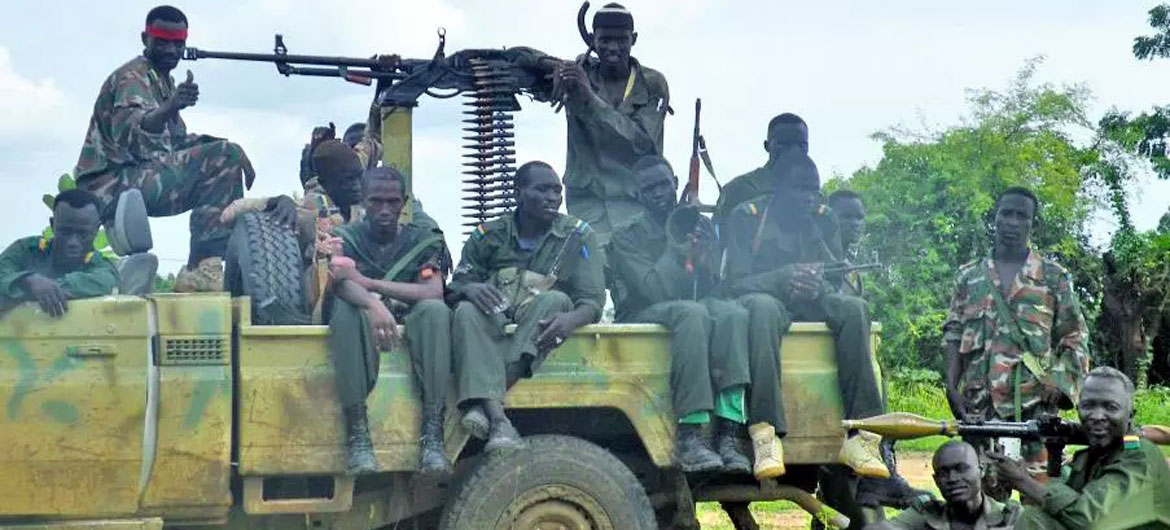
IRIN/Maryline Dumas | Soldiers are more numerous than civilians in the Blue Nile state. (file)
According to the UN, inter-communal clashes that have flared up several times since July have caused at least 359 fatalities, injured 469 people, displaced more than 97,000, and triggered extensive property damage.
“The clashes between the ethnic communities are rooted in long standing issues over land ownership and ethnic representation”, Alice Wairimu Nderitu said in a statement.
(UN News)* — Sweden should step up efforts to fight systemic racism and focus on strategies to restore trust between police and minority groups, said a UN Human Rights Council-appointed group of independent experts on advancing racial justice and equality, on Friday [].
Unsplash/Tamara Menzi | Street traffic in Stockholm, Sweden.
While visiting the country from 31 October to 4 November, the members of the International Expert Mechanism gathered information on the existing legislative and regulatory measures for tackling racial discrimination.
“The collection, publication and analysis of data disaggregated by race or ethnic origin in all aspects of life, especially regarding interactions with law enforcement and the criminal justice system, is an essential element for designing and assessing responses to systemic racism”, said Chair, Yvonne Mokgoro.




 HUMAN WRONGS WATCH