26/05/2022
New guidelines to support SMEs to phase out lead from paint manufacturing.

Geneva, 25 May 2022 (UNEP)* – Paint reformulation is entirely possible, and the industry can produce paint without added lead. However, a lack of technical knowledge; a lack of awareness of the health and environmental hazard of lead and where to source lead-free alternatives, as well as a shortage of lead paint laws in the countries where they are based mean many small manufacturers around the world are still producing hazardous lead paint.
read more »
Posted in Africa, Asia, Climate Crisis, Latin America & Caribbean, Market Lords, Middle East, Mother Earth, Others-USA-Europe-etc., The Peoples |
Leave a Comment »
26/05/2022
FAO and the Chinese Academy of Agricultural Sciences carried out pilots in the southern and eastern provinces of China, setting out to calculate the greenhouse gas emissions generated by tea production and assessing the potential for mitigation and carbon sequestration ©FAO/Pier Paolo Cito
May 2022 (FAO)* — Step inside a tea merchant’s shop in China with its metal canisters lining the walls or scroll through the range offered by any of the country’s popular online shopping platforms and you’ll be able to choose among green teas, black teas or in-between, semi-fermented teas. But as an ancient industry turns its eyes to the future, another choice you might soon be able to make is low carbon teas.
read more »
Posted in Africa, Asia, Climate Crisis, Latin America & Caribbean, Market Lords, Middle East, Mother Earth, Others-USA-Europe-etc., The Peoples |
Leave a Comment »
24/05/2022
MADRID, May 24 2022 (IPS)* – The message is clear: three-quarters of the world’s population will be affected by drought by 2050. Does it sound too far in time? Well, your kids might be among the billions of humans living on a desertified planet.

Droughts represent 15% of natural disasters but took the largest human toll, approximately 650,000 deaths from 1970-2019, Credit: Guillermo Flores/IPS
But it is not about only them. Also you are already affected. In fact, around 1.700 billion of drylands, home to two billion people, are already covering 41% of the planet’s land surface.
Moreover, an additional 1 billion dryland hectares are now under threat.
read more »
Posted in Africa, Asia, Climate Crisis, Latin America & Caribbean, Market Lords, Middle East, Migrants and Refugees, Mother Earth, Others-USA-Europe-etc., The Peoples |
Leave a Comment »
24/05/2022
Instead of buying into the World Economic Forum’s dystopian “Great Reset,” we can build an alternative system with a mandate to serve the people.
This is part two to a May 5, 2022 article called “A Monetary Reset Where the Rich Don’t Own Everything,” the gist of which was that national and global debt levels are unsustainably high. We need a “reset,” but of what sort?

Ellen Brown
The “Great Reset” of the World Economic Forum (WEF) would leave the people as non-owner tenants in a feudalistic technocracy.
The reset of the Eurasian Economic Union would allow participating nations to opt out of the Western capitalist system altogether, but what of the Western countries that are left? That is the question addressed here.
Our Forefathers Had Some Innovative Solutions
Fortunately for the United States, our national debt is in U.S. dollars. As former Federal Reserve Chairman Alan Greenspan once observed, “The United States can pay any debt it has because we can always print money to do that. So there is zero probability of default.”
read more »
Posted in Africa, Asia, Climate Crisis, Latin America & Caribbean, Market Lords, Middle East, Migrants and Refugees, Mother Earth, Others-USA-Europe-etc., The Peoples, War Lords |
Leave a Comment »
24/05/2022
(UN News)* — More than 33 million new jobs need to be created by 2030 in the Middle East and North Africa region by 2030, if the world’s largest unemployment hot spot is to be substantially improved, four United Nations agencies said on Monday [23 May 2022].
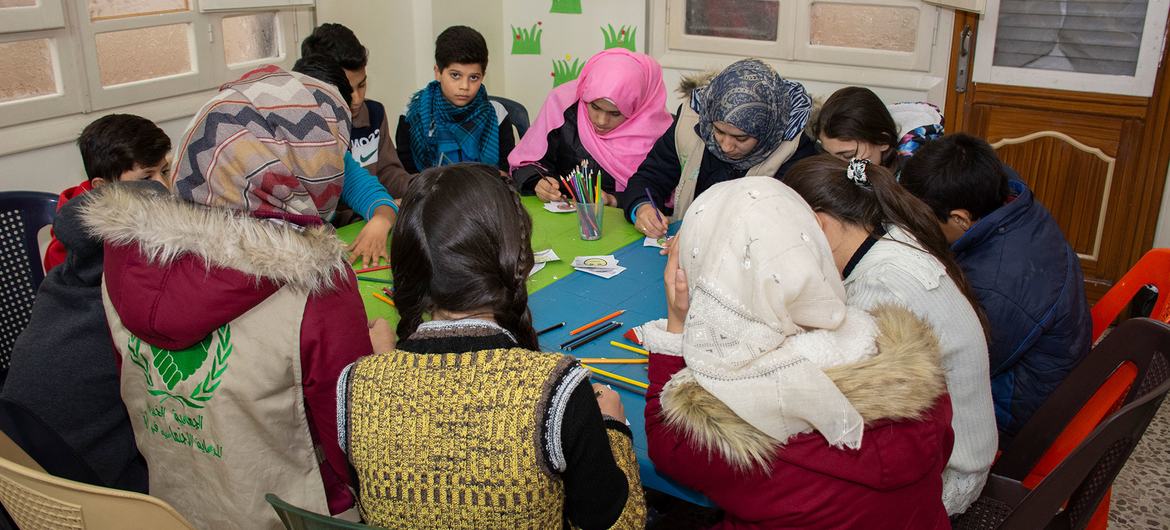
© UNICEF | Young people in Syria attend a life skills and employability training session.
The joint-release by the UN labour agency, ILO, the UN Development Programme (UNDP), the UN Population Fund (UNFPA) and the UN Children’s Fund (UNICEF) was issued ahead of a two-day meeting in Amman, Jordan, aiming to address the youth transition from learning, to work, a key priority for adolescents and young people across the vast predominantly Arabic-speaking region.
read more »
Posted in Africa, Asia, Market Lords, Middle East, Migrants and Refugees, Mother Earth, The Peoples |
Leave a Comment »
24/05/2022
(UN News)* — The recovery of the global jobs market is going into reverse, the UN labour agency, ILO, said on Monday [23 May 2022], blaming COVID-19 and “other multiple crises” that have increased inequalities within and between countries.
.
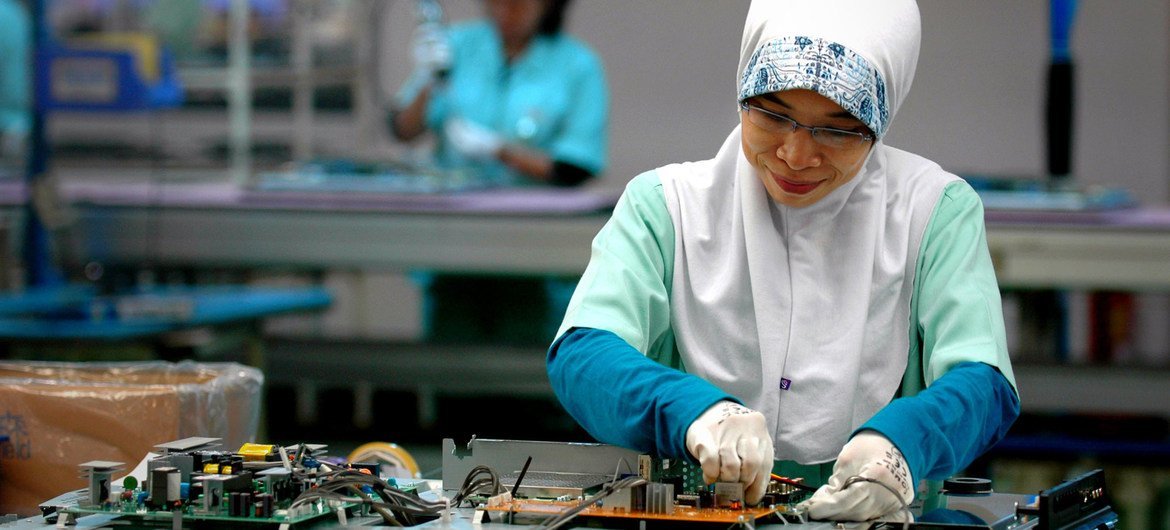
© ILO/Asrian Mirza | A woman works in an electronics factory in Cikarang, Indonesia.
In its
latest update on the world of work, International Labour Organization Director-General Guy Ryder said that although there had been “tentative signs of recovery in the final months of last year, with global employment returning to higher levels in industrialised nations”,
rising food and fuel prices and financial turbulence have destabilised the job market.
Posted in Africa, Asia, Latin America & Caribbean, Market Lords, Middle East, Migrants and Refugees, Others-USA-Europe-etc., The Peoples, War Lords |
Leave a Comment »
23/05/2022
(UN News)* – As 18 million people in Africa’s Sahel region teeter on the edge of severe hunger over the next three months, the UN released on Friday [20 May 2022] an additional $30 million from its emergency humanitarian fund, to boost the humanitarian response across four countries.
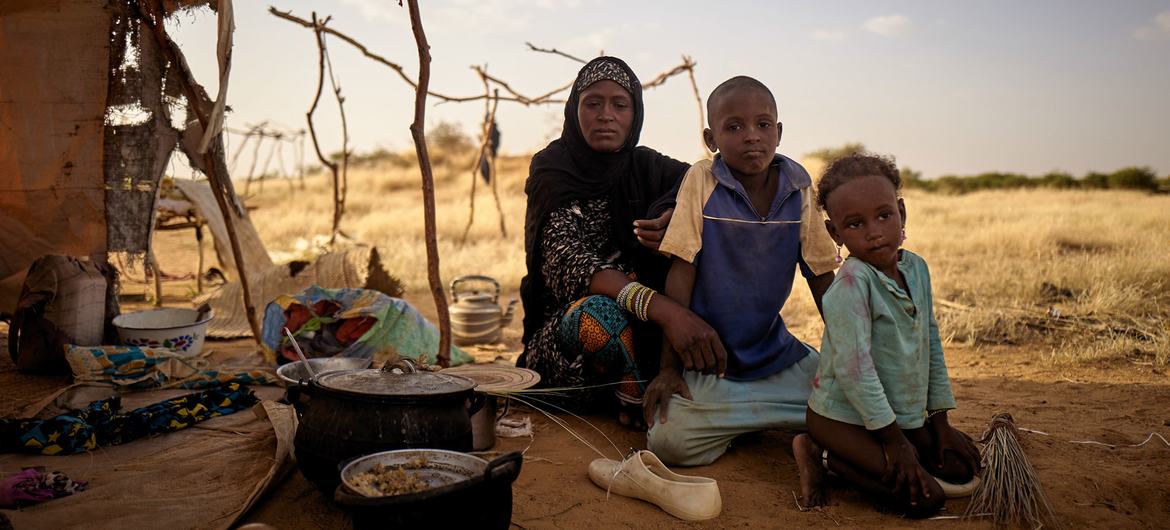
© UNOCHA/Michele Cattani | A displaced family sit in front of their tent at an informal camp in Bagoundié in Mali.
Food insecurity is set to reach its highest level since 2014, warned the UN Office for the Coordination of Humanitarian Affairs (OCHA).
“Entire families in the Sahel are on the brink of starvation,” said Martin Griffiths, UN Humanitarian Affairs chief and Emergency Relief Coordinator. “If we don’t act now, people will perish”.
Sobering numbers
In the Sahel, 7.7 million children under five are expected to suffer from malnutrition, of which 1.8 million are severely malnourished.
And if aid operations are not scaled up, this number could reach 2.4 million by the year’s end.
read more »
Posted in Africa, Climate Crisis, Market Lords, Middle East, Migrants and Refugees, Mother Earth, Others-USA-Europe-etc., The Peoples, War Lords |
Leave a Comment »
20/05/2022
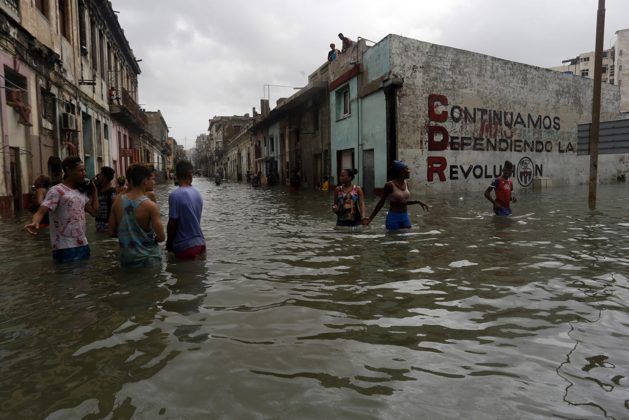
“The good news is that human decisions are the largest contributors to disaster risk, so we have the power to substantially reduce the threats posed to humanity, and especially the most vulnerable among us” Credit: Jorge Luis Baños/IPS
Others, instead, may think that such human ingenuity will once more address the symptoms rather than the causes provoking them. Thus, they would be right to want to be informed and aware of the root causes of such disasters in order to push for eradicating them.
read more »
Posted in Africa, Asia, Climate Crisis, Latin America & Caribbean, Market Lords, Middle East, Migrants and Refugees, Mother Earth, Others-USA-Europe-etc., The Peoples |
Leave a Comment »
20/05/2022
London, 18 May 2022 – Hundreds of thousands of migrant workers in Qatar have not received financial compensation or any other adequate remedy for serious labor abuses suffered while building and servicing infrastructure for the FIFA World Cup, which begins in November 2022, Human Rights Watch on 18 May 2022 said.
read more »
Posted in Africa, Asia, Market Lords, Middle East, Migrants and Refugees, The Peoples |
Leave a Comment »
20/05/2022
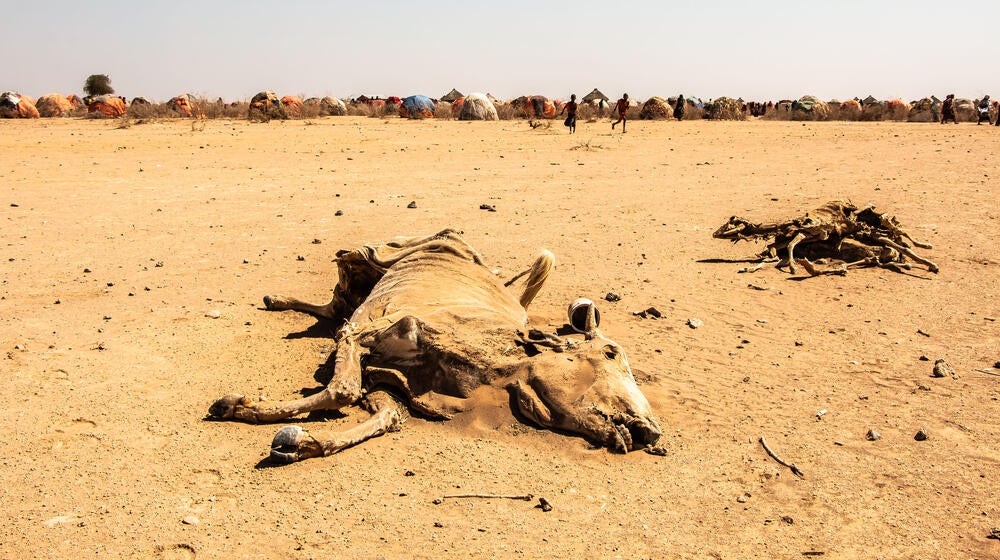
Ayan Abadi Wali, 24, recounted her story while recovering from a life-saving caesarean-section delivery in Gode, a town in Ethiopia’s Somali region and one of the hardest hit by the country’s worst drought in four decades.
Ms. Abadi is currently living at an informal settlement in the Shabelle zone with her seven children and her mother-in-law, Ms. Barkhado, alongside hundreds of others displaced by the drought.
read more »
Posted in Africa, Climate Crisis, Market Lords, Migrants and Refugees, Mother Earth, The Peoples |
Leave a Comment »

 HUMAN WRONGS WATCH