(FAO)* — The economic fallout of the COVID-19 pandemic, climate variability and extremes, conflict, and the persistence of hunger and malnutrition have shown us that now is the time for us to build more resilient agrifood systems.
If we don’t, agrifood systems will not be able to ensure food availability to all as well as physical and economic access to nutritious foods that make up healthy diets.
So, how can we protect our agrifood systems from shocks and stresses and better ensure nutritious food is available to all? In other words, how can we make our agrifood systems resilient?
— “Human-induced climate change and the war on Ukraine have the same roots: fossil fuels and our dependence on them” said Ukrainian climate scientist Svitlana Krakovska as Russia, one of the world’s biggest oil and gas producers, was invading her country.
(UN News)* — “Arboviruses” might not be something most of us are familiar with, but for almost four billion people, they’re a deadly threat – which is why the UN health agency on Thursday [31 March 2022], launched a plan to prevent them from causing a new pandemic.
The most common arboviruses are in fact some of the world’s most dangerous mosquito-borne illnesses, such as Dengue, Yellow fever, Chikungunya and Zika.
They represent an ever-present and massive health threat in tropical and sub-tropical parts of the planet, although there are in fact a growing number of arboviral outbreaks worldwide, according to the World Health Organization (WHO).
A bill that will limit discussions teachers and businesses can have about race
The Florida Republican-dominated State Legislature most recently passed a bill applied to K-12 public schools | Image fromWall Street International.
26 March 2022 (Wall Street International)* — The Florida Republican-dominated State Legislature most recently passed a bill that will limit discussions teachers and businesses can have about race.
MADRID, Mar 29 2022 (IPS)* – While several politicians -and media– have been viewing the ongoing armed conflict in South Sudan as a “civil war” between rival ethnic groups, so nothing to worry about, there are some key facts that should be considered for the sake of having a wider, more accurate panorama. One of them is that this country is rich in oil.
Widespread sexual violence against women and girls in conflict is being fueled by systemic impunity, the United Nations Commission on Human Rights in South Sudan reports. Credit: Jared Ferrie/IPS
Nairobi, Kenya, Mar 29 2022 (IPS)* – Even as COVID-19 brought Africa’s already fragile health care and economic systems to the brink, wealthy states colluded with corporate giants to dupe people with empty slogans and false promises of a fair recovery from the ongoing health pandemic, a newly released report by Amnesty International finds.
(UN News)* — Nearly half of all pregnancies, totalling 121 million each year worldwide, are unintended, according to a new report published on Wednesday [30 March 2022] by the UN’s sexual and reproductive health agency, UNFPA.
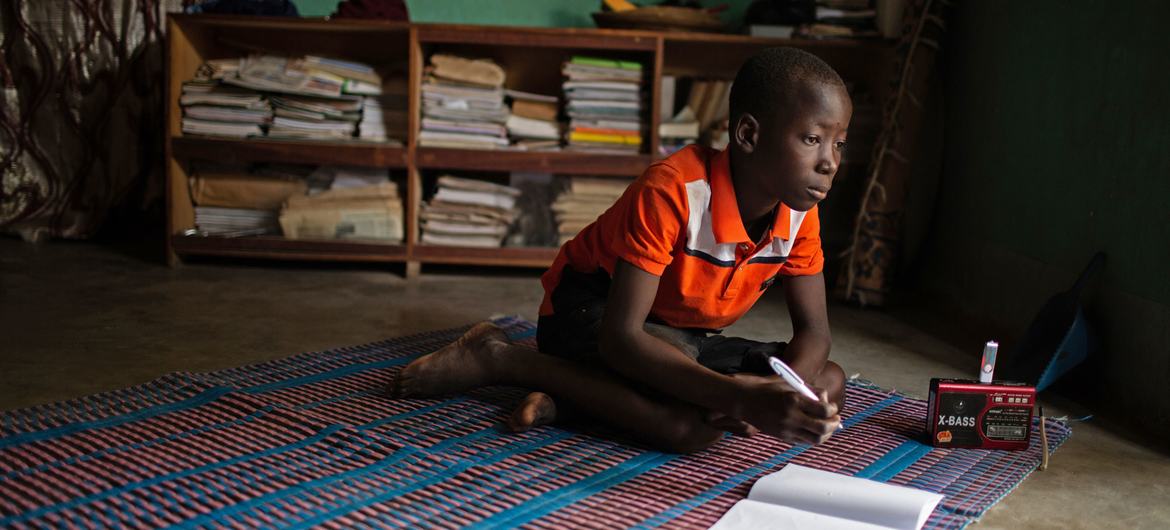
(UN News)* — Now entering its third year, the COVID-19 pandemic has continued to hold back some 405 million school children wordlwide from a full return to the classroom, according to a new report released on Wednesday [29 March 2022] by the UN Children’s Fund (UNICEF).
SYDNEY and KUALA LUMPUR, Mar 29 2022 (IPS)* – The spectre of ‘stagflation’ threatens the world once again. This time, the risk is the direct consequence of political provocations and war, and not simply due to inexorable economic forces.
Stagflation? Stagflation is a composite word implying inflation with stagnation. Stagnation refers to weak, ‘near zero’ growth, inevitably worsening unemployment. Inflation refers to price increases – not high prices, as often implied.
Anis Chowdhury
The term ‘stagflation’ was supposedly first used in 1965 by Iain Macleod, then UK Conservative Party economic spokesperson.
He later became Chancellor of the Exchequer, or finance minister, in 1970 for little over a month, the shortest tenure in modern times.
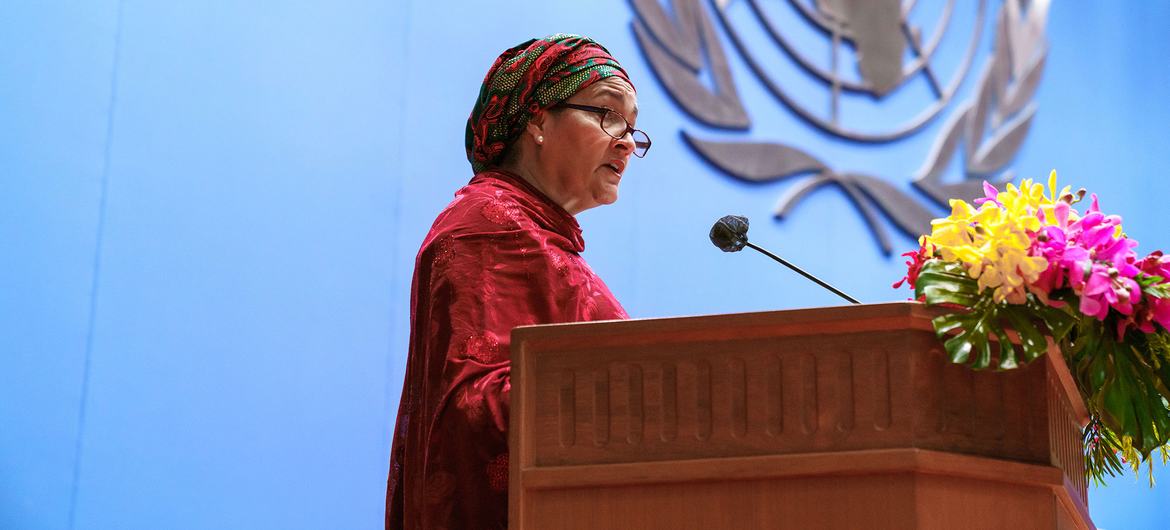
(UN News)* — The United Nations Deputy Secretary-General on Monday [28 March 2022 ] called on countries in Asia and the Pacific to speed up the shift from fossil fuels to new, low-carbon development models, in a just and inclusive way.
ESCAP/Suwat Chancharoensuk | UN Deputy Secretary-General Amina Mohammed delivers special remarks to the opening of the ninth Asia-Pacific Forum on Sustainable Development (APFSD).
“Moving away from coal and fossil fuels in a region that accounts for 75 per cent of global coal-fired generation capacity will not be easy. But it is essential for our common future, and it is financially and technologically possible,” Amina Mohammed said.








 HUMAN WRONGS WATCH