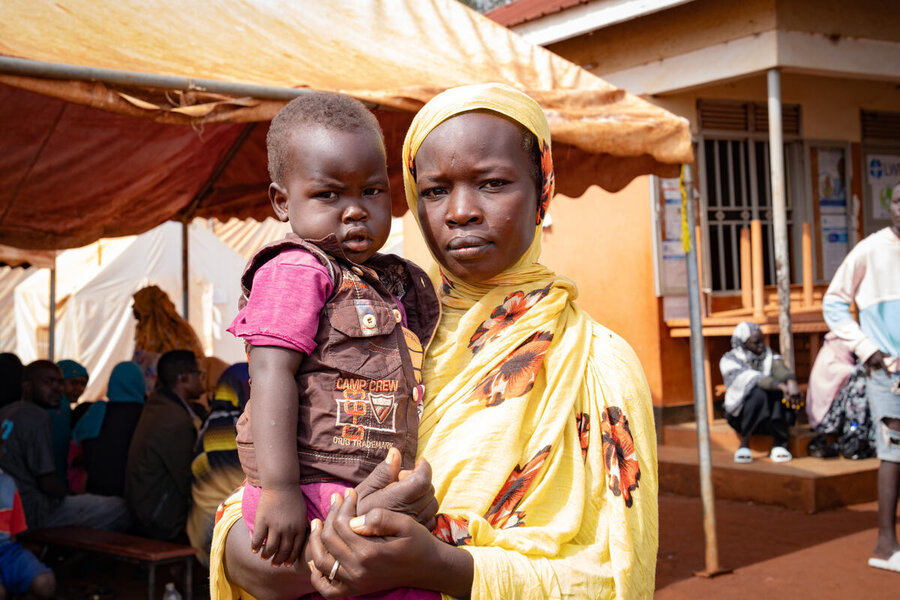
A girl at the Mother and Child Health Center in Mogadishu, Somalia, visited by the UN Special Representative on Sexual Violence in Conflict. PHOTO:UN/Tobin Jones
“The horror of these heinous crimes echoes long after the guns fall silent.
Too often, perpetrators walk free, cloaked in impunity, while survivors often bear the impossible burden of stigma and trauma.
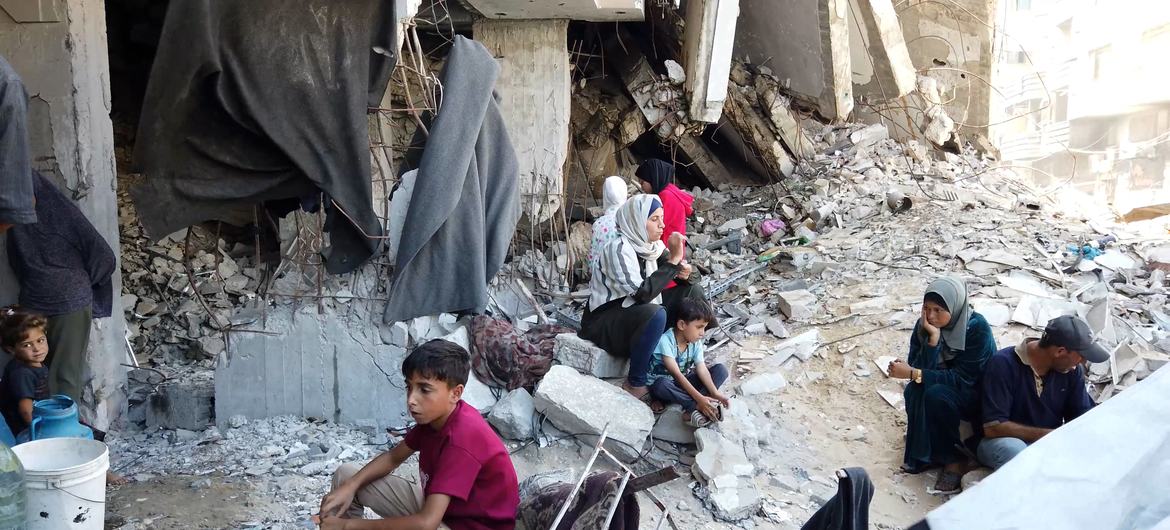
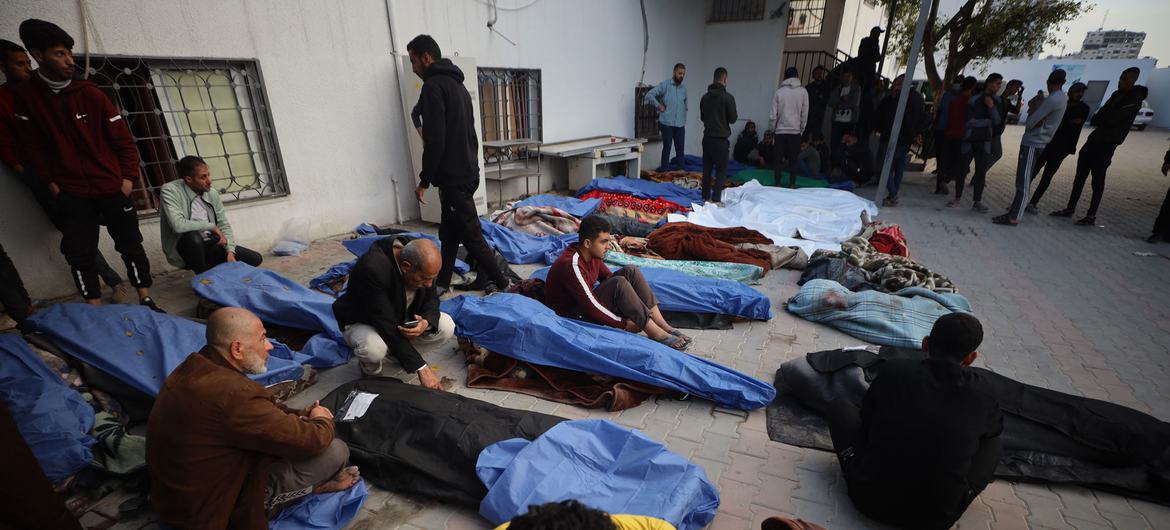
(UN News)* — Civilian deaths in conflict surged by 40 per cent last year, according to new data released by the UN human rights office (OHCHR) with already marginalised groups facing disproportionate levels of discrimination.
At least 48,384 individuals – mostly civilians – were killed in 2024, based on casualties recorded by OHCHR.
“Behind every statistic is a story. Behind every data point, a person,” said UN rights chief Volker Türk.
This alarming rise in civilian deaths exposes major failures to protect some of the most vulnerable in both peacetime and conflict situations, “painting a picture of a global human rights landscape in need of urgent action,” he said.
Unsplash/Jon Tyson | UNESCO says that hate speech is on the rise worldwide.
“It is an alarm bell: the louder it rings, the greater the threat of genocide,” he warned.
As part of its core mission to combat hatred, discrimination, racism and inequality, the UN is stepping up efforts to challenge hate speech wherever it arises.
“Hate speech is poison in the well of society. It has paved the way for violence and atrocities during the darkest chapters of human history,” Mr. Guterres added.
Up to 40% of all land area worldwide already considered degraded.
Healthy land underpins thriving economies, with over half of global GDP dependent on nature. Yet we are depleting this natural capital at an alarming rate: every minute, the equivalent of four football fields is lost due to land degradation.
.
A young boy herds his families cattle in the dry and desolate lanscape of the city of Tawaila in Northern Darfur. UN Photo/Fred Noy.
.
This drives biodiversity loss, increasing drought risk and displacing communities. The ripple effects are global—from rising food prices to instability and migration.
(UN Humanitarian Affairs (UNOCHA)* —North-east Nigeria is facing its worst malnutrition crisis in five years. More than 1 million children under age 5 across Borno, Adamawa and Yobe states are at risk of severe acute malnutrition – that’s twice as many children as last year and the highest number on record.
Falmata and her granddaughter, Aisha, at the entrance of their makeshift shelter in Sangaya displacement camp, Dikwa, Borno State. Photo: OCHA/Chima Onwe
For families who already endured years of conflict and displacement, hunger is a new and urgent threat.
“We’ve been here since 2016,” said Falmata Idris, 53, who lives in a makeshift shelter in the Sangaya camp for internally displaced people in Dikwa, Borno State, with her 12-year-old granddaughter, Aisha.
KUALA LUMPUR, Malaysia, Jun 17 2025 (IPS)* – Wars, economic shocks, planetary heating and aid cuts have worsened food crises in recent years, with almost 300 million people now threatened by starvation.
FAO statistics indicate enough output to feed the world’s eight billion plus another three billion!
Clearly, inadequate food due to population growth cannot explain persistent hunger. Yet, the number of hungry people has been rising for more than a decade.
So, why are so many hungry if there is more than enough food for all?
The multi-stakeholder 2025 Global Report on Food Crises (GRFC) notes 2024 was the sixth consecutive year of high and growing acute food insecurity, with 295.3 million people starving!
In 2023, 733 million people experienced chronic hunger. Over a fifth (22.6%) of the 53 countries/territories assessed in this year’s GRFC were especially vulnerable.
MONTEVIDEO, Uruguay, Jun 16 2025 (IPS)** – At a White House meeting, presidents Nayib Bukele and Donald Trump exchanged praises and joked about mass incarceration while discussing an unprecedented agreement: the USA would pay El Salvador US$6 million a year to house deportees – of any nationality, potentially including US citizens – in its Centre for Terrorism Confinement (CECOT), a notorious mega-prison.
Credit: Kevin Lamarque/Reuters via Gallo Images
This agreement marked the evolution of Bukele’s authoritarian model from a domestic experiment to an exportable commodity for strongmen worldwide.
Sudan, Palestine, South Sudan, Haiti, and Mali remain hotspots of highest concern, and Democratic Republic of the Congo has returned as a hunger hotspot to watch.
A woman collects WFP food assistance in Goma, where a precarious calm reigns after fighting earlier this year. Photo: WFP/Benjamin Anguandia
ROME, – A new joint UN report warns that people in five hunger hotspots around the world face extreme hunger and risk of starvation and death in the coming months unless there is urgent humanitarian action and a coordinated international effort to de-escalate conflict, stem displacement, and mount an urgent full-scale aid response.
ALBERTA, Canada, Jun 13 2025 (IPS)* – Aid cuts could cost millions of lives and leave girls, boys, women and men without access to enough food, water, education, health treatment.
.
Credit: United NationsThe 51st G7 summit is scheduled to take place 15-17 June 2025 in Kananaskis, Alberta, Canada. The G7 consists of seven of the world’s largest developed economies: Canada, France, Germany, Italy, Japan, the United Kingdom, and the United States plus the European Union (EU), a non-enumerated member.
G7 countries are making deliberate and deadly choices by cutting life-saving aid, enabling atrocities, and reneging on their international commitments.
—Famine is defined as “extreme food deprivation” by the Integrated Food Security Classification, or IPC, the global hunger monitoring body. It is at the extreme end of IPC Phase 5, the highest hunger level under the IPC’s classification. Not all IPC 5 areas are in famine.
WFP food assistance arriving in Sudan’s North Darfur State, where pockets of famine have been confirmed. Photo: WFP/Mohamed Galal
Famine is rare, predictable and – with the right resources, political will and action – preventable.Vulnerable population groups such as young children, pregnant and nursing women and displaced people are most at risk of hunger emergencies.
Once a famine is declared, many people have already died of starvation, and it’s hard to slow it down.