UNHCR warns against apathy and inaction amid spike in forced displacement.
GENEVA, 13 June 2024 (UNHCR)* — Overall numbers rise to 120 million by May 2024; conflicts from Sudan to Gaza and Myanmar are creating new displacement and urgently require resolution.
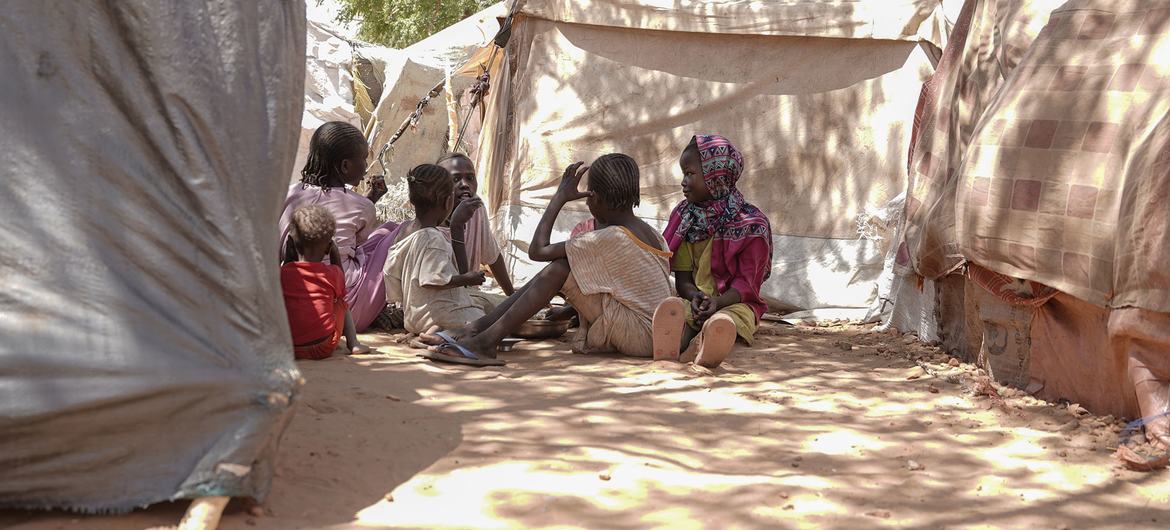
Forced displacement surged to historic new levels across the globe last year and this, according to the 2024 flagship Global Trends Report from UNHCR, the UN Refugee Agency.
The rise in overall forced displacement – to 120 million by May 2024 – was the 12th consecutive annual increase and reflects both new and mutating conflicts and a failure to resolve long-standing crises.
The figure would make the global displaced population equivalent to the 12th largest country in the world, around the size of Japan’s.
KARACHI, Jun 12 2024 (IPS)* –A dark head emerges, followed by the torso. The balding man heaves himself up, hands on the sides of the manhole, as he is helped by two men. Gasping for breath, the man, who seems to be in his late 40s, sits on the edge, wearing just a pair of dark pants, the same color as the putrid swirling water he comes out from.
.
A sewer worker who is popularly known as Mithoo emerges from the sewer. Credit: Zofeen T. Ebrahim/IPS
This is an all-too-familiar sight in Karachi, with its over 20 million residents producing 475 million gallons per day(MGD) of wastewater going into decades-old crumbling sewerage-systems.
11 June 2024 (UN News)* — The Prosecutor at the International Criminal Court (ICC) launched a campaign on Tuesday to address the unfolding crisis in the Darfur region of Sudan, amid the going war between rival military forces that erupted last April.
In a video posted on social media, Karim Khan urged victim groups, civil society organizations, national authorities, and international partners to engage with his Office and provide any evidence and material relating to the ongoing atrocities being inflicted on civilians.
3 June 2024 — For the second year in a row Burkina Faso is the world’s most neglected displacement crisis, according to a new report from the Norwegian Refugee Council (NRC). The normalisation of neglect is exacerbating needs and deepening despair.
.
.
.
.
.
.
.
“My biggest worry as a mother is that my children are hungry, and I don’t have enough food to feed them,” said Mariam, a displaced mother now living in Kongoussi, Burkina Faso.
The annual list of neglected displacement crises is based on three criteria: lack of humanitarian funding, lack of media attention, and a lack of international political and diplomatic initiatives compared to the number of people in need.
The crisis in Cameroon is listed second, having featured on the list every year since 2018.
This is a summary of what was said by UNHCR spokesperson Alpha Seydi Ba – to whom quoted text may be attributed – at 7 June 2024’s press briefing at the Palais des Nations in Geneva.
GENEVA – (UNHCR)* — UNHCR, the UN Refugee Agency, is deeply concerned about the fast-growing humanitarian crisis in the Sahel Region.
In the Central Sahel countries of Burkina Faso, Mali and Niger, over 3.3 million people are forcibly displaced due to relentless conflict, exacerbated by the worsening effects of the climate crisis, according to April 2024 data. This staggering forced displacement of civilians demands immediate international action to prevent it worsening.
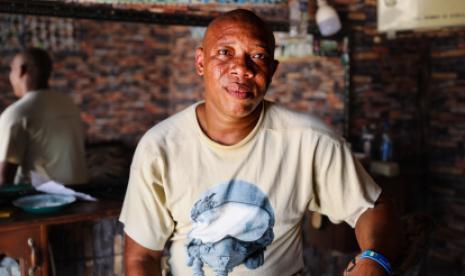
Benin-City, Edo State, Nigeria, 11 June 2024 (IOM)* –Frederick could barely hold back tears as he recounted his story. Six years after his return, he is still healing from the trauma of his experience in Libya.
.
.
.
Frederick poses in his barbershop in Benin-City, Edo State. Like him, thousands of Nigerians have returned home and with IOM’s support, they’re slowly rebuilding their lives. Photo: IOM/François-Xavier
“When I came back, I had nothing,” he says in a low, breaking voice, sitting outside his modest barbershop in a suburb of Benin-City, in Nigeria’s Edo State. “But today, at least I have a business and I am healthy. I was in hell in that country, but I am happy to be back home.”
Europe’s agriculture industry is exploiting the at least 2.4 million migrants who harvest Europe’s fruits and vegetables. This is according to a new report published on 4 June 2024 by the University of Comillas and Oxfam researchers titled “Essential but invisible and exploited.”
(UN News)* —Horrific violence and the risk of famine continue to stalk the people of Sudan, UN humanitarians warned on Friday [], as they echoed condemnation by UN Secretary-General António Guterres of an attack on a village south of Khartoum two days ago that is now believed to have left more than 100 dead.
“The UN Secretary-General strongly condemns the attack reportedly carried out on 5 June by the Rapid Support Forces (RSF) in the Wad Al-Noura village, Jazira state, which is said to have killed over 100 people,” his Spokesperson said in a statement overnight, which also underscored “the immense suffering of the Sudanese population as a result of the continued hostilities”.
The alarming surge in global debt burden calls for urgent reforms to the international financial systems to safeguard a prosperous future for both people and the planet.
(UNCTAD)* — In a new report released on 4 June, the United Nations sounded the alarm over the escalating debt burdens to global prosperity.
Titled ”A world of debt 2024: A growing burden to global prosperity”, the report highlights the unprecedented surge in public debt – comprising both domestic and external general government borrowing – which reached a historic peak of $97 trillion in 2023, up by a notable $5.6 trillion from the previous year.
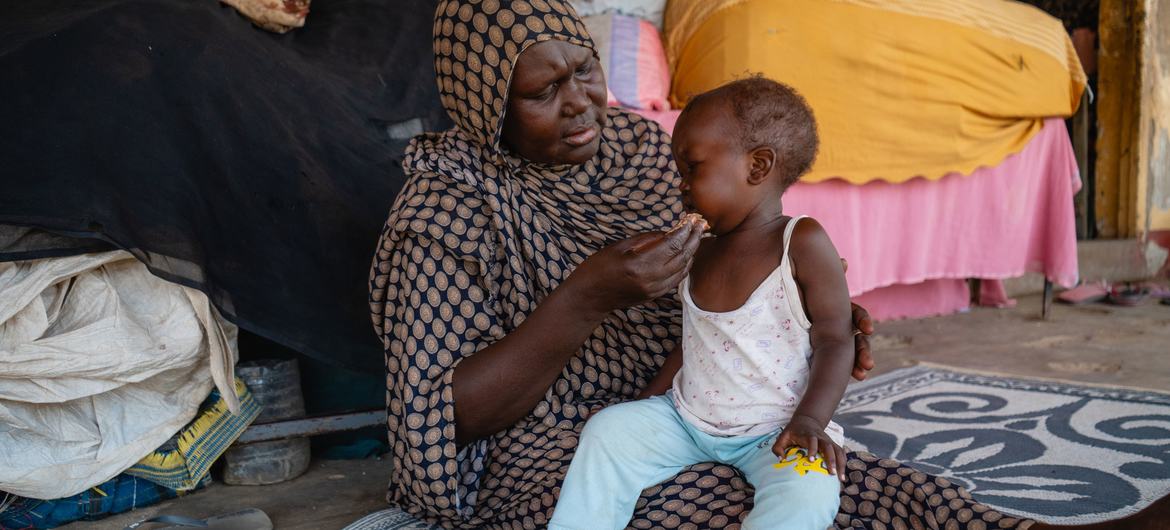
Children experiencing this level of food poverty are up to 50 per cent more likely to suffer from life-threatening malnutrition, new analysis finds.
UN0517643
NEW YORK, 6 June 2024 (UNICEF)* -–Around 181 million children worldwide under 5 years of age – or 1 in 4 – are experiencing severe child food poverty, making them up to 50 per cent more likely to experience wasting, a life-threatening form of malnutrition, a new UNICEF report reveals today.





 HUMAN WRONGS WATCH