(Beirut) – Gulf Cooperation Council (GCC) countries are failing to protect outdoor migrant workers experiencing dangerous, heat-related health risks as global warming-fueled heatwaves envelope the region, Human Rights Watch said on 8 August 2024.
SYDNEY, NEW YORK, WASHINGTON DC, Aug 6 2024 (IPS)* – The International Monetary Fund (IMF), World Bank and Asian Development Bank (ADB) are complicit in the gross human rights violations and death of democracy in Bangladesh.
BELÉM, Brazil, Jul 28 2024 (IPS)* – The decade-and-a-half-long battle for life in the so-called Volta Grande (Big Bend) of the Xingu river, a stretch of the river dewatered by the Belo Monte hydroelectric power plant in the Brazilian Amazon, has a possible solution, albeit a partial one. | En español
.
An igapó, a flood-prone wooded area on the Vuelta Grande of the Xingu River, with fruit on the dry ground. This is where the piracema, or fish reproduction, was supposed to take place, frustrated by the scarcity of water released by the Belo Monte hydroelectric plant on this stretch of the river in the eastern Brazilian Amazon. The fruits are lost and stop feeding the fish by falling on the ground and not in the water. Credit: Mati / VGX
UNITED NATIONS, Jul 26 2024 (IPS)* – “The world must rise to the challenge of rising temperatures,” says the UN Secretary-General as he launches a call to action on extreme heat and its impact on society and the environment.
Extreme heat has caused hundreds of deaths and has many other implications. This is an image from Dahanu, Maharashtra. Credit: 350/flickr
24 July 2024 (WMO)* — The Earth has just experienced its warmest day in recent history, according to one of the datasets that the WMO uses to monitor the Earth’s climate, namely the ERA5 dataset from the European Union’s Copernicus Climate Change Service (C3S).
Workplace exposures to excessive heat in Africa were above the global average, affecting 92.9 per cent of the workforce.
.
GENEVA, 25 July 2024 (ILO)* –A new report from the International Labour Organization (ILO), Heat at work: Implications for safety and health, warns that more workers are being exposed to heat stress worldwide.
The new data reveals that regions previously unaccustomed to extreme heat will face increased risks, while workers in already hot climates will confront ever more dangerous conditions.
Rio de Janeiro, 24 July 2024 (FAO)* –Around 733 million people faced hunger in 2023, equivalent to one in eleven people globally and one in five in Africa, according to the latest State of Food Security and Nutrition in the World (SOFI) report published today [24 July 2024] by five United Nations specialized agencies.
(UN News)* — Soaring summer temperatures in Europe and Central Asia are killing nearly 400 children a year according to new analysis of the latest available data by the UN Children’s Fund (UNICEF) released on Wednesday [].
UNICEF revealed that 377 children died in 2021 based on data from 23 countries across the vast region. Heat-related illnesses claimed the lives of half of those vulnerable youngsters in the first year of their lives.
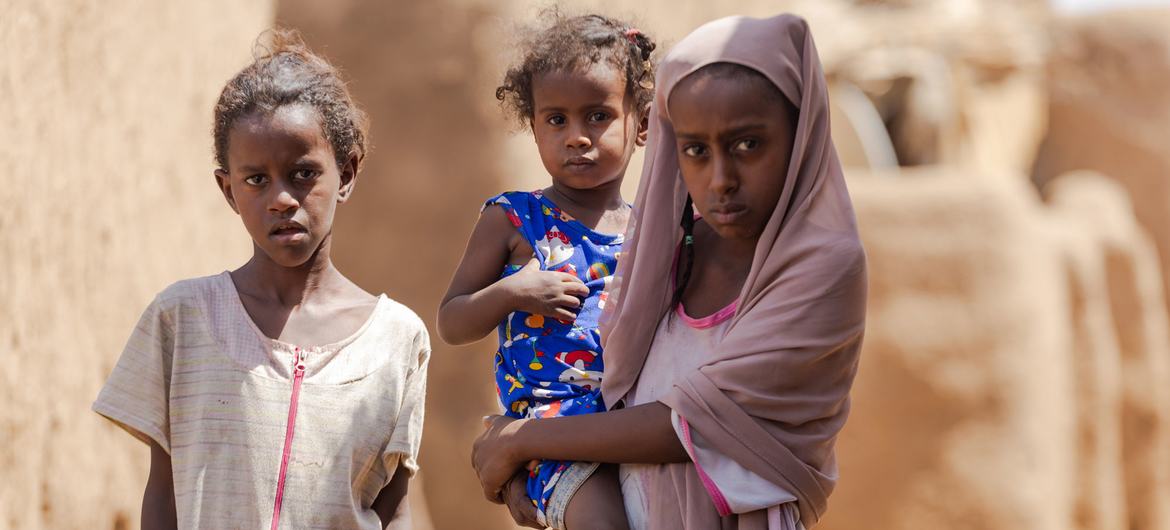
(UN News)* —Nearly 26 million people in war-torn Sudan are not getting enough to eat, the UN reported on Tuesday [23 July 2024], citing its humanitarian affairs office, OCHA.
“To give you an example, that is equivalent to the entire population of Australia,” UN Spokesperson Stéphane Dujarric told journalists attending his daily briefing in New York.





.jpg?sfvrsn=2ee86607_9 "Hunger numbers stubbornly high for three consecutive years as global crises deepen: UN report")


 HUMAN WRONGS WATCH