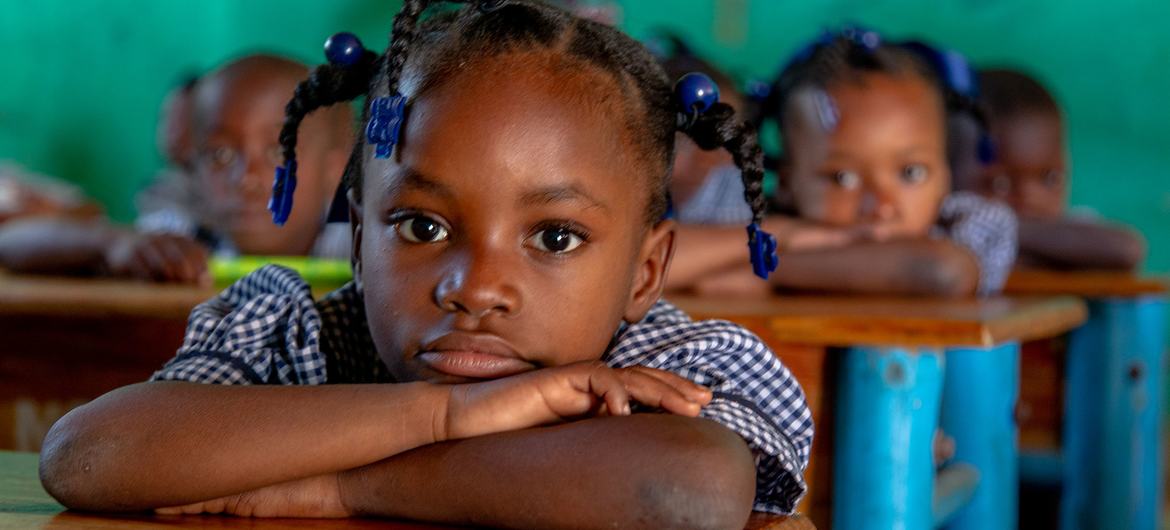
(UN News)* — The number of children missing out on any schooling has increased by six million, bringing the total to 250 million, according to new figures released on Monday [] by the UN Education, Science, and Cultural Organization (UNESCO).
The increase is partly due to the mass exclusion of women and girls from education in Afghanistan but can also be attributed to broader stagnation in education provision worldwide.
The findings undermine UN Sustainable Development Goal 4, which sets the goal of quality education for all by 2030.
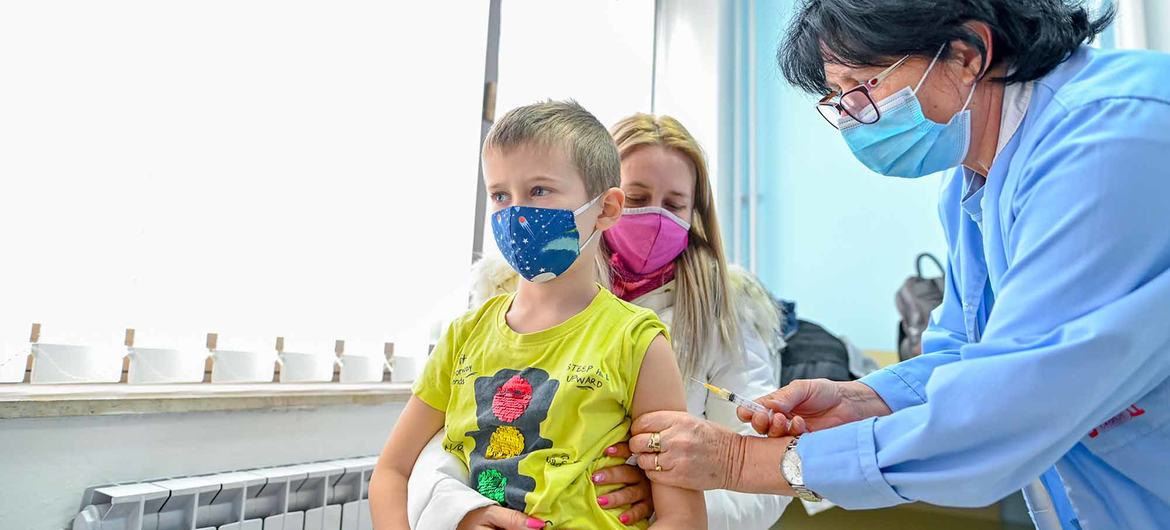
(UN News)* — Over 4.5 billion people worldwide lack coverage for essential health services the UN health agency said on Monday [], underscoring the need for stronger political commitment and increased government investment.
Moreover, two billion face severe financial hardships when paying out-of-pocket for necessary medical treatment, according to a joint World Health Organization (WHO)-World Bank report.
(UN News)* — Record numbers of children are on the move through Latin America and the Caribbean, facing perilous journeys marked by violence, exploitation and abuse, the UN Children’s Fund (UNICEF) warned on Thursday [].
Children in the region driven from their homes by gang violence, instability, poverty and climate change represent around 25 per cent of migrants said UNICEF – almost double the global average of 13 per cent.“
More and more children are on the move, of an increasingly young age, often alone and from diverse countries of origin, including from as far away as Africa and Asia,” said Garry Conille, UNICEF Latin America and the Caribbean Director.
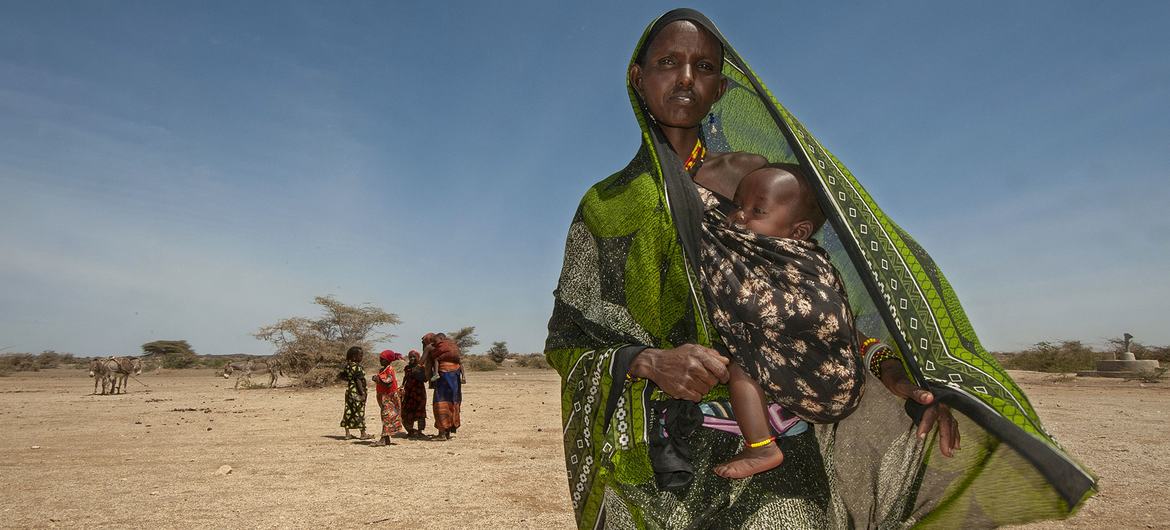
(UN News)* — The world is falling worryingly short in terms of closing the gender gap as part of the 2030 Sustainable Development Goals (SDGs) warned UN Women on Thursday [].
The new Gender Snapshot report from the UN’s gender equality agency at this midway point towards the SDGs warns that if current trends continue, over 340 million women and girls will be living in poverty by 2030. That represents eight per cent of the female population worldwide.
Close to one in four will experience moderate or severe food insecurity and at the current rate of progress, the next generation of women will still be spending 2.3 more hours per day on unpaid care and domestic work than men.
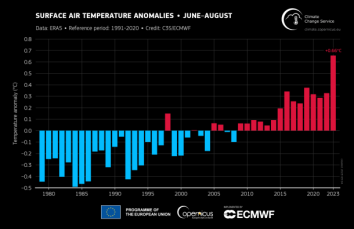
Bonn and Geneva, 6 September 2023 (ECMWF and WMO)*– Earth just had its hottest three months on record, according to the European Union-funded Copernicus Climate Change Service (C3S) implemented by ECMWF.
Global sea surface temperatures are at unprecedented highs for the third consecutive month and Antarctic sea ice extent remains at a record low for the time of year.
It was the hottest August on record – by a large margin – and the second hottest ever month after July 2023, according to the Copernicus Climate Change Service ERA 5 dataset.
BULAWAYO and BONN, Sep 4 2023 (IPS)* – Mango farmer Eufria Nyadome used to earn USD 60 from selling a 20-litre bucket of fresh mangoes and now can barely make USD 20 even though her mango trees are giving a good yield. She is throwing away buckets of rotten mangoes.
Wild boar female (Susscrofa) walking on mud beside a river with her piglets. The wild boar is an invasive Alien Species in countries such as South Africa, Vanuatu, and Uruguay. Credit: Budimir Jevtic/Shutterstock
Nyadome, from Mhondiwa Village in Ward 9 Murehwa District of Zimbabwe, has lost her income to an invasive Oriental fruit fly all the way from Asia.
(UN News)* — Food assistance to two million people in Afghanistan will have to be cut later this month, the UN World Food Programme (WFP) said on Tuesday [].
Forced to take the drastic measures citing a “massive funding shortfall”, WFP will only be able to provide emergency assistance to three million people per month across the country from October.
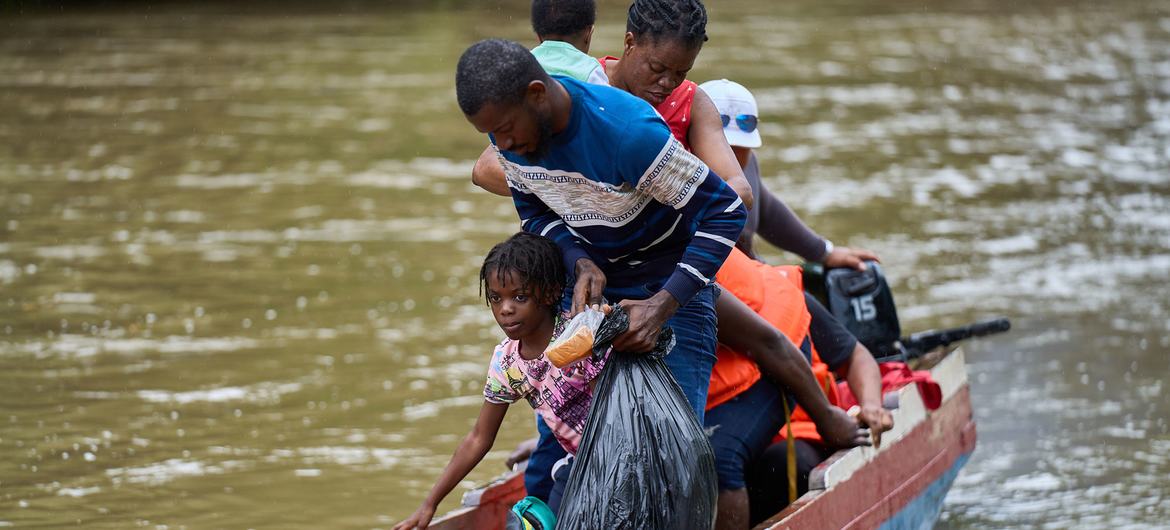
(UN News)* — An unprecedented number of migrants and refugees continue to cross the dense tropical jungle between Colombia and Panama known as the Darien Gap, risking their lives and facing horrific human rights abuses, the UN rights office (OHCHR) said on Tuesday [].
So far this year, more than 330,000 people have crossed the Darien Gap on their journey towards North America – the highest annual figure recorded to date, OHCHR said. One in five was a child.
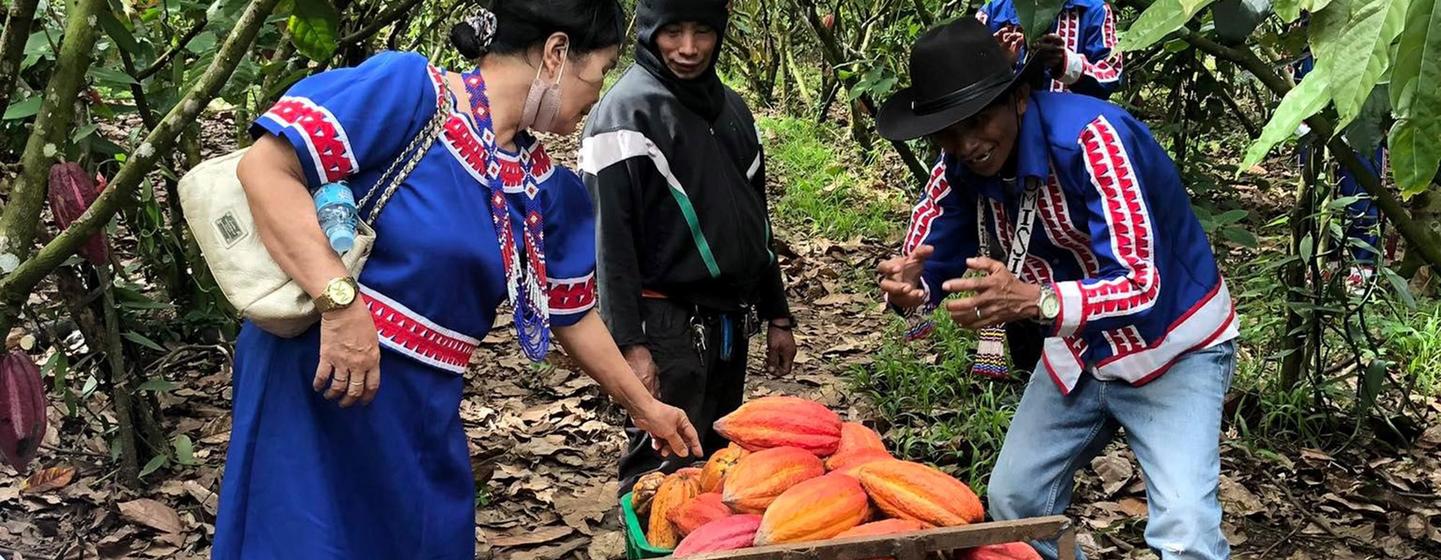
In the mountainous province of Bukidnon in the southern Philippines, local indigenous groups are being forced to adapt to the alarming impacts of climate change. With UN support, communities are making significant strides, using centuries-old knowledge to forge sustainable solutions.
Local tribal leader Jemuel Perino discussed the success of local initiatives, supported by the UN Development Programme (UNDP) Adaption Fund Climate Change Innovation Accelerator (AFCIA), in educating his community on effective prevention and mitigation techniques to deal with the growing impacts of climate change.
“The indigenous cultural communities have their own centuries-old knowledge, systems, and practices and have kept them alive,” Mr. Perino said. “In the Philippines, the Government is promoting their use in environmental protection and conservation.”
Ameenah Gurib-Fakim argues that Innovative global development finance ecosystems are needed to unlock equitable international financing flows while preserving the fiscal sovereignty of developing countries to pursue development pathways unique to their circumstances and realities.
A view of an artificial installed at Mon Choisy Beach to combat soil erosion and create resilience. The installation will break up the waves before they reach the shore and will also act as a habitat for fish. Credit: Reuben Pillay/Climate Visuals Countdown
PORT LOUIS, Sep 4 2023 (IPS)* – The Africa Climate Summit 2023 is expected to start with renewed hope. In its 60+ years of post-independence history, Africa has contributed around 3% of Green House Emissions, accounts for approximately 2.6% of global trade, and less than 3% of the world’s GDP in 2021.



 HUMAN WRONGS WATCH