Land degradation and drought are fueling a hidden health crisis – but we still have time to act. When we speak of desertification or drought, we often think of dry rivers, cracked soil and failed harvests.
But there is another, less visible toll – one that strikes deep into the lungs, hearts and daily lives of the world’s most vulnerable people.
A new policy brief from the UNCCD reveals the far-reaching health impacts of land degradation and drought — and it delivers a stark message: the health of the planet and the health of people are inseparable.
Around the world, land is deteriorating at an alarming pace.
Between 2015 and 2019, more than 100 million hectares of productive land were lost each year. That’s an area roughly the size of Egypt — gone annually.
KUALA LUMPUR, Malaysia, Aug 12 2025 (IPS)* –– The accumulation of still growing greenhouse gas emissions (GHG) in an increasingly unequal world is accelerating planetary heating. It is also worsening disparities, especially between the rich and others, both nationally and internationally.
Jomo Kwame Sundaram
Unequal emissions In our grossly unequal world, international disparities account for two-thirds of overall income inequalities.
National income aggregates and averages can mislead by obscuring significant disparities within countries.
Meanwhile, GHG emissions continue to grow as their accumulation accelerates planetary heating.
Emissions disparities within nations now account for almost two-thirds of worldwide emissions inequality, nearly doubling from slightly over a third in 1990.
The bottom halves of rich country populations are already at – or close to – the 2030 per capita carbon dioxide equivalent emission targets set by their governments. Yet North America’s wealthiest 10% or decile are the world’s biggest GHG emitters.
The sheer, unrelenting horror unfolding in Gaza is not unique in its scale of human suffering. Sudan has endured catastrophic famine for over a year, reaching the same “fifth stage of starvation” Gaza now tragically enters.
Every second of august, under the GENOCOST celebration , the Congolese community and its allies around the world come together to honor the memory of the victims of the Congolese genocide.
UNITED NATIONS, Aug 7 2025 (IPS)* –– The humanitarian situation in Haiti has deteriorated significantly in the past few weeks, with the United Nations (UN) underscoring a growing list of abuses committed by armed groups, including killings, kidnappings, and sexual violence.
Christiana, a mother of six, fled repeated waves of armed violence, first from her home in Morne Blanc, where her husband was killed in 2024, then from Mirebalais in March 2025, seeking safety in Boucan Carré. Credit: UNICEF/Herold Joseph
N’Djamena, Chad, 8 August 2025 – In a country where legal frameworks are still taking root and taboos around human trafficking and exploitation run deep, Julienne Deyo stands as a determined force. A lawyer by training and justice advocate by conviction, she has been at the frontlines of the Chad’s fight against human trafficking since 2018.
Now Chair of the National Commission to Combat Trafficking in Persons and Director of Legal Affairs at the Ministry of Justice and Human Rights, Madame Deyo leads with both a steady resolve and a heart marked by the suffering she’s witnessed.
“It started with the stories of young boys,” she recalls. “Children sold off to cattle herders, sent into the bush, far from their families, walking behind herds. Some were bitten by snakes and died alone. No one seemed to care. How can anyone stay unmoved?”
Madame Deyo’s focus is as much on the survivors as it is on building a foundation that prevents such abuse from happening again. Illustration: AI-generated image
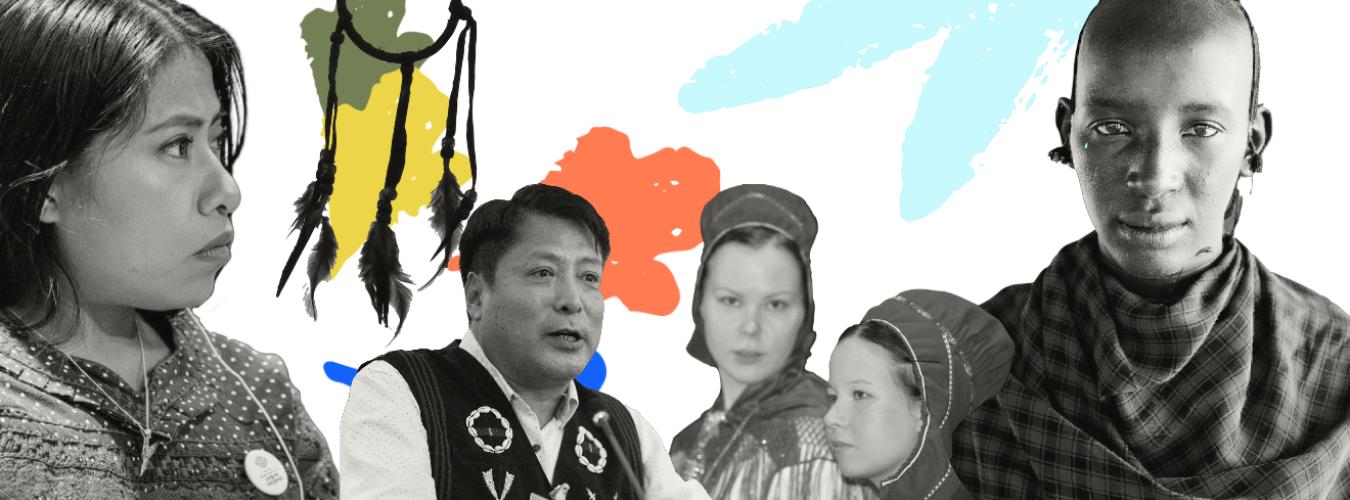
Indigenous peoples consider 22% of the world’s land surface their home. They live in areas where around 80% of the planet’s biodiversity is found on not-commercially-exploited land. UN Composition with photographs by Manuel Elias, Alessia Pierdomenico, Evan Schneider and Marcel Crozet (left to right.)
Watch
Young Indigenous Activists Fight to Save Their Languages and Cultures | United Nations
An estimated 476 million Indigenous Peoples live across 90 countries, representing 5,000 different cultures.
Without proper safeguards, AI risks harming Indigenous rights through inequitable distribution of the groundbreaking technology, environmental damage and the reinforcement of damaging colonial legacies.
The growing amount of electricity generation needed for AI data centres and other infrastructure is also intensifying climate change pressures, according to the UN.
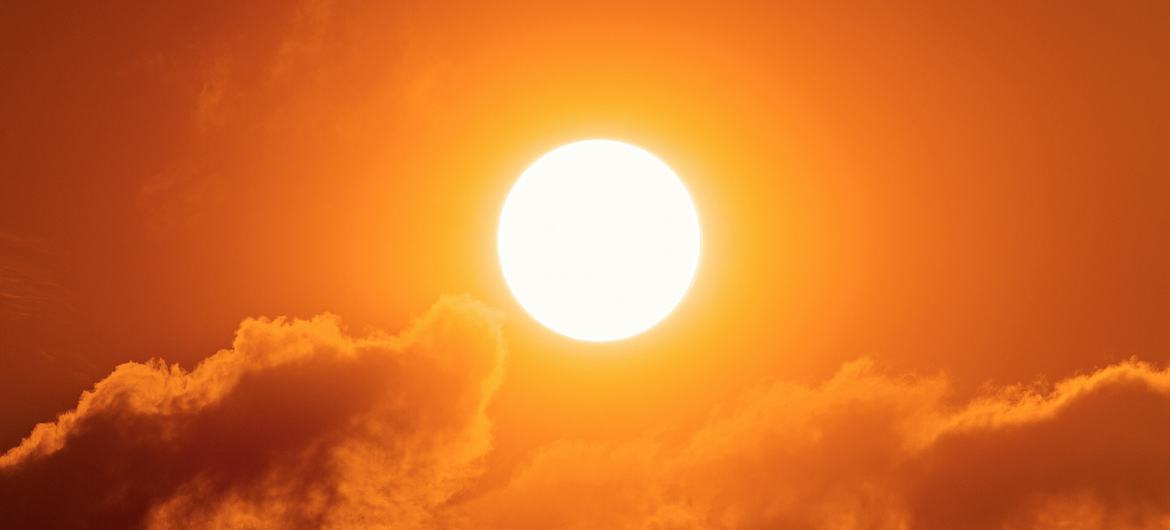
(UN News)* —Extreme heat is breaking records around the world, with wildfires and poor air quality compounding the crisis, according to a report from the World Meteorological Organization (WMO) released Thursday [].
Extreme temperatures caused approximately 489,000 heat-related deaths annually between 2000 and 2019, with 36 per cent occurring in Europe and 45 per cent in Asia.
The health impacts of heat are especially severe in cities due to the so-called ‘urban heat island effect’ – the over-heating of dense city areas compared with their rural surroundings – which is magnifying problems as urbanisation continues.
Amid rising 21st-century temperatures, the WMO underscored that July 2025 was the third-warmest July ever recorded, behind those in 2023 and 2024.
An invitation for the reader to analyze and decide which countries, peoples, and/or cultures can be considered civilized in the 21st century—more specifically, in 2025.
A civilization or culture is defined as a set of customs, traditions, ethics, values, language, music, dance, gastronomy, clothing, religion, and social and political organization of a people, ethnic group, tribe, or nation.
British scholars of the 19th century classified the peoples and races as Civilized, Barbarians and Savages, based on their respective “evolutions.” Such classification was based primarily on three factors:
Charles Darwin’s Theory of Evolution;
the Industrial Revolution in the beginning of industrial capitalism; and
the Reformation of the Catholic Church, the schism from which Protestantism arose.
By Nargiz Shekinskaya in Awaza and Vibhu Mishra in New York.
(UN News)* — Trapped by geography and squeezed by global market forces, the world’s 32 landlocked developing countries remain among the poorest – and most overlooked.
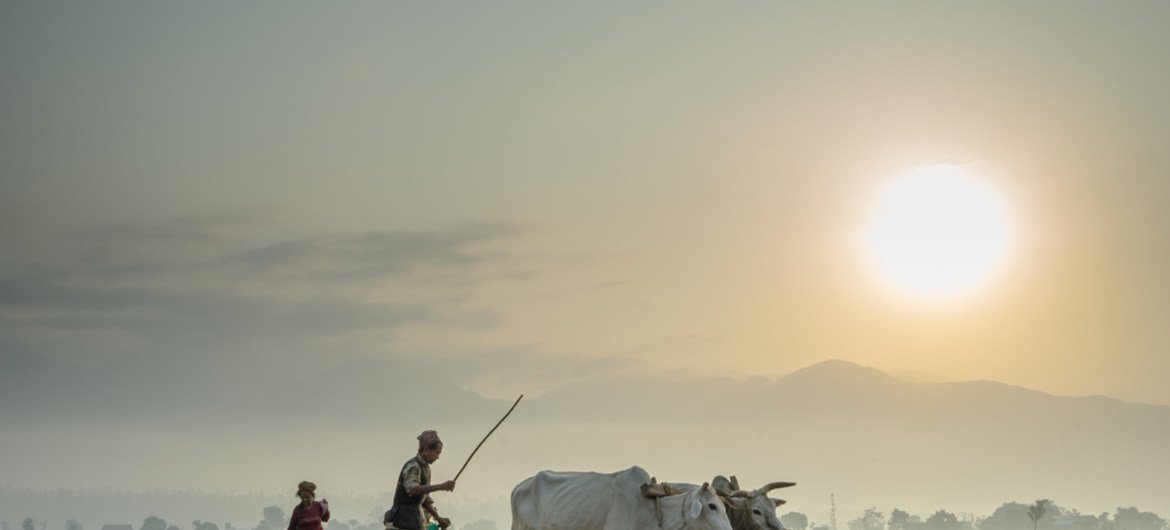
IFAD/Sanjit Das | In landlocked developing countries like Nepal (pictured), a lack of diversified industries and accessible markets limits local livelihoods – driving a growing exodus of young people seeking work abroad and often leaving older generations behind.
At a major UN conference underway this week in Awaza, Turkmenistan, calls are growing to tackle the high trade costs, investment gaps and growing digital divide that continue to hold these countries back.
Despite progress in some areas, landlocked nations – from Bolivia to Bhutan and Burkina Faso – account for just1.2 per cent of global exports, even though they represent over seven per cent of the world’s countries.



 HUMAN WRONGS WATCH