UNITED NATIONS, Jan 2 2024 (IPS)* –– When US President Joe Biden lambasted “the largest aerial assault,” which hit “a maternity hospital, a shopping mall and residential areas killing innocent people”, he was not talking of the devastating Israeli attacks on Gaza but criticizing the most recent Russian military assault on Ukraine.
Destruction in Gaza Strip. Credit: UNICEF/Hassan Islyeh
Biden obviously has one yardstick for the Russians and another for the Israelis –displaying sheer hypocrisy and political double standards.
(UN News)* — UN humanitarians repeated dire concerns for civilians caught up in the war in Gaza on Tuesday [], amid reports of continued Israeli bombardment of the southern towns of Deir al Balah, Khan Younis and Rafah, direct clashes on the ground and the firing of rockets overnight by Palestinian armed groups into Israel.
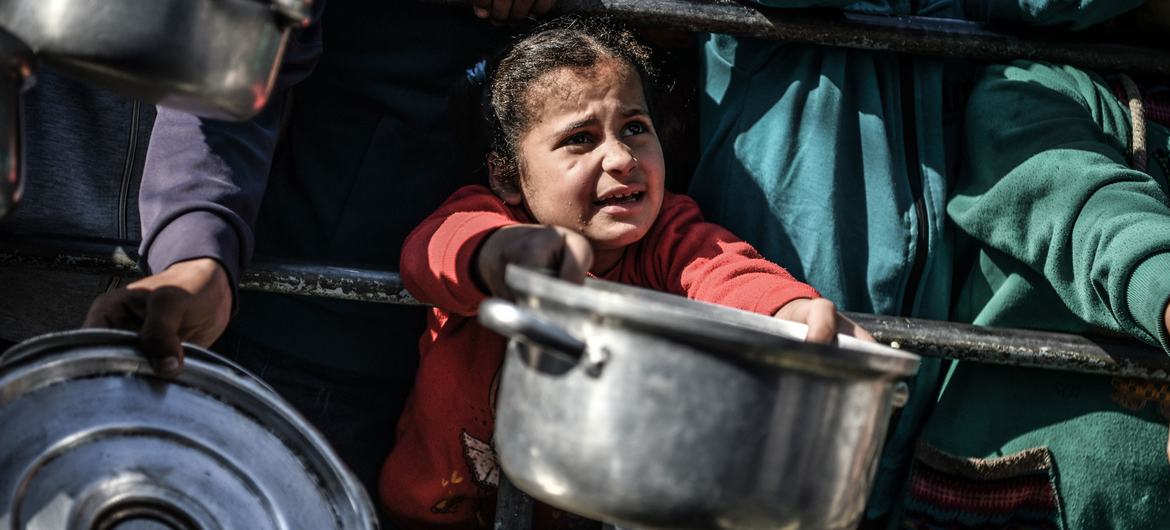
The latest warnings from UN relief agency for Palestinians UNRWA and the UN World Food Programme, WFP, highlighted the threat of starvation and disease in heavily built-up areas, where tens of thousands of people have fled intense bombing campaigns in the enclave’s north and centre.
(UN News)* — In 2024, the UN will once again be at the heart of international efforts to tackle the world’s most urgent challenges, from bolstering the global economy, to supporting climate action and keeping the peace in conflict hotspots.
Whilst we can’t predict what will be making the headlines, we do know that the UN will make full use of its unique convening power, to bring together leaders and decision-makers in the hope of making the world a more peaceful, equitable and prosperous place for all.
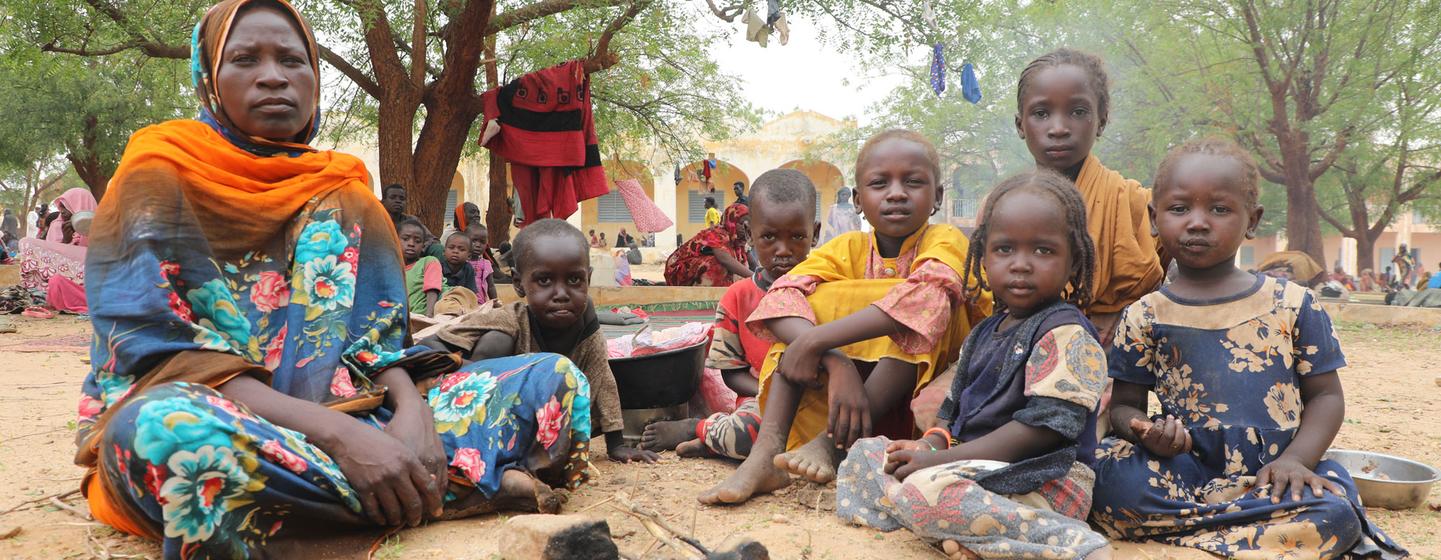
(UN News)* —The outbreak of conflict seven months ago in Sudan has led to “a convergence of a worsening humanitarian calamity and a catastrophic human rights crisis”, according to a senior UN official, and the restive region of Darfur has been particularly badly affected.
Close to nine million people need humanitarian assistance and reports suggest that some 4,000 people have been targeted and killed because of their ethnicity.
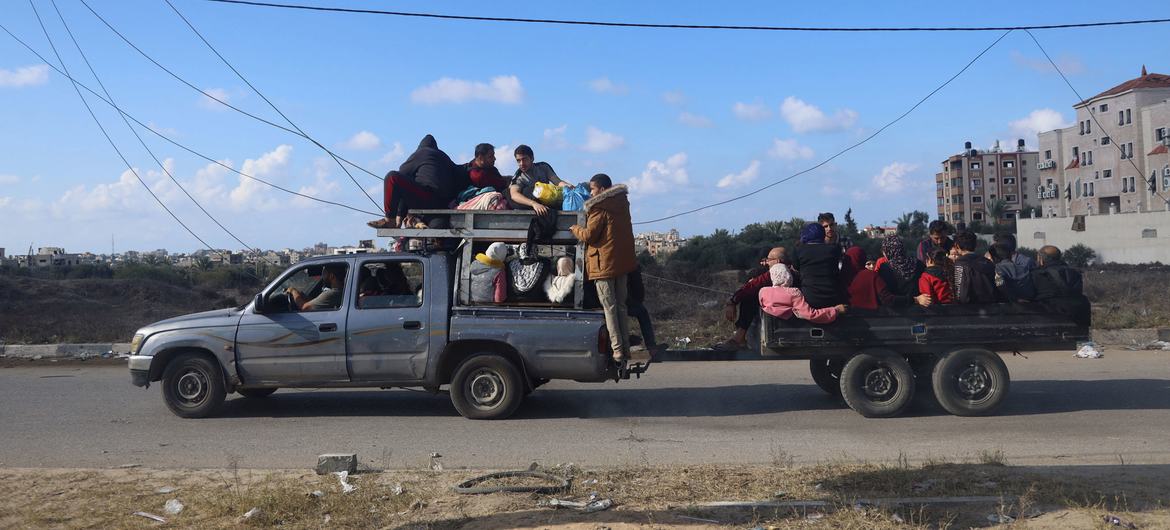
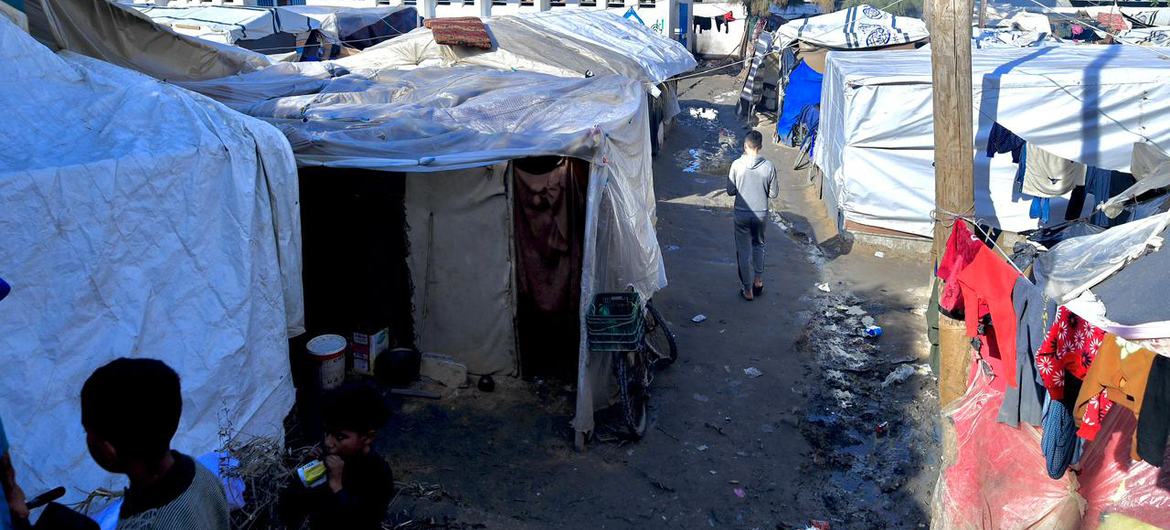
(UN News)* — In Gaza, at least 100,000 displaced people have poured into Rafah in recent days, UN humanitarians said on Friday [], worsening already dire conditions in the southernmost part of the enclave.
“A traumatized and exhausted population” is being “crammed into a smaller and smaller sliver of land,” UN emergency relief chief Martin Griffiths warned on social platform X on Friday.
But serious obstacles persist to bringing more aid to those in need amid relentless Israeli bombardment and intense fighting on the ground.
(UN News)* — The UN refugee agency, UNHCR, has appealed for action in the wake of a mob attack against refugees in Banda Aceh, Indonesia, on Wednesday [].
Unsplash/Appai | Jakarta, Indonesia’s capital.
Hundreds of young people stormed a building basement where scores of Rohingya refugees were sheltered, according to media reports.
The Rohingya are a mainly Muslim community who have fled waves of persecution in Myanmar, a predominantly Buddhist country.
Nearly one million are living in camps in Bangladesh and more than 1,000 have arrived in Indonesia by boat in recent months.
UNHCR issued a statement saying it was “deeply disturbed to see a mob attack on a site sheltering vulnerable refugee families.”
In a region scarred by years of wars and displacement, climate change and water scarcity have become yet another threat for fragile contexts in Middle East and North Africa.
Dried reeds in the marshes of southern Iraq. Photo: Fareed Baram/NRC
In this region, populations’ ability to cope with the impacts of climate change is limited, thereby aggravating their overall vulnerability.
(UN News)* —Aid missions to supply Gaza have become increasingly difficult amid reports of continued heavy bombing of the Strip overnight by the Israeli military and intense clashes “in most areas” with Hamas fighters, UN humanitarians warned on Wednesday [].
Locations in the north and south of the enclave were hit as Israeli ground forces also reportedly pushed into central areas, along with the firing of rockets by Palestinian armed groups into Israel, prompting concerns from the UN agency for Palestinian refugees, UNRWA, about the safety of civilians uprooted time and again.
“I’ve been farming this land all of my life and seen so many people from this area leave over the years because of the heat, dry weather and water shortages,” says Adyl Khujanov, who runs a farm in the village of Kyzylkesek, in western Uzbekistan’s Karakalpakstan region.
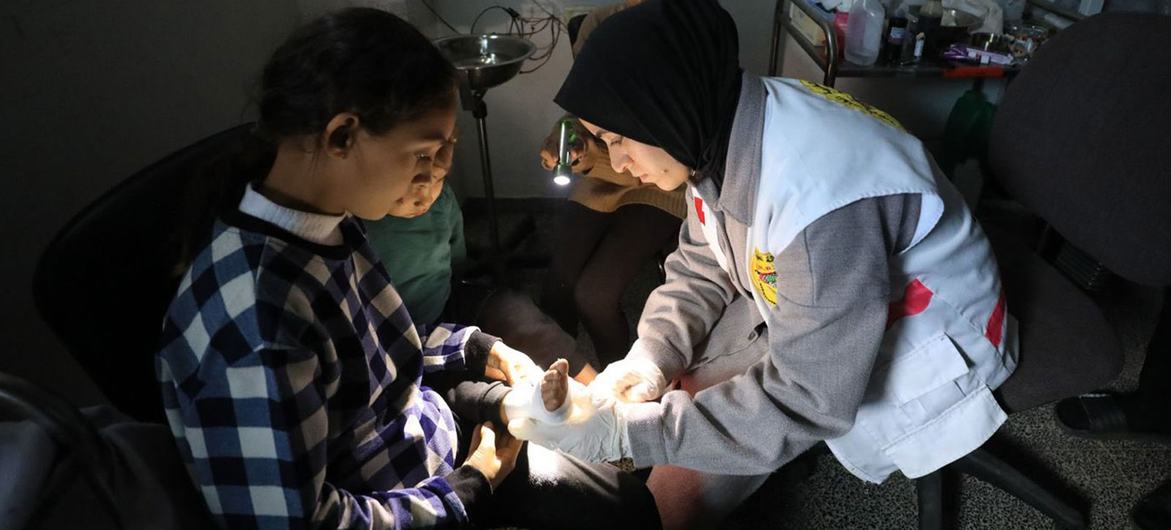
Overwhelmed medics in Gaza on Tuesday [] continued to try to save victims of missile strikes including attacks near refugee camps in the centre of the devastated enclave that have reportedly killed well over 100 people, the UN health agency said.
UN News/Ziad Taleb | Nuseirat school in central Gaza which is run by the UN agency for Palestinians UNRWA and is now a shelter for thousands of displaced people.
World Health Organization (WHO) Emergency Medical Teams coordinator Sean Casey said that “100-plus patients” had been brought into Al-Aqsa Hospital on Monday in the space of 30 minutes, following reported blasts, including near Al-Maghazi refugee camp.
All of them needed urgent treatment for serious wounds, the WHO official told UN News, while “about 100” more lifeless bodies were brought into the hospital at around the same time.




 HUMAN WRONGS WATCH