West Coast, Yemen. 31 May 2024 (IOM)*– In her coastal home in Mokha, Zahara diligently tends to the cooking. As the head of the household, her days are bustling with chores. Dressed in vibrant traditional attire, she checks on the food and ensures the children are cared for. Given her serene demeanour, it’s easy to overlook the challenges she faces.
.
.
.
.
Zahara, the head of her household, stands proudly in front of her shelter, surrounded by her family. Photo: IOM/Monica Chiriac. Photo: IOM/Monica Chiriac
She cares for her husband whose health is frail and ensures that every member of her extended family is well-fed and content. She feels that she owes them for the support they provided seven years ago when her family was forced to flee the turmoil of conflict in her home district of At Tuhayta.
GENEVA/NEW YORK/ROME (UNICEF)* —Three United Nations agencies on 30 May 2024 issued a stark warning that all indications point to a significant deterioration of the nutrition situation for children and mothers in war-torn Sudan.
UNICEF/UNI426052/Dejongh
The lives of Sudan’s children are at stake and urgent action is needed to protect an entire generation from malnutrition, disease and death.
A recent analysis conducted by the UN Children’s Fund (UNICEF), UN World Food Programme (WFP) and World Health Organization (WHO) highlights that the ongoing hostilities are worsening the drivers of child malnutrition.
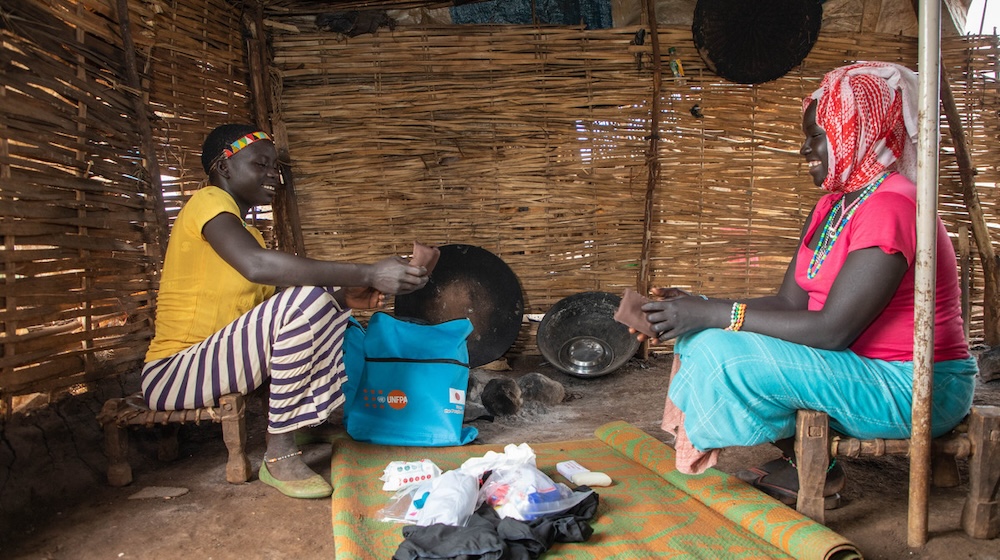
UNITED NATIONS, New York, 28 May 2024 (UNFPA)* – Every month, nearly 2 billion people menstruate, but gender inequality, poverty and other forms of marginalization mean the world has still not adapted to become period-friendly. In a humanitarian crisis, these inequities are greatly exacerbated.
When forced to flee their homes because of violence, conflict or climate disasters, people leave most of their possessions behind – including, usually, sanitary items.
KUALA LUMPUR, Malaysia, May 30 2024 (IPS)* –The World Bank expects the international economic slowdown to be at its worst in over four decades in 2024. This is mainly due to powerful Western nations’ contractionary macroeconomic and geopolitical policies.
Dismal outlook According to the Bank’s last Global Economic Prospects report, world economic growth will be weakest by the end of 2024. Only the US economy’s strength will statistically prevent a world recession.
Jomo Kwame Sundaram
World economic growth was expected to slow to 2.4 per cent in 2024. But even the US-controlled World Bank acknowledges growing geopolitical tensions are the main threat.
Medium-term prospects for most developing economies have worsened due to slower growth in most major economies. This has been exacerbated by tighter monetary policy and credit, sluggish trade and investment growth.
PORT AU PRINCE/NEW YORK, 28 May 2024 (UNICEF)* -– As armed violence continues to drive the deteriorating conditions across Haiti, the UN has estimated that 30 to 50 per cent of armed group members are children who are subject to coercion, abuse and exploitation stemming from persistent social, economic and political fragility caused by ongoing violence that has spiraled parts of the country into chaos.
UNICEF/UNI557180/ErolChildren display artwork they created during psychosocial and educational activities organized by APADEH, in collaboration with UNICEF, at a school in Port-au-Prince, Haiti.
The situation for children in Haiti is dire. Ninety per cent of Haiti’s population live in poverty and three million children remain in urgent need of humanitarian assistance.
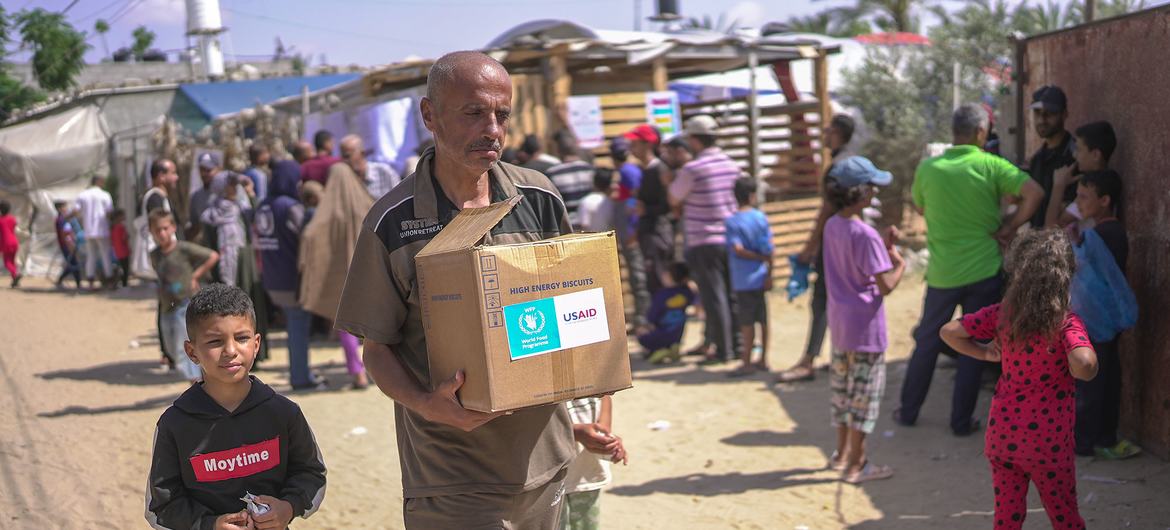
(UN News)* — Far too little aid is reaching people in Gaza to the extent that children are now starving, UN humanitarians said on Friday [], in a renewed appeal to Israel to respect international law regarding the safe passage of lifesaving relief in the war-shattered enclave.
The alert from the World Health Organization (WHO) follows the finding that more than four in five children “did not eat for a whole day at least once in the three days” ahead of a food insecurity survey.
(UN News)* — Famine in Sudan is “imminent” if aid agencies continue to be prevented from providing relief, UN humanitarians warned on Friday [].
In a bleak assessment of the dire situation in Sudan where conflict is in its second year, the heads of 19 global humanitarian organizations issued an alert that further obstacles to providing aid “rapidly and at scale” will mean that “more people will die”.
UNITED NATIONS, May 30 2024 (IPS)* – Scattered over the vast area of our oceans, Small Island Developing States (SIDS) are often pictured as blue, serene and beautiful paradises. However, we are risk losing the beauty of these islands, due to the triple threats of climate change, loss of biodiversity, and pollution, especially marine plastic debris.
If not stopped, the annual flow of plastic into the ocean will nearly triple by 2040, to 29 million metric tonnes per year, 50 kilgrammes of plastic for every metre of coastline worldwide. Credit: UN Development Programme (UNDP)
If business continues as usual, the annual flow of plastic into the ocean will nearly triple by 2040, to 29 million metric tonnes per year, equivalent to 50 kilogrammes of plastic for every metre of coastline worldwide. Soon, the ocean will turn into plastic soup, and islands will be covered in, and surrounded by, plastic waste.
29 May 2024 — Starting in April, flash floods have wreaked havoc across Afghanistan, leaving at least 300 dead, hundreds injured, and nearly 9,000 homes destroyed. Thousands are now homeless. Roads, bridges, schools, and health facilities in Baghlan, Badakshan, Takhar, Faryab and Ghor are in ruins.
Once again, Afghanistan is heavily affected by a climate catastrophe after last year’s earthquakes in Herat, and frequent sandstorms and drought hitting the most vulnerable, particularly women and children, the hardest.
But why are these sudden deluges so deadly, and what makes this disaster particularly devastating?
Geneva/ Addis Ababa, 29 May – Over 3 million people were internally displaced in Ethiopia by the end of last year according to the latest National Displacement Report by the International Organization for Migration’s (IOM) Displacement Tracking Matrix (DTM).
Displaced families in Dubuluk IDP Camp. Photo:: IOM/ Ethiopia.
The Report shows that the majority – 69 per cent – of those displaced were a direct result of conflict, whereas drought and other climate induced events such as floods, landslides and fires on the other hand contributed to 17 per cent, and 9 per cent respectively.






 HUMAN WRONGS WATCH