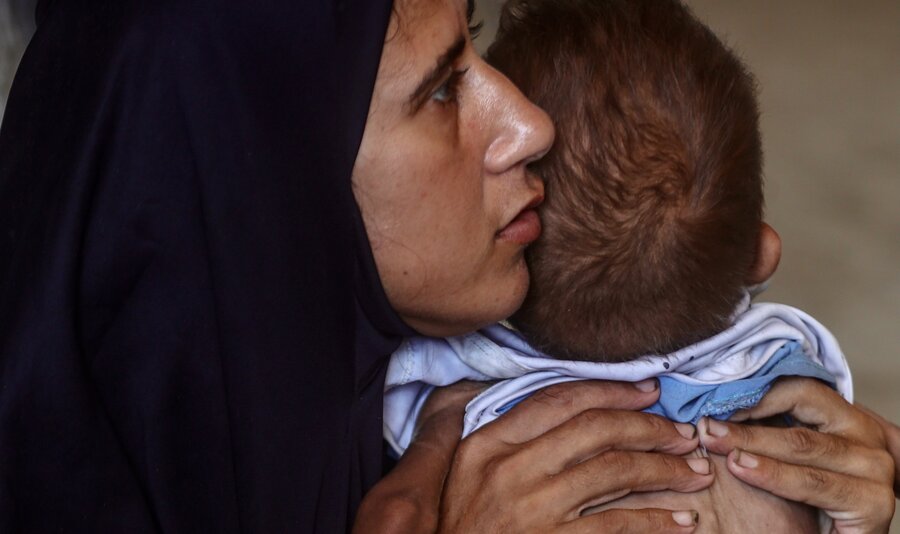
Cradling 18-month-old Mohamed in her arms, Hedaia remembers a once-healthy child when food was available – despite Mohamed’s muscular atrophy, a rare genetic weakness.
Today, the little boy is skeletal.
.
Hedaia, holding 18-month-old Mohamed, who has a rare genetic disorder. She says he was a healthy little boy when there was enough food. Photo: WFP/Ali Jadallah “He needs milk, diapers and specific foods,” Hedaia said, as her son cried softly. “But we can’t afford them.” (For their safety, only the first names of Gazan interviewees are being used in this story.)
. Hedaia’s struggle to find food is reflected across Gaza, where 641,000 people will face catastrophic hunger by the end of September, according to figures released today (22 August).
27 Aug 2024 – The children of Gaza are being starved and killed.
Israel has killed 18,592 Palestinian children in the last two years and there are 39,000 children orphaned in Gaza. This forced starvation is an Israeli policy leading to famine.
Mairead Corrigan Maguire
Calls for genocide come from high Israeli politicians and generals {see genocidal statement 18 Aug 2025 via Prof Michael de Graff}.
This is not a natural disaster; it is mass murder and intentional starvation of Gazans by Israel.
The suffering is deep and painful. Please do something to stop such preventable suffering and death of little Palestinian children by Israeli military and politicians.
Please President Trump, cut off weapons and diplomatic support and save the Palestinians from ethnic cleansing and genocide, which are being witnessed by the whole world. Continue reading →
NEW YORK, Aug 26 2025 (IPS)** –– President Trump, you are the only leader who can stop Netanyahu from committing another genocide in Gaza. The whole world is watching. Do not allow yourself to become an accessory to the murder of thousands of innocent Palestinian women and children and the utter destruction of what’s left of Gaza.
People wait for food at a community kitchen in western Gaza City. Credit: UN News
As I am writing this column, the Israeli military is converging on Gaza to destroy what has been left after 22 months of relentless war that killed more than 60,000 Palestinians and leveled to the ground 80 percent of its infrastructure. Continue reading →
Eight years of displacement for Abu and the Rohingya people
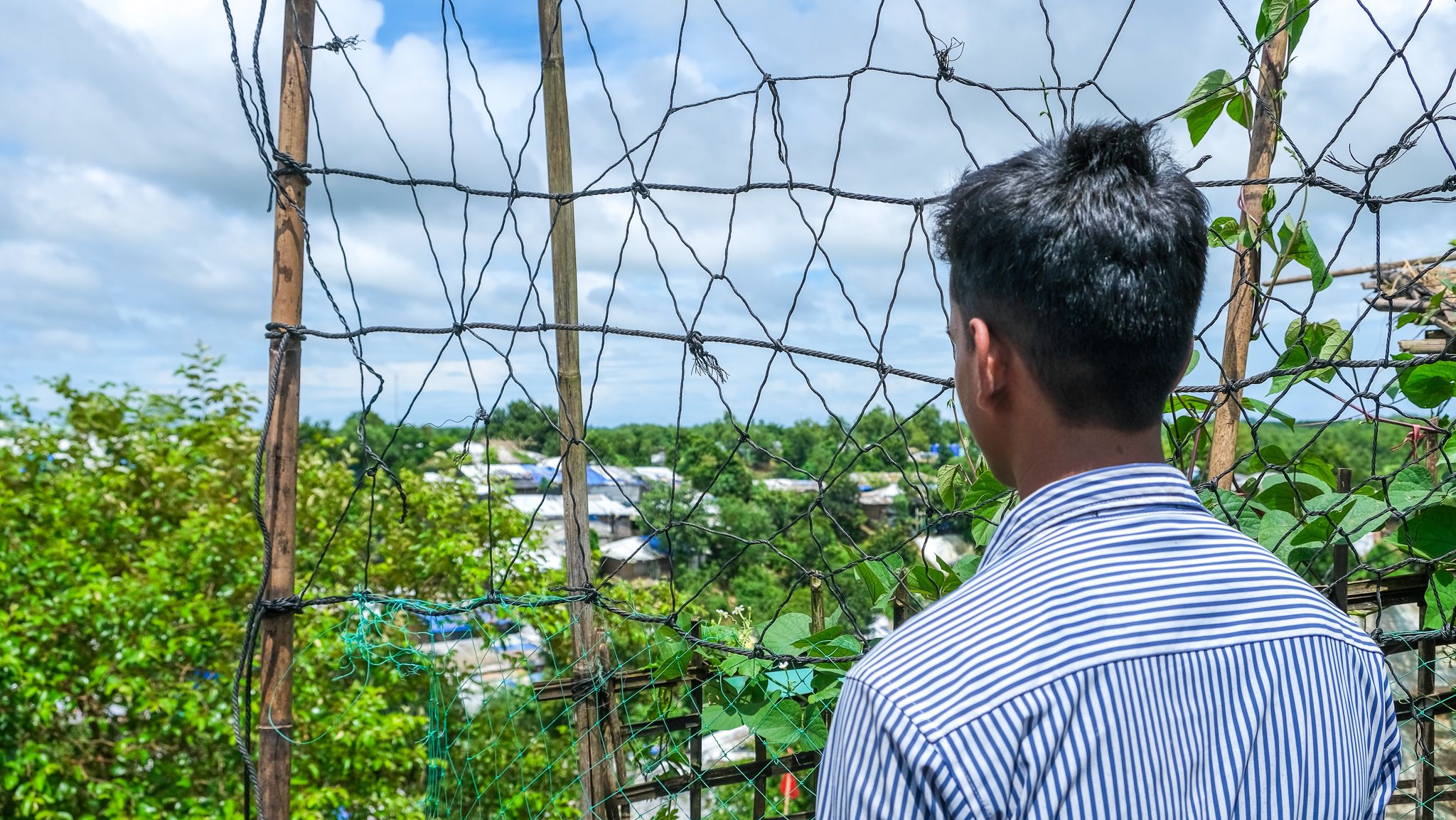
Abu, 18, has spent nearly half his life in this refugee camp.
“Today I am eighteen. I grew up in this refugee camp, waiting for education, waiting for a future, waiting to return home with dignity and rights.”
Abu*, an 18-year-old boy, was only 10 when he and his family fled Myanmar in 2017. Eight years on, he reflects on his life as a refugee and his hopes and fears for the future.
It was a Thursday in August. After lunch, we were resting when suddenly we heard shouting around our house. Our peaceful village, Thingana, surrounded by green fields and trees, turned into chaos.
An armed group was ordering people to leave their homes. They threatened to set fire to the houses and kill anyone who stayed.
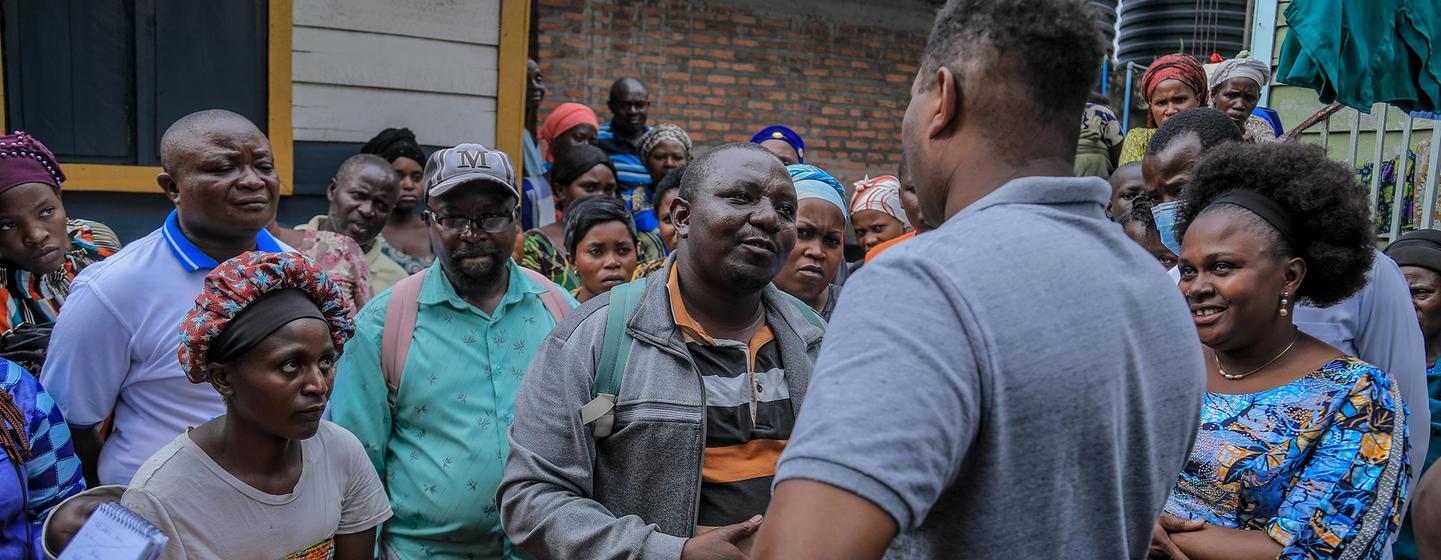
(UN News)* — In the days leading up to the fall of Goma, the capital of North Kivu in eastern Democratic Republic of the Congo, Dr. Thierno Balde slept with a helmet and bulletproof vest beside his bed as shells rattled the walls of his hotel.
Gunfire tore through the dark. Night after night, the 44-year-old physician from Guinea clung to the hope that the besieged city would hold somehow.
Then, one morning in late January, the call came: he and the remaining international staff had to be evacuated immediately.
“We took the last flight out,” he recalled.
Hours later, Goma was in the hands of M23. The Tutsi-led rebel group, backed by neighbouring Rwanda, had just landed its boldest military victory in the region yet.
The data show “a proportion of civilian slaughter with few, if any, parallels in modern warfare.”
.
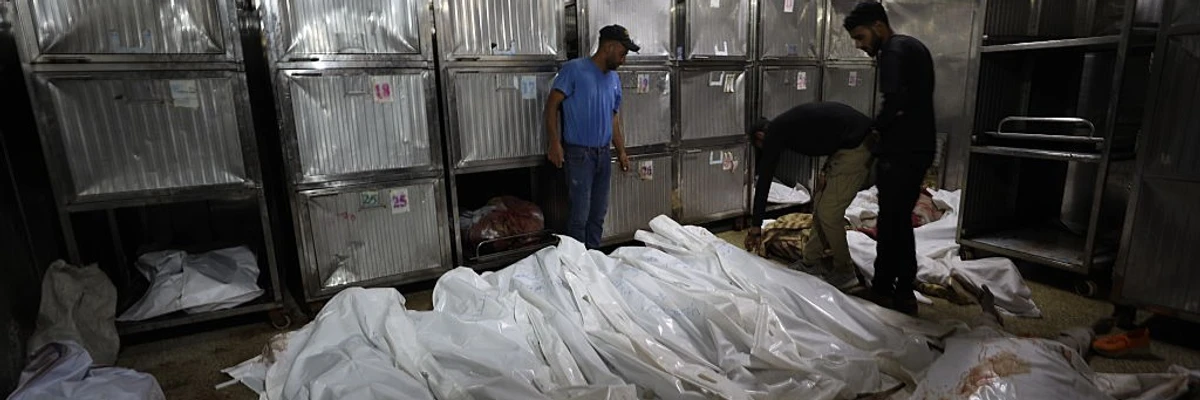
Bodies of Palestinians, including children, killed in Israeli airstrikes targeting residential neighborhoods are brought to al-Shifa Hospital in Gaza City for identification and funeral preparation on 21 Aug 2025.
(Photo by Khames Alrefi/Anadolu via Getty Images)
An investigation published today [21 Aug 2025] belied Israeli government claims of a historically low civilian-to-combatant kill ratio in Gaza, as classified Israel Defense Forces intelligence data revealed that 5 in 6 Palestinians killed by the IDF through the first 19 months of the US-backed war were, in fact, civilians. Continue reading →
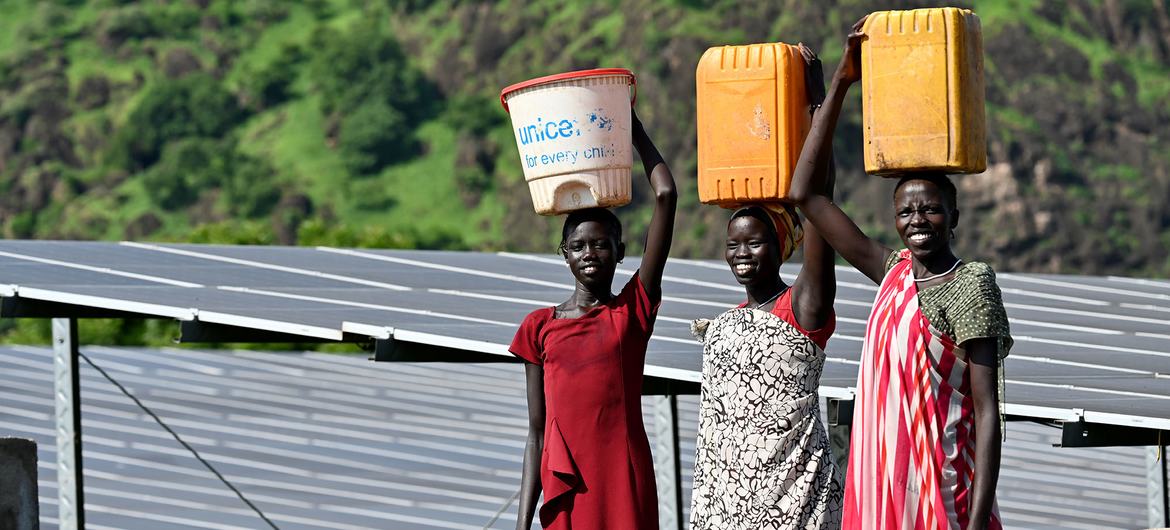
NEW YORK/GENEVA, 26 August 2025 (UNICEF)* -– Despite progress over the last decade, billions of people around the world still lack access to essential water, sanitation, and hygiene services, putting them at risk of disease and deeper social exclusion.
People living in low-income countries, fragile contexts, rural communities, children, and minority ethnic and indigenous groups face the greatest disparities.
(UN News)* — Some 2.2 billion people worldwide still lack access to safely managed drinking water services, according to the World Health Organization (WHO) – an increasingly urgent challenge as demand for safer access to the vital resource grows.
Currently underway in Stockholm from 24 to 28 August, the 35th World Water Week meeting highlights the crucial link between water and global warming, under the theme, Water For Climate Action.
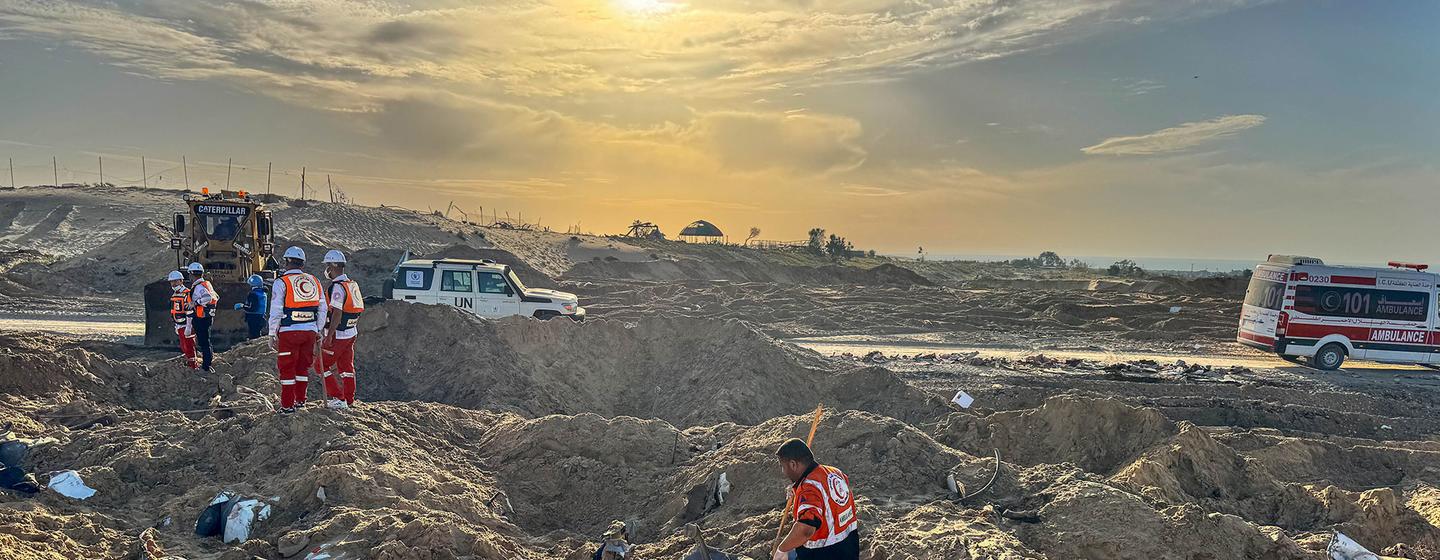
(UN News)* —From Gaza to Sudan, wars are being waged on the very systems set up to protect civilian populations, with health workers, hospitals, health centres and ambulances being targeted in horrifying numbers, according to the UN agency for reproductive health and rights, UNFPA.
Attacks against health facilities doubled between 2023 and 2024, and more than 900 health workers were killed last year, the agency reported.
Humanitarian aid workers were also killed in record numbers in 2024.
Yet, 2025 is outpacing even these dark statistics at a time when funding for humanitarian work is shrinking and support services established over decades are struggling to operate.
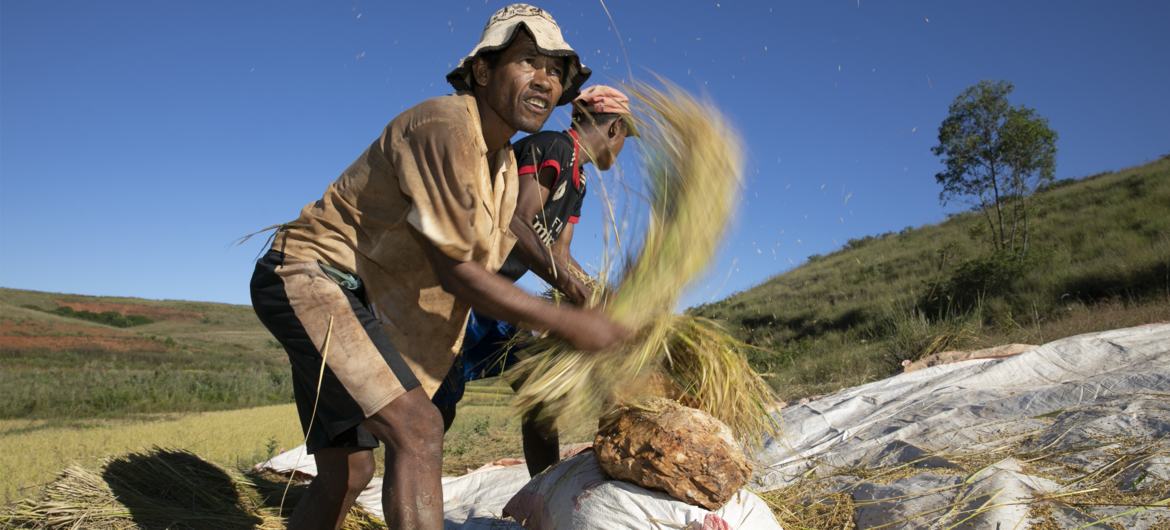
(UN News)* — Extreme heat is fast becoming one of the biggest threats to workers’ health and livelihoods, the World Health Organization (WHO) and World Meteorological Organization (WMO) warned on Friday [].
The new joint report, Climate change and workplace heat stress, underscores the mounting risks as climate change fuels longer, more extreme, and more frequent heatwaves.
Stressing that workers in agriculture, construction, and fisheries are already suffering the impacts of dangerous temperatures, the report points out that vulnerable groups in developing countries – includingchildren, older adults, and low-income communities – face increasing dangers.



 HUMAN WRONGS WATCH