It’s this vicious cycle that as long as the institutions are still so weak, you have the Wild West like in old American movies, where the sheriff is the judge, jury and executioner, all in one.
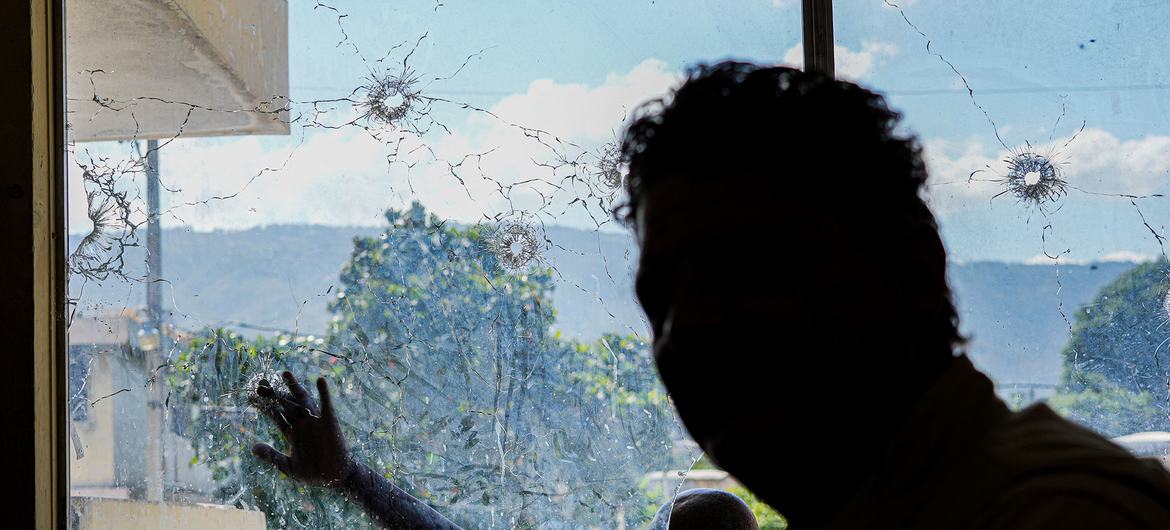
(UN News)* — With armed gangs expanding their influence, self-defence groups morphing into gang-like entities and public officials acting with impunity, Haiti is slowly becoming something like the Wild West, according to William O’Neill, the UN’s designated expert on human rights forthe Caribbean island nation.
And if you ask Mr. O’Neill what is creating conditions akin to the Wild West, the answer is desperation.
With over 1.3 million Haitians displaced and half of the country going hungry, desperation is not some abstract idea in Haiti — it is a lived reality.
(UN News)* — Sexual violence in conflict zones rose sharply in 2024, increasing by a quarter compared to the previous year, the UN reported on Thursday [].
More than 4,600 survivors endured abuses used as weapons of war, torture, terrorism and political repression.
According to the annual Report of the Secretary-General on Conflict-Related Sexual Violence, both State and non-State actors were responsible for violations in 21 countries, with the highest numbers recorded in the Central African Republic (CAR), the Democratic Republic of the Congo (DRC), Haiti, Somalia and South Sudan.
Women and girls made up 92% of victims, but men, boys, people with diverse sexual orientations and gender identities, racial and ethnic minorities – together with some persons with disabilities – were also targeted, ranging in age from one to 75.
FREIBURG, Germany, Aug 15 2025 (IPS)** –– The EU likes to think of itself as a normative power — a community of values, committed to upholding international law, promoting peace, protecting civilians and building a rules-based global order.
These are not just lofty ideals; they are enshrined in EU treaties, declarations and Council conclusions.
Credit: alliance/Anadolu/Moiz Salhi
But when it comes to the brutal, drawn-out destruction of Gaza and the continued illegal occupation of Palestine, these principles seem to have become hollow rhetoric.
Worse, they are being actively undermined by the craven inaction of the EU’s institutions and the blockage of governments like Germany, Italy, Hungary and the Czech Republic.
The European Commission has been shamefully absent as well.
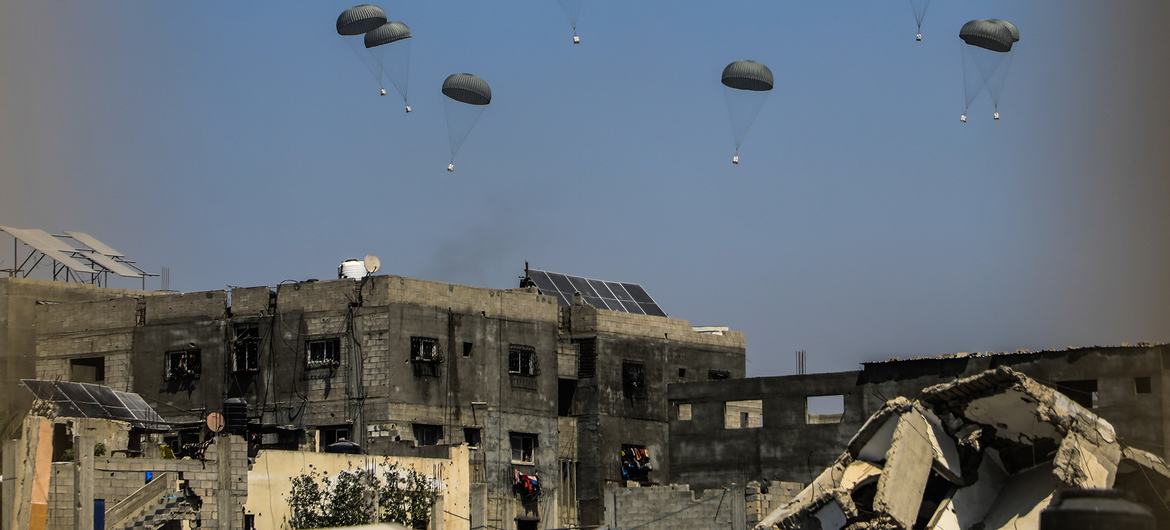
(UN News)* — At least 100 children in Gaza have died from malnutrition and hunger, prompting humanitarians to underscore the need to speed up medical evacuations from the enclave while also allowing more food to enter.
These young deaths are “the latest in the war on children and childhood in Gaza,” Philippe Lazzarini, head of UN Palestine refugee agency UNRWA, said in a tweet on Wednesday [].
The toll also includes some 40,000 boys and girls reported killed or injured due to bombardment and airstrikes, at least 17,000 unaccompanied and separated children, and one million deeply traumatised youngsters who are not getting an education.
People in Haiti are living through “hell on earth,” according to William O’Neill, the UN’s designated expert on human rights in Haiti.
Armed gangs – predominantly in the capital Port-au-Prince – are parasitically extracting financial resources from the population and perpetrating horrific acts of violence, he says – but they’re just one cog in a larger cycle of impunity, corruption and violence.
Following the release of the most recent report on human rights in Haiti, UN News’ Naima Sawaya spoke to Mr. O’Neill about whether a path forward to peace even exists. She began by asking if he had ever met a gang leader.
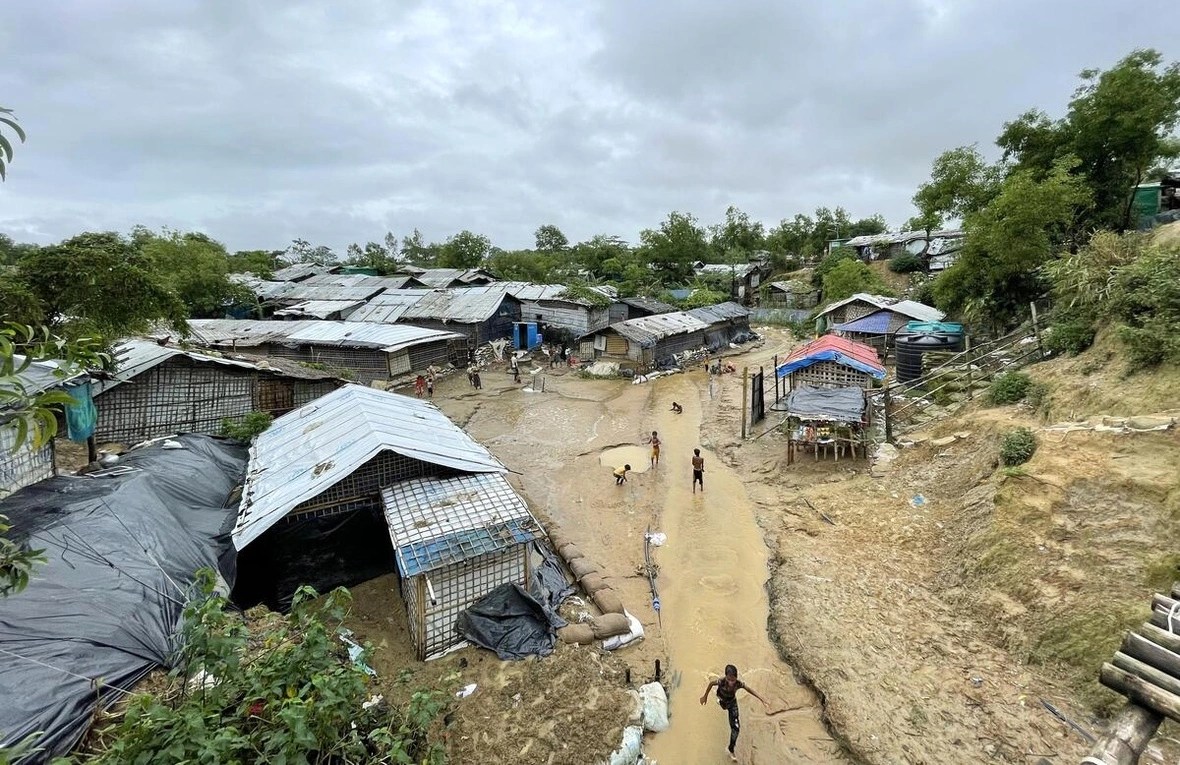
Cuts to a programme that maintained communal facilities for refugees in Cox’s Bazar have meant lost income for families and a more precarious environment in the camps.
(UN Refugee Agency (UNHCR)* — In the hilly terrain of Cox’s Bazar, life for over 1 million Rohingya refugees in the world’s largest and most densely populated refugee camp is always a struggle, but monsoon season brings fresh challenges.
WFP calls for humanitarian access, as Sudanese city grapples with starvation
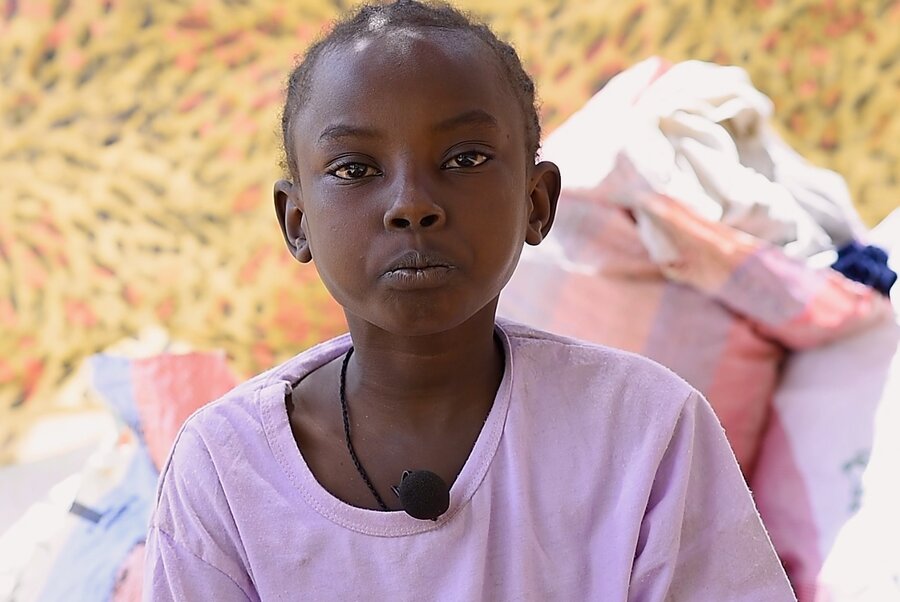
Hunger and bombs forced eight-year-old Sondos and her family to flee Sudan’s North Darfur capital of El Fasher. Photo: WFP/Mohamed Galal
Surrounded by burlap bags and a sea of sand, eight-year-old Sondos describes fleeing Sudan’s war-besieged city of El Fasher with her family, after weeks surviving on only millet.
“Hunger forced us to leave,” said the little girl, speaking from Tawila displacement camp, roughly 75 kilometres away. “Only hunger and bombs,” she added of the shells raining down on North Darfur’s capital.
UNITED NATIONS, Aug 12 2025 (IPS)* —The food crisis in Sudan is starving more day by day, yet it is affecting women and girls at double the rate compared to men in the same areas.
.
In Sudan, women-led households are three times more likely to deal with serious food insecurity compared to male-led households. Credit: UN Women Sudan
New findings from UN-Women reveal that female-headed households (FHHs) are three times more likely to be food insecure than ones led by men.
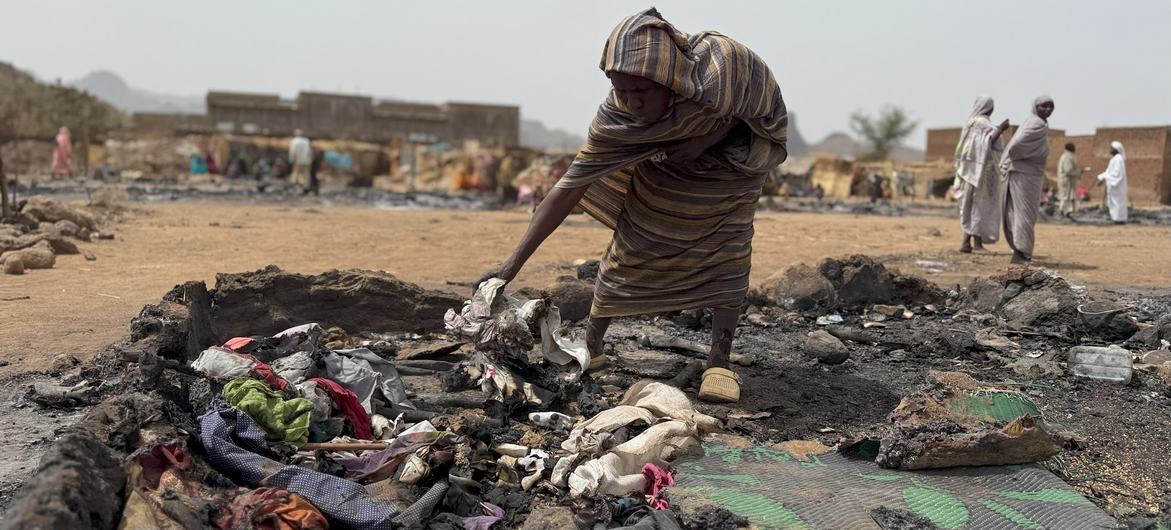
(UN News)* — The UN has expressed deep alarm over a large-scale assault by the Rapid Support Forces (RSF) militia on El Fasher, the government-held capital of Sudan’s North Darfur State, and the nearby Abu Shouk displacement camp, which has been under siege since April 2024.
Monday’s attack left 40 civilians dead and 19 injured within Abu Shouk, according to humanitarian partners.
The International Organization for Migration (IOM) reported that the renewed violence forced at least 500 residents of the camp to flee to other parts of North Darfur.
Acting Humanitarian Coordinator for Sudan, Sheldon Yett, condemned “all deliberate and indiscriminate attacks on civilians” in the strongest terms.
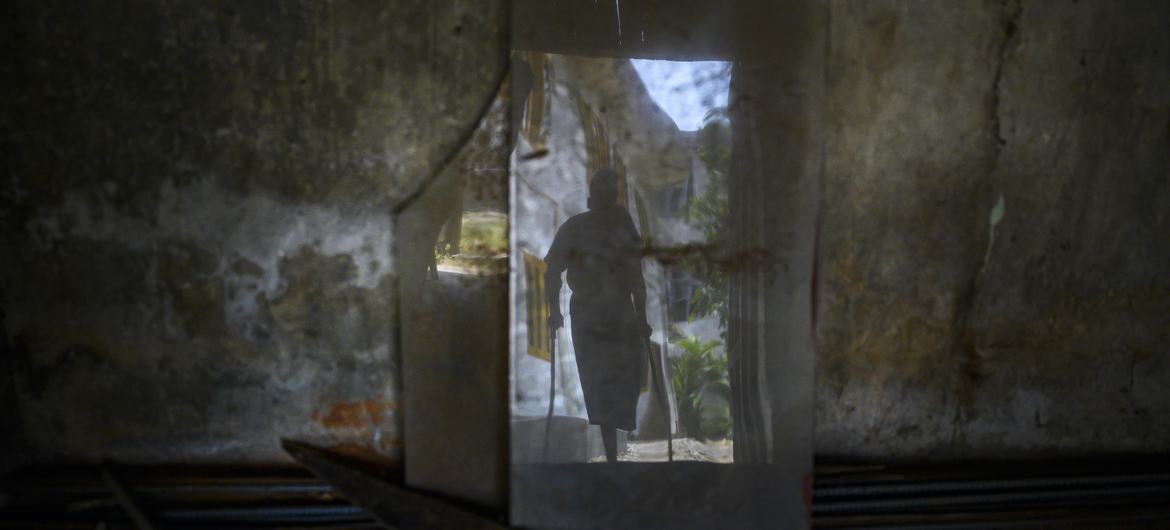
(UN News)* — UN-mandated independent investigators have uncovered “systematic torture” in Myanmar’s military-run detention facilities – including beatings, electric shocks, strangulations and gang rape – a pattern of atrocities which is intensifying across the country.
In its annual reportreleased on Tuesday [], the Independent Investigative Mechanism for Myanmar(IIMM) said it had made “important progress” documenting crimes and identifying those responsible, including commanders of security forces overseeing detention facilities.
Myanmar descended into civil war following the military coup of February 2021 and the detention of civilian leaders, including President Win Myint and State Counsellor Aung San Suu Kyi.




 HUMAN WRONGS WATCH