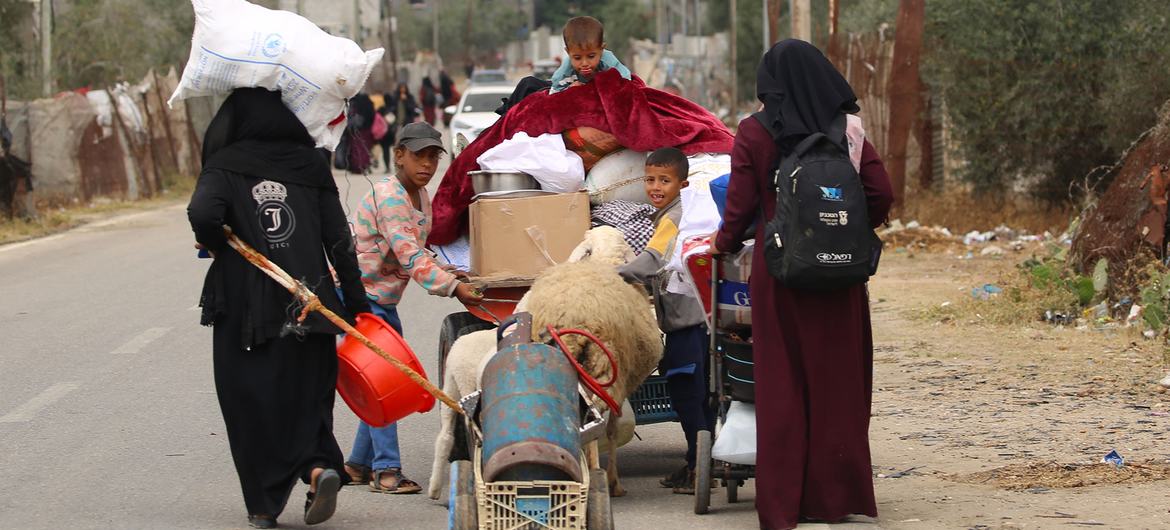
(UN News)* — Roughly 800,000 people have been forced to flee Rafah since Israel launched a military operation in the area on 6 May, the head of UN Palestine refugee agency UNRWA said on Saturday [] in a renewed appeal for greater protection of civilians in Gaza, safe humanitarian access and, ultimately, a ceasefire.
“Once again, nearly half of the population of Rafah or 800,000 people are on the road,” Commissioner-General Philippe Lazzarini wrote in post on the social media platform X. formerly Twitter.
He said that following evacuation orders demanding people to flee to so-called safe zones, people mainly went to the middle areas in Gaza and Khan Younis, including to destroyed buildings.
UNITED NATIONS, May 16 2024 (IPS)* – As the ancient Greek saying goes: those whom the Gods wish to destroy, they first drive them mad. Perhaps destruction is too far-fetched here, but madness is closer home—in Washington DC
.
With the 7-month-old Israeli-Gaza conflict showing no positive signs of a permanent solution, there is a lingering sense of growing political craziness in Capitol Hill, the seat of the US government, once described as Israeli-occupied territory.
Last week Lindsey Graham, a senior Republican senator from South Carolina, who once chaired the Senate Committee on the Judiciary, implicitly advised Israel it should drop nuclear bombs over Gaza—perhaps ignorant of the fact that a nuclear fallout will also destroy parts of Israel.
(UN News)* — Large parts of the city of Rafah are now a “ghost town”, with UN humanitarians reporting on Tuesday [] that some 450,000 Gazans have been forcibly displaced from the southernmost city by Israeli evacuation orders in the last week.
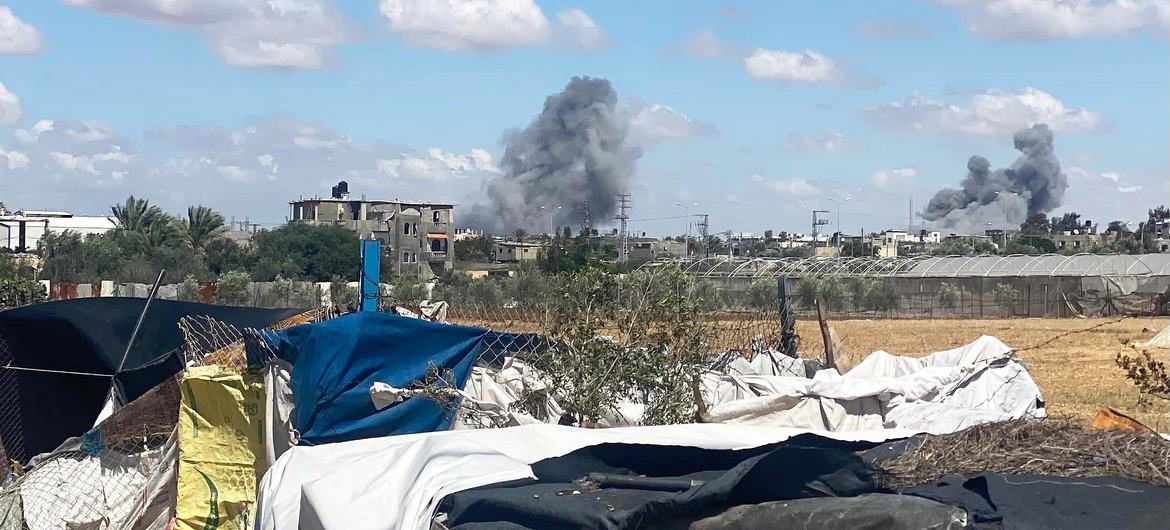
UNRWA | Smoke rises over Rafah as bombardments continue. (file)
“Empty streets in Rafah as families continue to flee in search of safety… UNRWA estimates that nearly 450,000 people have been forcibly displaced from Rafah since 6 May,” said the UN agency for Palestinian refugees in a post from western Rafah on X.
“Inland in Rafah is now a ghost town. It’s hard to believe there were over one million people sheltering here just a week ago,” reported UNRWA spokesperson Louise Wateridge.
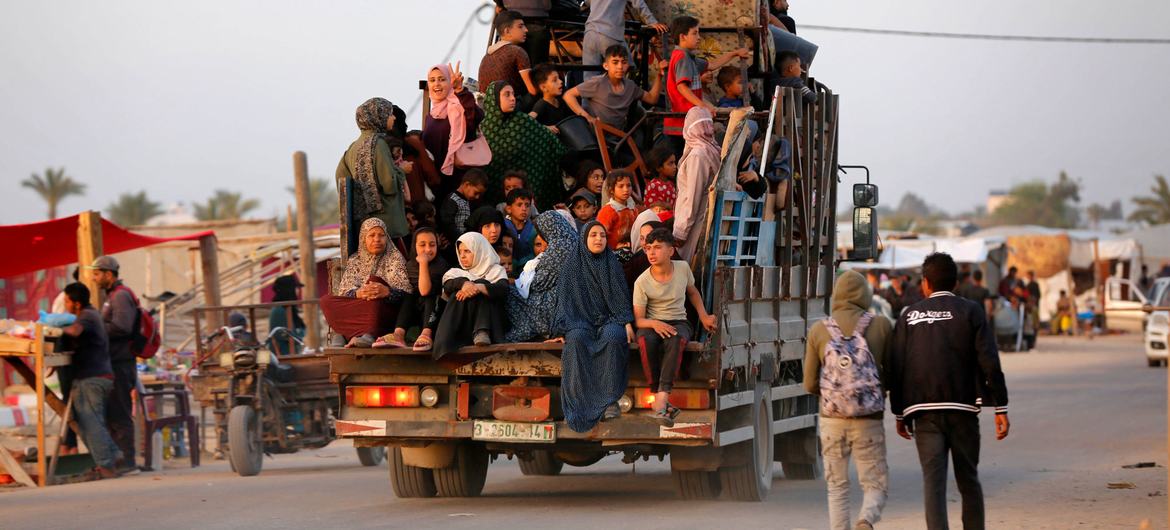
(UN News)* — Nearly 360,000 people have fled Rafah in the last week amid continuing Israeli bombardment that has crippled humanitarian aid deliveries and is believed to have killed another UN aid worker, the UN agency for Palestinian refugees, UNRWA, said on Monday [].
“Nearly 360,000 people have fled Rafah since the first evacuation order a week ago,” the UN agency said in a post on X, referencing leafleting by the Israeli military ordering those in eastern Rafah to leave their shelters.
In another alert, UNRWA warned of ongoing “restricted humanitarian access” to and across the Gaza Strip that was now “a matter of life or death” for Gazans already suffering “relentless bombardments and food insecurity”.
Statement from Jan Egeland, Secretary General of the Norwegian Refugee Council (NRC) following forced, unlawful evacuation orders in Rafah:
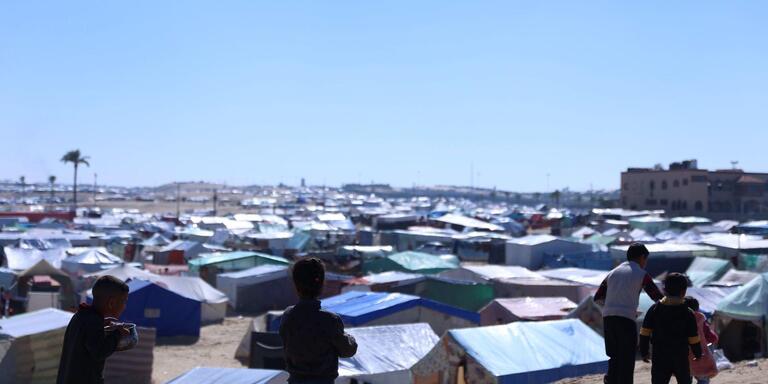
Tented shelters in Raffah, southern Gaza. Photo: Yousef Hammash/NRC
“Israel’s military offensive in Rafah could lead to the deadliest phase of this conflict, inflicting horrific suffering on approximately 1.4 million displaced civilians in the area.
“The relocation orders issued by Israel today to thousands of Gazans, directing them to move to Al-Mawasi, are beyond alarming. The area is already overstretched and devoid of vital services.
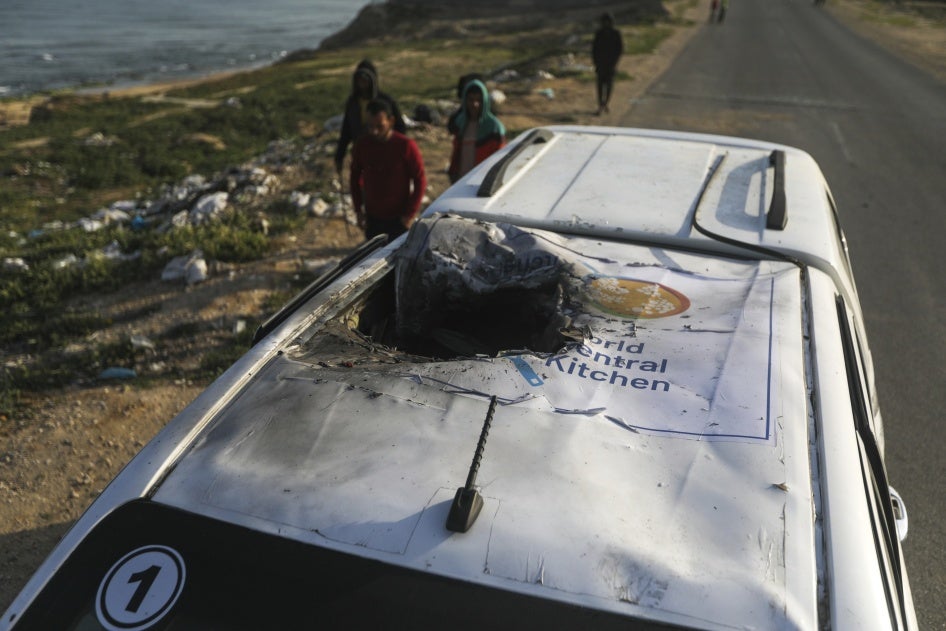
(Jerusalem) –Israeli forces have carried out at least eight strikes on aid workers’ convoys and premises in Gaza since October 2023, even though aid groups had provided their coordinates to the Israeli authorities to ensure their protection, Human Rights Watch said on 14 May 2024.
Seeds are emblematic of the connections between our lives, our food, our health and our freedom. They are the first link in the food chain. They embody our heritage and enfold the future evolution of life.
Global Context: Seeds and GMOs
The cultivation of seeds and their free exchange among farmers is the core foundation of our biodiversity and our food security. To have control over seeds is to have control over our lives, our food and our freedom.
Bio-imperialism severely threatens this freedom today through intellectual property rights.
Despite two decades of worldwide efforts, more than 4,000 precious wildlife species still fall prey to trafficking every year, a new report by the UN crime and drugs prevention office, UNODC, showed on Monday [].
Play video
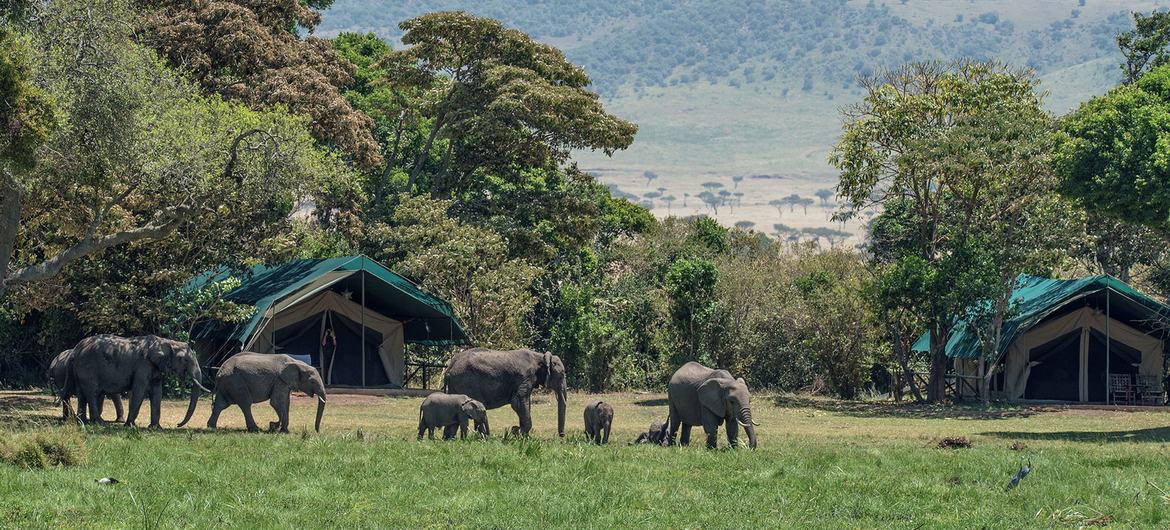
Unsplash/David Clode | A herd of elephants heads to a waterhole at a tourist safari camp in the Masai Mara, Kenya.
“Wildlife crime inflicts untold harm upon nature and it also jeopardizes livelihoods, public health, good governance and our planet’s ability to fight climate change,” said Ghada Waly, UNODC Executive Director.
The agency’s World Wildlife Crime Report takes stock of the efforts to counter poaching worldwide. Although there are positive signs that trafficking of some iconic species has decreased, including elephants and rhinoceroses – thanks to the dismantling of large trafficking networks and the suppression of demand in key markets – the overall picture is still gloomy for thousands of protected plants and animals.
This is a summary of what was said by UNICEF Spokesperson James Elder – to whom quoted text may be attributed – at 7 May 2024‘s press briefing at the Palais des Nations in Geneva
UNICEF/UNI521730/El BabaChildren stand in front of the tent where they are staying with their families in Rafah, the Gaza Strip.
(UNICEF)* -– “Every warning. Every story of children killed and wounded. Every image of heartbreak and bloodshed. Every mind-boggling piece of data on the number of children and mothers killed; of homes and hospitals destroyed. All Ignored.
“Our worst fear – Gazans’ nightmare – appears to be a reality. A reality that those holding power have the ability to prevent.
— The deep ocean — 200 to over 10.000 meters below the surface — is one of Earth’s last untouched frontiers, but it is under threat from a nascent industry: deep sea mining. Some countries and corporations are racing to extract metals and minerals like cobalt, nickel, manganese, copper from the seabed, pretending that those minerals are needed for a clean energy transition.
Greenpeace activists crash Deep Sea Mining Summit in London in April 2024 with a giant octopus to show wherever the deep sea mining industry goes, they’ll be there to stop them.
.
As if it was not enough to plan to destroy fragile ecosystems, some deep sea mining companies are now marketing deep sea minerals as necessary to strengthen military power, exacerbating geopolitical tensions between world superpowers with worrying implications for global peace and stability.




 HUMAN WRONGS WATCH