Archive for August, 2014

27/08/2014

UN Health Agency Calls for Regulation of ‘e-cigarettes,’ Curbs on Advertising, Sales to Minors

Human Wrongs Watch

Electronic cigarettes, known as e-cigarettes, represent an “evolving frontier filled with promise and threat for tobacco control,” a new United Nations World Health Organization (WHO) report said on 26 August 2014, urging regulations to impede their promotion to non-smokers and young people.*

E-cigarette. Photo: WHO

E-cigarette. Photo: WHO

“Evidence shows that while they are likely to be less toxic than conventional cigarettes, e-cigarettes use poses threats to adolescents and fetuses of pregnant mothers using these devices,” said Douglas Bettcher, WHO Director of Prevention of Non-communicable Diseases in an interview with UN Radio.

Electronic nicotine delivery systems (ENDS), of which electronic cigarettes are the most common prototype, are devices that do not burn or use tobacco leaves but instead vaporise a solution the user then inhales. The report says existing evidence shows that e-cigarette aerosol is not merely “water vapour” as is often claimed in the marketing of these products.
read more »

27/08/2014

Year's Deadliest Week: More than 300 Die in Boat Tragedies on Mediterranean

Human Wrongs Watch

26 August 2014 – The past few days have been the deadliest this year for people making irregular crossings on the Mediterranean from North Africa to Europe, with the United Nations Refugee Agency (UNHCR) reporting that at least 300 people have died in successive boat tragedies.

Photo: UNHCR/M. Sibiloni

Photo: UNHCR/M. Sibiloni

“In all, we now believe 1,889 people have perished this year while making such journeys, 1,600 of these since the start of June,” said Melissa Fleming, UNHCR spokesperson, telling reporters in Geneva on 26 August 2014 that over the past few days, at least three vessels having overturned or sunk.*

The first and largest of these incidents occurred on Friday when a boat reportedly carrying at least 270 people overturned near Garibouli to the east of Tripoli. Nineteen people, one of them a woman, survived.

“The Libyan coastguard has since recovered the bodies of 100 others, including five children under the age of five and seven women, but the remaining passengers are feared drowned,” said Fleming.

read more »

26/08/2014

Why Is the Total Elimination of Nuclear Weapons So Urgent?

Human Wrongs Watch

By John Scales Avery*, 25 August 2014, TRANSCEND Media Service —  In the follow-up to the 2013 high-level meeting on nuclear disarmament, the United Nations General Assembly passed a resolution in which it declared 26 September the International Day for Total Elimination of Nuclear Weapons. The first ever event will take place a month from now on 26 September, 2014.

Source: ICAN

Source: ICAN

What can you, as an individual, do? You can plan an action to commemorate the day. You can write to your Prime Minister/President and/or Foreign Minister, to ask what your government plans to do to commemorate the day. You can ask your local parliamentarian, mayor and city council the same question. You can tell http://www.unfoldzero.org about your activities.

The Inter-parliamentary Union, with 167 members, passed a resolution in March, 2014, calling on its members to support the total elimination of nuclear weapons.

Why is the total elimination of nuclear weapons so urgent? Although somewhat reduced in numbers from the insane heights of the Cold War, the power of today’s nuclear weapons is more than sufficient to destroy human civilization and much of the biosphere.

Many of the weapons are on hair-trigger alert, meaning that those in charge of them have only minutes to decide whether a radar signal is a true or false report of an attack. Most of us alive today owe our existence to Lt. Col. Stanislav Petrov, who correctly reported such a warning as a computer error.

read more »

26/08/2014

South Sudan – Child Soldiers… Again

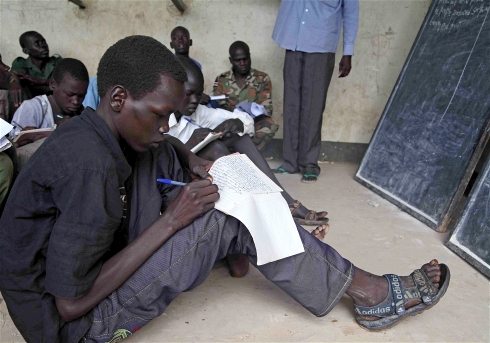
NAIROBI, 25 August 2014 (IRIN)* – The government of South Sudan signed an Action Plan with the UN in 2012 to end the use of child soldiers but there is evidence the ongoing conflict is eroding any gains achieved.
Photo: Hannah McNeish/IRIN Education or arms?

**Photo: Hannah McNeish/IRIN
Education or arms?

“The current conflict is threatening to erode all the gains so far made in ending the use of child soldiers in South Sudan. The use of child soldiers in South Sudan is something we will raise in our next meeting at the highest levels of the UN,” Leila Zerrougui, The UN special representative of the Secretary-General for children and armed conflict, told IRIN.

read more »

26/08/2014

USA-Israel vs. Arab-Muslim Worlds: What Happens?

Human Wrongs Watch

By Johan Galtung*, 25 August 2014, TRANSCEND Media Service

Nothing good. But let us have a look at it in the standard peace studies way: Diagnosis-analyzing, Prognosis- forecasting, and Therapy–remedies, even solutions.

**Image: Jewish Wedding in Morocco by Eugène Delacroix, Louvre, Paris | Public Domain | Wikimedia Commons

**Image: Jewish Wedding in Morocco by Eugène Delacroix, Louvre, Paris | Public Domain | Wikimedia Commons

“Israel-Palestine” is the discourse Tel Aviv-Washington prefers. They have all the strong cards: overwhelming military power, political veto in the United Nations Security Council, the economic upper hand in interlocking economies–not just oil cash from Saudi Arabia-Qatar–and the idea of working for a solution with Washington as “mediator”–only USA can bring the two together, gently or roughly–toward a sustainable peace.

It is needed a great distance from reality to believe in that spin.

read more »

26/08/2014

A Lifetime of Waiting

Sarah was born and raised in Hagadera refugee camp. Now 21, she’s become a wife and mother without ever setting foot outside the camp. Hagadera refugee camp in Dadaab, Kenya, is just 100 kilometers from the Somali border. For Sarah, it might as well be a million.*

Photo from UNHCR

Photo from UNHCR

Like so many others living here, she was born a refugee and raised in the camp after her mother fled war-torn Somalia a quarter of a century ago. In her tent, which she shares with her husband, Mohammed, she is still living out of the suitcases that her mother first arrived with.

Sarah has become a wife and now a mother without ever stepping foot outside the camp.

Her baby daughter, Somaya, is the second generation of her family to have been born in exile. Although Sarah has never visited her home country, she hopes to go there one day. “I feel like I am Somali,” she says, rocking her child tenderly. “My parents are Somali. I believe that someday Somalia will be peaceful and I will go there.”

Today, over 1 million Somalis remain displaced outside their country. With the crisis well into its third decade, UNHCR launched a Global Initiative on Somali Refugees last year in a bid to find solutions.

read more »

26/08/2014

A Desperate Struggle Against Starvation in South Sudan

Human Wrongs Watch

By Mike Pflanz*, (UNICEF) – As a food crisis threatens millions in conflict-stricken South Sudan, families are eating whatever they can to survive. Without more urgent international help, many will likely die of starvation.*

KIECH KUON, South Sudan, 25 August 2014 – In the field next to Nyakaka Wal’s home in rural South Sudan, maize plants stand tall and dense, an acre or more of desperately needed food slowly growing in the hot sun.

© UNICEF Video | A child is checked for signs of malnutrition in Kiech Kuon, South Sudan.

But it is ripening too slowly for Nyakaka and her children. Harvest is still six weeks away, at least, and she and her family are struggling on the fringes of survival, eating only wild plants plucked from the ground, or dry-roasted cow’s blood.

An estimated 3.9 million people are facing emergency levels of food insecurity in South Sudan, where conflict that broke out at the end of 2013 forced people to flee their homes and fields. As a result, planting was delayed, and food stockpiles kept for lean times were looted.

read more »

25/08/2014

Bangladesh: the Crippling Cost of Climate Change Adaptation

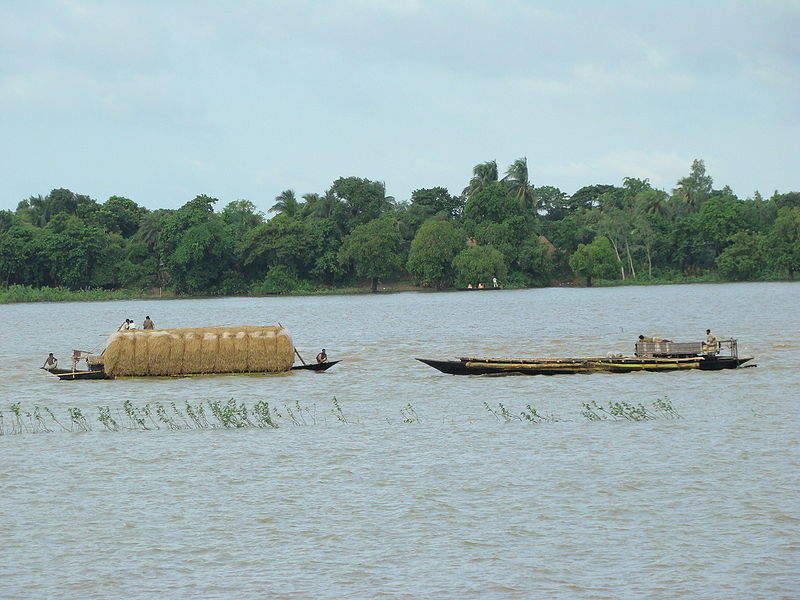
With 140 million inhabitants, Bangladesh is one of the world’s most populated countries. It is also one of the most vulnerable to the impacts of climate change. Cyclones, floods and droughts have long been part of the country’s history but they have intensified in recent years. As a result of the long exposure to these hazards, Bangladesh is a world leader in adaptation strategies but this has come with a heavy price tag, according to the UN Environment Programme (UNEP)*
 
Chalan Beel Natore Bangladesh | Author:	Shahnoor Habib Munmun | Wikimedia Commons

Chalan Beel Natore Bangladesh | Author: Shahnoor Habib Munmun | Wikimedia Commons

To find out exactly how much tax payers’ money has been absorbed by efforts to tackle the effects of climate change, the Ministry of Finance has been working with the UNDP-UNEP Poverty-Environment Initiative to launch its first comprehensive climate change accounting system. The results of the financial review were telling.

read more »

23/08/2014

OP-ED: International Relations, the U.N. and Inter Press Service

Human Wrongs Watch

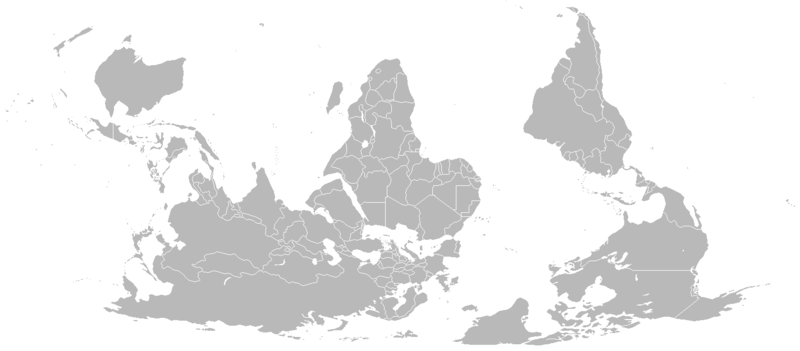
 **180 degree rotated map of the world| Released into the public domain by its author, Vardion.  | Wikimedia Commons

**180 degree rotated map of the world| Released into the public domain by its author, Vardion. | Wikimedia Commons

By Roberto Savio*

Roberto Savio

Roberto Savio

Rome, 24 August 2014 – In 1980, I had a debate at the United Nations with the late Stan Swinton, then the very powerful and brilliant director of Associated Press (AP). At one point, I furnished the following figures (which had been slow to change), as an example of Western bias in the media:

In 1964, four transnational news agencies – AP, United Press International (UPI), Agence France Presse (AFP) and Reuters – handled 92 percent of world information flow. The other agencies from industrialised countries, including the Soviet news agency TASS, handled a further 7 percent. That left the rest of the world with a mere 1 percent.

Why, I asked, was the entire world obliged to receive information from the likes of AP in which the United States was always the main actor? Swinton’s reply was brief and to the point: “Roberto, the U.S. media account for 99 percent of our revenues. Do you think they are more interested in our secretary of state, or in an African minister?”

read more »

23/08/2014

The Measure of “Man’s Inhumanity to Man” — Profits and Poverty: The Economics of Forced Labour

Human Wrongs Watch

I had not then learned the measure of “man’s inhumanity to man,” nor to what limitless extent of wickedness he will go for the love of gain.” Solomon Northup, Twelve Years a Slave (1853).

Those words were written by Solomon Northup in “Twe lve Years a Slave” more than 150 years ago, but they ring as true today as they did then.*

Shackles used to bind slaves. UN Photo/Mark Garten

Shackles used to bind slaves. UN Photo/Mark Garten

“More than a century after being banned in the developed world, and decades after being outlawed in the newly emerging developing world, modern forms of slavery—forced labour, human trafficking, forced sexual exploitation—still exist, and unfortunately risk growing in extent and profitability in the world today.”

These statements are part of chapter “Conclusions” of the International Labour Organization (ILOReport Profits and Poverty: The Economics of Forced Labour. The Chapter is here reproduced.

read more »