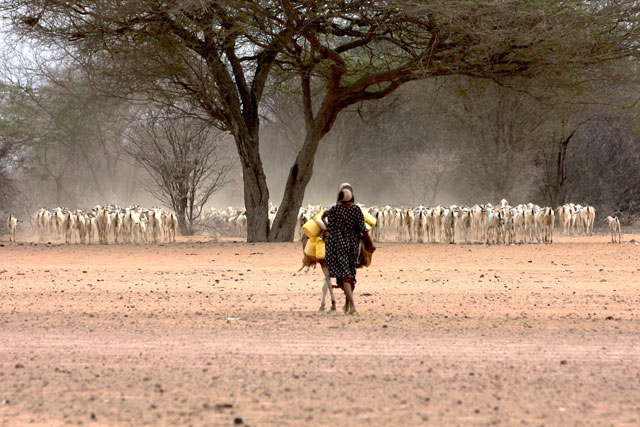
Thanks to a decent harvest and a strong response from the international humanitarian community, the United Nations declared an end to famine in southern Somalia in early 2012. More than two million people are currently food insecure, down by about 17 percent from early 2012 estimates, UN Food and Agriculture Organization (FAO) reports*
franknyakairu/FAO
But conditions are still touch-and-go in this arid,conflict-torn country– one of the poorest in the world. If people cannot produce and sell their own food and have the wherewithal to withstand shocks, gains made in improving their food and nutrition security could slip away with the next disaster.
A United Nations official for Nigeria on 20 August 2014 said that restoring the dignity and integrity of returning schoolgirls kidnapped by Boko Haram militants in Chibok is instrumental in reintegrating the girls back into a “safe space” in society.
Photo: UNESCO
“The UN family has not forgotten the girls,” said Rati Ndhlovu, the representative of the UN Population Fund (UNFPA) in Nigeria at a Headquarters press conference.
Some 200 girls were abducted by Boko Haram militants as they attended school on 14 April. Despite efforts by the Nigerian Government and international outcry, most of the girls remain missing, while some who have managed to flee their perpetrators have been raped by lone men they meet on their way home.
Calling it a “double tragedy,” Ndhlovu stressed that the issue of sexual violence is very serious because the girls are threatened both by insurgents and by other men who will take advantage of a vulnerable situation.
We have come of age, at 50; and I am the only surviving founder from 1964 in London, capital of a foggy island in the North Sea. Now we meet in the sunny capital of another empire; bridging three continents. One cloned itself all over; the other was more an Islamic umma, a community of togetherness-and-sharing, with millet islands of tolerance. And now: the superb IPRA program.
Johan Galtung
Uniting for peace. But we differ, disagree?
Incredible how far we can come if we identify and focus on the good and the positive in Kiev, Donetsk and Moscow, or husband and wife in broken marriages rather than what is wrong, and build new relations on that.
Peace is a relation, not attributes of the parties. So also for conferences: focus on the best in paper, praise it; not on the dubious and missing.
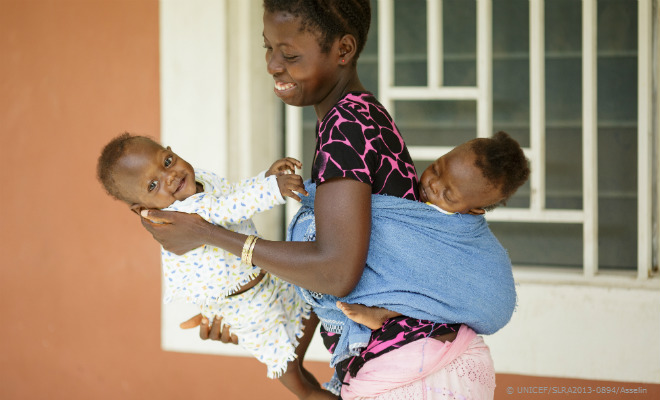
Africa has experienced a marked increase in its population in last few decades. Its current population is five times its size in 1950. And the continent’s rapid population expansion is set to continue, with its inhabitants doubling from 1.2 billion to 2.4 billion between 2015 and 2050, and eventually reaching 4.2 billion by 2100, says UNICEF report Generation 2013/Africa.
Photo from UNICEF
According the report, which has been launched on 12 August 2014, the future of humanity is increasingly African. More than half the projected 2.2 billion rise in the world population in 2015-2050 is expected to take place in Africa, even though the continent’s population growth rate will slow.
On current trends, within 35 years, 1 in every 4 people will be African, rising to 4 in 10 people by the end of the century.
Back in 1950, only 9 among 100 of the world’s number of inhabitants were African. The following are the key finding of UNICEF’s report.
Johannesburg – An unprecedented projected increase in Africa’s child population size provides policymakers with a once-in-a-generation opportunity to craft a child-focused investment strategy that enables the continent, and the world, to reap the benefits of Africa’s demographic transition, UNICEF said in a report issued on 12 August 2014.
Photo from UNICEF
According to the Generation 2030/Africa Report, high fertility rates and rising numbers of women of reproductive age mean that over the next 35 years, almost two billion babies will be born in Africa; the continent’s population will double in size; and its under-18 population will increase by two-thirds to reach almost a billion children.
Among the report’s most important findings is a massive shift in the world’s child population towards Africa. Projections indicate that by 2050, around 40 per cent of all births, and about 40 per cent of all children, will be in Africa, up from about 10 per cent in 1950.
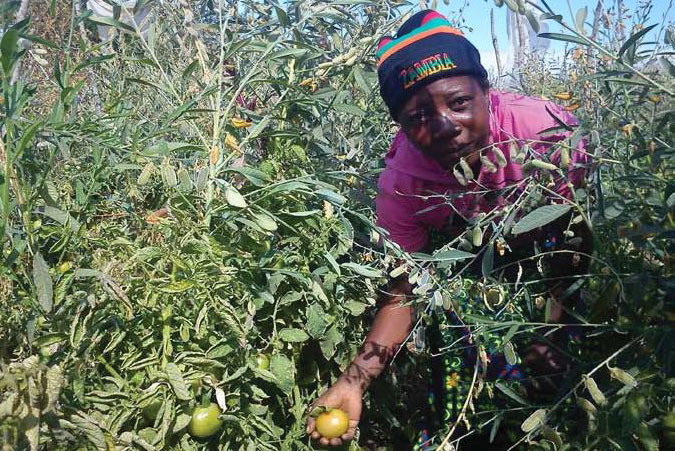
Investing in ways to adapt to climate change will promote the livelihood of 65 per cent of Africans, the UN environmental agency on 13 August 2014 reported*, warning also that failing to address the phenomenon could reverse decades of development progress on the continent.
New UN report says investment in climate change adaptation can help promote the ivelihoods of 65 per cent of Africans. Photo: UNEP
Africa’s population is set to double to 2 billion by 2050, the majority of whom will continue to depend on agriculture to make a living, according to the UN Environment Programme (UNEP). “With 94 per cent of agriculture dependent on rainfall, the future impacts of climate change – including increased droughts, flooding, and seal-level rise – may reduce crop yields in some parts of Africa by 15 – 20 per cent,” UN Under-Secretary-General and UNEP Executive Director Achim Steiner said. “Such a scenario, if unaddressed, could have grave implications for Africa’s most vulnerable states,” he added.
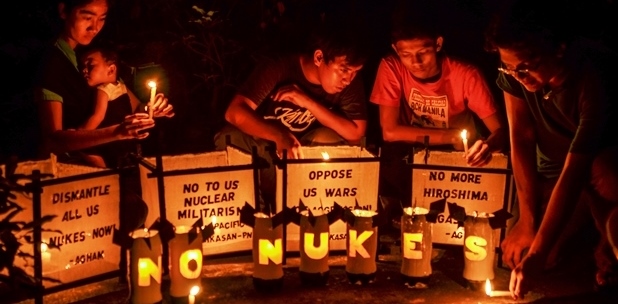
By Jasmine Pilbrow*, 14 August 2014 — Last week marked the 69th anniversary since the devastating nuclear bombings of Hiroshima and Nagasaki. On the 6th and 9th of August this year, people around the world took the time to remember the tragic loss of lives, and the disastrous effects the atomic bombs had on Japan and so many of its people.
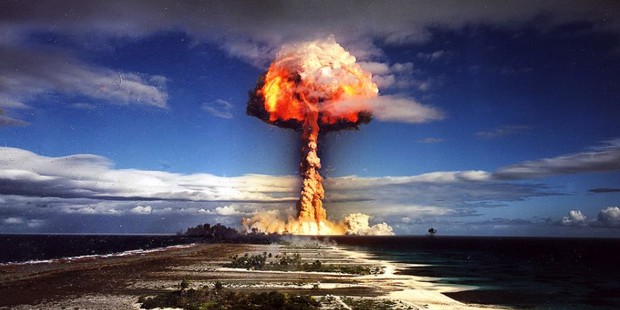
Photo from: International Campaign Against Nuclear Weapons (ICAN).
On the 6th of August 1945, a 12 year old boy was at school in Hiroshima when the atomic bomb was dropped.
69 years later he says that “even now, I carry the scars of war and that atomic bombing on my body and in my heart. Nearly all my classmates were killed instantly. My heart is tortured by guilt when I think how badly they wanted to live and that I was the only one who did.”
Mayor Kazumi Matsui of Hiroshima and Mayor Tomihisa Taue of Nagasaki both took the time last week to write Peace Declarations to mark the significant dates, and to announce their priority to join with people around the world, to ban nuclear weapons.
Nairobi, 12 August 2014 -World Elephant Day, now in its third year, should be an opportunity to celebrate the majesty of the planet’s largest land animal. Instead, it is a reminder that if poaching continues at current rates, we face a future in which one of the environment’s keystone species may be driven to extinction by rising demand for illegal ivory in the rapidly growing economies of Asia.*
African Elephants(Loxodanta Africana)in the Luangwa Valley, Zambia. Image: UNEP/GRID Arendal
UNEP and partner research reveals that large-scale seizures of ivory (consignments of over 800 kg) destined for Asia have more than doubled since 2009 and reached an all-time high in 2011.
To meet this insatiable demand for ivory, approximately 20,000 to 25,000 elephants are killed per year, out of a population of between 420,000 and 650,000.
Poached African ivory may represent an end-user street value in Asia of US$165 to US$188 million of raw ivory.
The Asian elephant is now endangered, with less than 40,000 remaining worldwide, and it is estimated that one in every three elephants in Asia lives in captivity.
Like so many, like millions, this author’s heart is bleeding for the killed and bereaved in Gaza–so disturbingly similar to the Warsaw ghetto in 1943. With Arab and Western governments doing nothing; like the Red Army. But the latter was heading for Berlin. And the West uses Ukraine as a distraction, trying to hit Moscow.
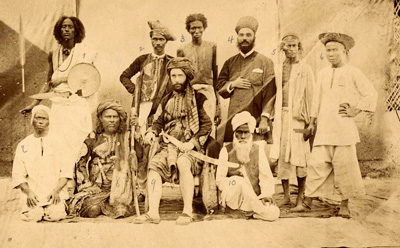
Various ethnic and religious types present in the Middle East, 19th century | A post card from the 19th century showing the rich mix of ethnic and religious types in the Indian subcontinent 1. unknown; 2. Maratha 3. unknown; 4. Zoroastrian; 5. Jew; 6. Chinese; 7. unknown; 8. unknown; 9. Arab (sitting in the middle on a chair); 10. Sikh | Public Domain
Like Rabbi Michael Lerner, my non-Jewish heart is also bleeding for Judaism and the Israel that could have been. The present regime is a traitor to both, driving into the abyss. Yet they have parliamentary and democratic, voter, support? Except that parliaments are not infallible, democracies can be wrong; even more so if the people think they have a divine mandate.
During the days before that fateful August 6, 1945, General Douglas MacArthur learned that Japan had asked Russia to negotiate a surrender. “We expected acceptance of the Japanese surrender daily,” one of his staff members recalled. When he was notified that an atomic bomb had been dropped on Hiroshima, the general was “livid.” MacArthur declared that the atomic attack on Hiroshima was “completely unnecessary from a military point of view.”
Image: International Campaign Against Nuclear Weapons (ICAN)
Why then did the president make the decision to drop the atomic bomb on Hiroshima?
Harry S. Truman was an accidental president. He had been sworn into office only months earlier, when Franklin D. Roosevelt suddenly died on April 12 [1945].
Truman admitted to his wife that he had little knowledge of foreign policy. Feeling inadequate to fill the shoes of the great F.D.R., he had to face indignities and sarcasm.
In the streets, people asked, “Harry who?” and mocked him as “the little man in the White House.”
But Truman hid his insecurity behind a façade of toughness. Publicly, he presented himself as a man of the frontier. He blustered: “The buck stops here.”


 HUMAN WRONGS WATCH