Human Wrongs Watch
New York — China has launched a UN-supported social protection scheme for 250 of its most vulnerable people, according to the United Nations.

Source: UNDP
'Unseen' News and Views
New York — China has launched a UN-supported social protection scheme for 250 of its most vulnerable people, according to the United Nations.
Source: UNDP
Rome, 24 January 2015 –– Every day we receive striking data on major issues which should create tumult and action, but life goes on as if those data had nothing to do with people’s lives.
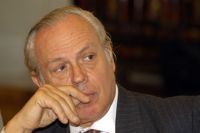
Roberto Savio
A good example concerns climate change. We know well that we are running out of time. It is nothing less than our planet that is at stake … but a few large energy companies are able to get away with their practices surrounded by the deafening silence of humankind.
Another example comes from the world of finance. Since the beginning of the financial crisis in 2009, banks have paid the staggering amount of 178 billion dollars in fines – U.S. banks have paid 115 billion, while European banks 63 billion.
But, as analyst Sital Patel of Market Watch writes, these fines are now seen as a cost of doing business. In fact, no banker has yet been incriminated in a personal capacity.
Now we have other astonishing data from Oxfam – if nothing is done, in two years’ time the richest one percent of the world´s population will have a greater share of its wealth than the remaining 99 percent.
24 January 2015
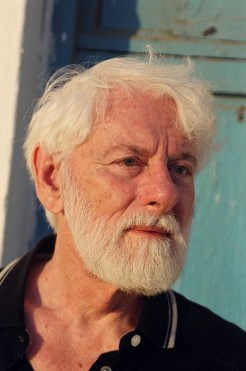
Uri Avnery
THERE USED to be a joke about a sadist and a masochist.”
Hit me! Beat me! Kick me!” the masochist pleads with the sadist.
The sadist smiles a cruel smile and slowly answers: “No!”
THAT, MORE or less, reflects the situation on our northern border at this moment.
Two Israeli drones have bombed (or missiled) a small Hezbollah convoy, a few miles beyond the border with Syria on the Golan heights. 12 people were killed. One was an Iranian general. One was a very young Hezbollah officer, the son of Imad Mughniyeh, a very high-ranking Hezbollah officer who was also killed by Israel, some seven years ago, in a Damascus car explosion.
The killing of the Iranian general was perhaps unintended. Seems that Israeli intelligence did not know that he, and five other Iranian Revolutionary Guards officers, were in the convoy. An Israeli army officer admitted this in a roundabout way. A second officer denied the statement of the first.
Nairobi, 23 January 2015 (IRIN)* – The shocking satellite imagery of the destruction in the northeastern Nigerian town of Baga and nearby villages earlier this month provided graphic evidence of the extent of the crimes by the Islamist extremist group Boko Haram when they stormed in.

**Photo: Human Rights Watch | Satellite imagery of the destruction of Doro Gowon, 3km from Baga | Source: IRIN
The images released by Human Rights Watch (HRW) and Amnesty International on 15 January, which show clear signs of arson, ended a growing debate on media coverage of remote conflict zones.
It turned the spotlight back to the fact that something terrible had happened in Baga, and hundreds, if not as many as 2,000 people, may have died.
“It’s the power of the image,” Nigerian human rights lawyer Clement Nwankwo told IRIN.
“The reason people questioned whether 2,000 people were killed was because that level of brutality was unimaginable. But the images validate that claim, the number of fatalities could be in that vicinity.”
22 January 2015 (RT)* — Today we live our lives through the internet but we have to take a responsibility to protect our privacy as our governments can’t guarantee that intelligence agencies don’t spy on us, former MI5 agent Annie Machon told RT.
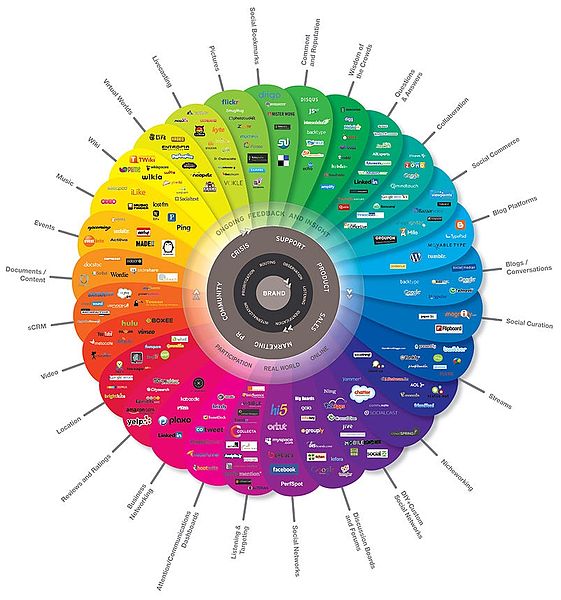
**Diagram depicting the many different types of social media | Description: The Conversation Prism 2.0 | Author: Brian Solis and JESS3 | Wikimdia Commons
RT: What do you think about the situation with whistleblowers?
Annie Machon: I think we’ve had over the last few years a number of amazingly brave whistleblowers come forward. And I think it’s been good because of the degree of criminality they have been exposing for the public good, and also to raise the profile of the concept of whistle blowing, how important it is within functioning democracies to have the regulations of last resort exposing wrongdoing…

The Green-crowned Brilliant in Costa Rica Photo: UNEP GRID Arendal/Peter Prokosch | Source UN News Centre
By Zhang Kai*
22 January, 2015, Greenpeace — “One thing that fascinated and shocked me the most was the fact that even on smoggy days, people still lived their lives as usual,” said Chinese film director Jia Zhangke last week as the air outside in Beijing was a thick, soupy grey.
“When the Air Quality Index hit 200 or 300, and the air turned opaque or grey, I still saw people dancing their square dances, young people still hanging out. Everyone was doing what they would normally be doing.”
The renowned film director is known for his gritty portrayals of contemporary Chinese society, and his latest short film commissioned by Greenpeace East Asia, is no exception.
‘U.S., NATO and EU’s agenda at the moment is – “we kill people who kill people because it is wrong to kill people” and thus we bomb IS, fight terrorist groups we have nurtured to quite an extent ourselves and move from one crisis (mis)management to the next.’
![**US Army soldiers in a firefight near Al Doura, Baghdad" by Sean A. Foley - [1]. Licensed under Public Domain via Wikimedia Commons](https://human-wrongs-watch.net/wp-content/uploads/2015/01/us_army_soldiers_in_a_firefight_near_al_doura_baghdad.jpg)
**US Army soldiers in a firefight near Al Doura, Baghdad” by Sean A. Foley – [1]. Licensed under Public Domain via Wikimedia Commons
By Jan Oberg*, 20 January 2015 – Transnational Foundation for Peace & Future Research
Eleven points as a reflection on the terror in Paris and – not the least – the reactions to it*:

**White House, the executive mansion of the President of the United States, located at 1600 Pennsylvania Avenue in Washington, D.C. | Author: Matt H. Wade | Wikimedia Commons
Though it is no longer the world’s foremost industrial producer, the United States still does lead in one important export: “democracy.” Washington has taken the lead in undermining, demonizing, and otherwise destabilizing Russia and China, Venezuela and Iran, Syria and North Korea – countries in need of regime change because, according to Washington, they are undemocratic.
Women and children make up the vast majority of the latest wave of refugees fleeing violence in northern Nigeria, the United Nations Children’s Fund on 20 January 2015 warned, spotlighting its ongoing efforts to provide basic assistance, including safe water, nutrition, health, education and protection services to affected children in the region.

Children at a primary school in the town of Toro, Bauchi State, Nigeria. Photo: UNICEF/NYHQ2014-0710/Eseibo
“Children are suffering the dire consequences of the conflict in Nigeria, losing their homes, missing out on education and risking their lives,” UNICEF’s Christophe Boulierac told reporters in Geneva.
Boko Haram’s recent attacks on Baga drove a fresh wave of refugees into neighbouring countries, worsening a humanitarian crisis in the region that has already seen 1 million people displaced from their homes and more than 135,000 seeking refuge in Cameroon, Chad and Niger.
 HUMAN WRONGS WATCH