In the early 19th century, industrial society began to be governed by new rules: Traditions were forgotten and replaced by purely economic laws. Labor was viewed as a commodity, like coal or grain, and wages were paid according to the laws of supply and demand, without regard for the needs of the workers. Wages fell to starvation levels, hours of work increased, and working conditions deteriorated.
A watercolor painting by Vincent van Gogh showing wives of Belgian miners carrying bags of coal.
John Fielden’s book, “The Curse of the Factory System” was written in 1836, and it describes the condition of young children working in the cotton mills.
Gerga, Egypt, 13 August 2015 (UNEP)*– Crops grown on the Egyptian desert using treated wastewater are safe for human consumption and their production is economically viable, concluded engineers working on an experimental farm in Gerga, in the Sohag Governorate of Egypt.
Their final report, ‘The Re-use of Treated Sewage Waste Water in Agriculture’ contains recommendations for a successful country-wide establishment of wastewater irrigated farms, in support of Egypt’s bit to tackle water scarcity and meet the growing demand for agricultural products.
Since its launch in 2013, the pilot project has identified crops and soils suitable for wastewater irrigation and analyzed the environmental, social and economic impacts of this method.
In the last phase of the project, the engineers conducted a market research on town, province and country level to evaluate the economic viability of wastewater irrigation.
14 August 2015 (Middle East Eye)* – The desert wind hits the men’s faces as they gather in the late afternoon sun at the Holot Detention Centre.
A meal being prepared just outside the Holot grounds last Ramadan (MEE/Benjamin Dooley)
Just 15km away stands the Egyptian border, where years ago many of the detainees arrived as the lucky survivors of an often deadly trek across the Sinai desert, victims of the mostly Bedouin traffickers who assured them of a better life awaiting them in Israel.
The yard just outside the prison is laden with rocks, marking off campsites where the detainees can enjoy a few hours of relative freedom in the desert landscape that surrounds the camp. Although they are allowed to leave the facility during the day they must return each evening.
14 August 2015 (RT)* – For all their political posing, Western powers continue to harbor questionable affiliations, counting among their partners war criminals and brutal dictators. At which point does one’s silence or chosen oversight constitute tacit cooperation?
A wise person once said: “Tell me who your friends are and I will tell you who you are.”
If we are indeed defined by the company we keep, western powers have much explaining to do – especially when most of their allies would figure on the Who’s Who of the International Criminal Court’s Most Wanted list if not for some convenient legal and political redacting.
SOME OF my best friends demand that I write an article condemning unconditionally the “administrative detention” of Jewish terrorists.
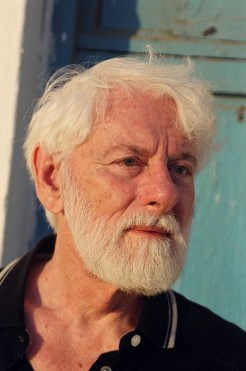
Uri Avnery
Three suspected terrorists have already been arrested under this procedure.
They are members of a group following the teachings of Rabbi Meir Kahane (the leader is actually his grandson).
Kahane was an American Rabbi who came to this country and founded a group branded by the Supreme Court as racist and anti-democratic.
It was outlawed. He was later assassinated by an Arab in the US. An underground group of his followers is now active in Israel.
This is one of the groups which belong to a clandestine movement, generally called “Price Tag” or “Hilltop Youth”, that has conducted various acts of terrorism, setting fire to Christian churches and Muslim mosques, attacking Arab farmers and destroying their olive trees.
None of the perpetrators has ever been apprehended, either by the army, which acts as a police force in the occupied territories, nor by the police in Israel proper. Many army officers are themselves residents of settlements in the occupied West Bank, which are illegal under international law.
The United Nations refugee agency on 14 August 2015 expressed concern about the escalating violence in and around Nigeria and its impact on the situation of Nigerian refugees in surrounding host countries, including a shrinking humanitarian space in which they can seek asylum.
Displaced Nigerians expelled from Cameroon wait in line for a meal. Photo: OCHA
“We salute the generosity and humanitarian spirit of Cameroon, Chad and Niger in opening their doors to tens of thousands of people fleeing conflict in their home areas in north-east Nigeria over the past two years,” stated the Office of the UN High Commissioner for Refugees (UNHCR) in a press release.
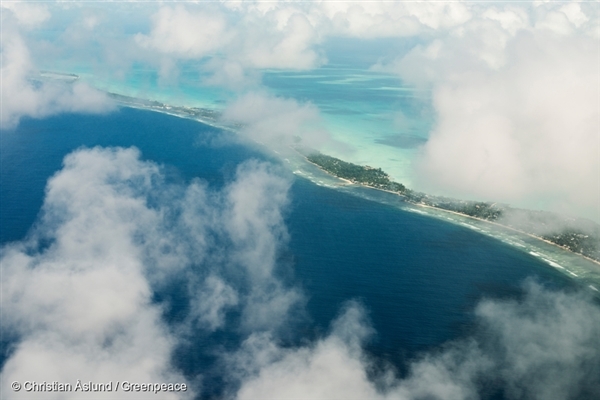
13 August 2015 – Out in the central Pacific Ocean, straddling the equator and the International Date Line, lies an island group in Micronesia called Kiribati (pronounced ‘Kiri-bas’). It’s not “famous” like Hawaii, Bali or Tahiti but its scenery is just as, or even more magnificent. Its flag – a bird flying over the sun as it sets on the ocean horizon – is testament to its peace, beauty and tranquility: stunning lagoons, white sandy beaches and a thriving traditional culture.
Credit: Christian Astund/Greenpeace
But unfortunately, due to climate change, this entire island nation with a population of over 100,000 could disappear.
After spending a few short days here I’ve been both inspired by the spirit of the people and concerned with the enormity of the problems they are facing.
Rome, 11 August 2015 – The Dr Fridtjof Nansen is plying the waves of the southern Indian Ocean, trawling for trash.*
Crew on the vessel descend on a raft to deploy floating sensors in the Indian Ocean. | Source: FAO
Every time the ship’s scientific crew threw down special nets, they hauled in pieces of plastics, underscoring the risk of dramatic upheavals in marine ecosystems even in one of the world’s least-known and least-visited environments.
An estimated 5 trillion pieces of plastic currently float in the world’s oceans, up from none in 1950 and posing a question about their potential impact on a food supply chain that stretches from plankton – which have been filmed eating plastic pellets – up through shellfish, salmon, tuna and eventually humans, not to mention whales.
Laboratory tests have shown that fish fed such plastics suffer poisoned livers and consequent metabolic problems.
Yet little is known about just how much rubbish is being eaten in wild marine ecosystems, nor whether toxic chemicals remain in plastics after long exposure to sea water and pounding waves.
MINAWAO REFUGEE CAMP, Cameroon, 14 August 2015 (UNHCR)*– The UN refugee agency is working with the authorities in countries neighboring Nigeria to maintain a shrinking humanitarian space as Nigerian insurgents have extended attacks in recent months to Chad, Niger and Cameroon.
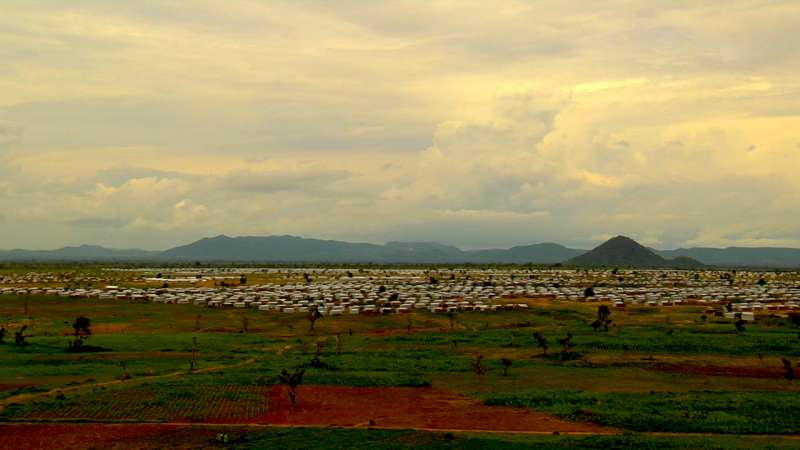
Much of the activity has been focused on the UNHCR-managed camp of Minawao, the largest formal refugee camp in the region for Nigerian asylum-seekers.
Minawao camp in northern Cameroon was built for 30,000 people but is now home to nearly 45,000 and growing by the day. UNHCR Representative in Cameroon Khassim Diagne said overcrowding there is “unsustainable”.
“The insurgents call themselves Boko Haram”, said Nigerian refugee Kulkwa Tatu, who was a teacher in Nigeria’s north-eastern Borno State, bordering Cameroon, but has now sought refuge in Minawao.
BUJUMBURA, 4 August 2015 (IRIN)* – The growing schism between the Catholic Church and Burundi’s political leadership is a particularly worrisome aspect of the fallout from President Pierre Nkurunziza’s bid for a third term, which has already seen dozens killed in protests and 175,000 people, mostly women and children, flee the country since April.
.
**Photo: Phil Moore/IRIN | Prayers for the dead: a priest gives a sermon for people killed during political protests in June.
More recent signs of violent instability a decade after the end of a 13-year civil war include the weekend assassination of Adolphe Nshimirimana, an army general and intelligence chief said to be the second most powerful man in the country, and the serious wounding in a shooting incident of Pierre Claver Mbonimpa, a leading human rights activist.
The Catholic Church has played a key role during years of talks between opposition groups and the government, dialogue designed to shore up peace since the end of the war, which claimed some 300,000 lives.





 HUMAN WRONGS WATCH