Human Wrongs Watch
By ICAN*
.

Source: ICAN
'Unseen' News and Views

Source: ICAN
Nuclear weapons have been around since 1945 and today, nine states possess over 15,000 warheads – many which are ready to be launched within minutes. The Cold War might be over, but all nine states are continuing to modernise and upgrade their arsenals and the threat of nuclear weapons is far from over.
video courtesy of Norwegian People’s Aid and Atomkommisjonen
1. The effects are inhumane and unacceptable
Nuclear weapons are the most destructive, inhumane and indiscriminate weapons ever created.
A single nuclear bomb detonated over a large city could kill hundreds of thousands of people in just a few seconds. The effects would spread across regions and would affect unborn generations, and the humanitarian suffering would be immeasurable.
The attacks on Hiroshima and Nagasaki have shown the extent of the humanitarian impact of nuclear weapons. More than 200,000 men, women and children have been the victims of those attacks.
By Gary G. Kohls, MD*
3 August 2015 – TRANSCEND Media Service – August 6, 2015, is the 70th anniversary of the atomic bombing of Hiroshima, a civilian city that had minimal military value, despite the claims of President Truman when he announced the event to the American people.
.
.
The whole truth of what the Nuremburg tribunal would later help define as an international war crime and a crime against humanity has been heavily censored and mythologized ever since war-weary Americans in 1945 accepted the propaganda that the bombings were necessary to shorten the war and prevent the loss of a million US soldiers during the allegedly planned November 1945 invasion.
By John Scales Avery*
3 August 2015 – One of the greatest threats to the survival of the human species and the biosphere is catastrophic climate change. Scientists warn that if the transition to renewable energy does not happen within very few decades, there is a danger that we will reach a tipping point beyond which feedback loops, such as the albedo effect and the methane hydrate feedback loop, will take over and produce an out-of-control and fatal increase in global temperature.

**Fossil Fuel’s last stand | Credit: Michael Loewa/Greenpeace
In 2012, the World Bank issued a report warning that without quick action to curb CO2 emissions, global warming is likely to reach 4 degrees C during the 21st century. This is dangerously close to the temperature which initiated the Permian-Triassic extinction event: 6 degrees C above normal.
– In recommendations to German Chancellor Angela Merkel at the end of July, the German Council of Economic Experts outlined how a weak member country could leave the Eurozone and called for strengthening the European monetary union.
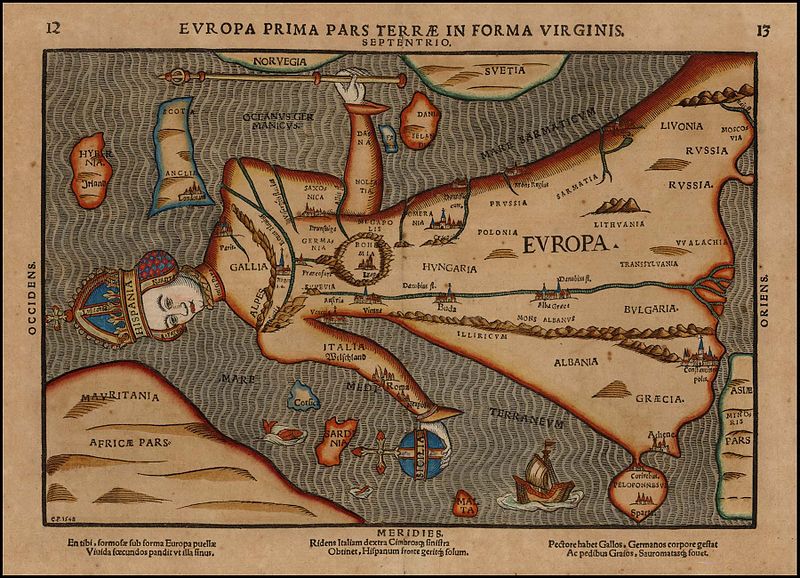
**Map of Europe shaped as a virgin | Author: Heinrich Bünting (1545–1606) Link back to Creator infobox template wikidata:Q99420| Date: 1582 | Wikimedia Commons
German Finance Minister Wolfgang Schäuble wants Greece out because he does not believe that it will ever be able to refund the loans it has received so far, and because he thinks it is question of principle to be strict.
In an interview with Der Spiegel a few days after the historical date of Jul. 13, at the end of negotiations on Greece, he said: “My grandmother used to say: benevolence comes before dissoluteness.”
UN Secretary-General Ban Ki-moon praised UN Member States for reaching agreement on the draft outcome document that will constitute the new sustainable development agenda, which will be formally adopted by world leaders in New York this September.

Fetching water at a borehole in the village of Bilinyang, near Juba, South Sudan. Photo: World Bank/Arne Hoel | Source: UN
“Transforming our World: The 2030 Agenda for Sustainable Development” encompasses a universal, transformative and integrated agenda that heralds an historic turning point for our world. This agreement results from a truly open, inclusive and transparent process,” the UN chief said in a statement issued on 2 August 2015.
By Kumi Naidoo*
1 August 2015 – Greece is facing a depression on a scale arguably comparable to the US Great Depression of the late 1920s. Huge unemployment rates and a dramatic drop in family incomes of over 40 percent have Greek citizens pondering what the impacts will be of the new bail-out agreement. Unending austerity and lack of hope are all it seems the future has to offer.

Credit: Konstantinos Sathias/Greenpeace
But there is a way to start changing things for the better. With energy poverty emerging as one of the most dramatic symptoms of the recession – six out of every 10 households are struggling to pay their energy bills – it is high time that Greece seized upon its greatest and still largely unexploited asset: the Sun.
Breastfeeding is one of the most cost-effective ways to boost children’s health. World Breastfeeding Week 2015 (1-7 July) aims to empower women to combine work with breastfeeding and raising their children.*
.
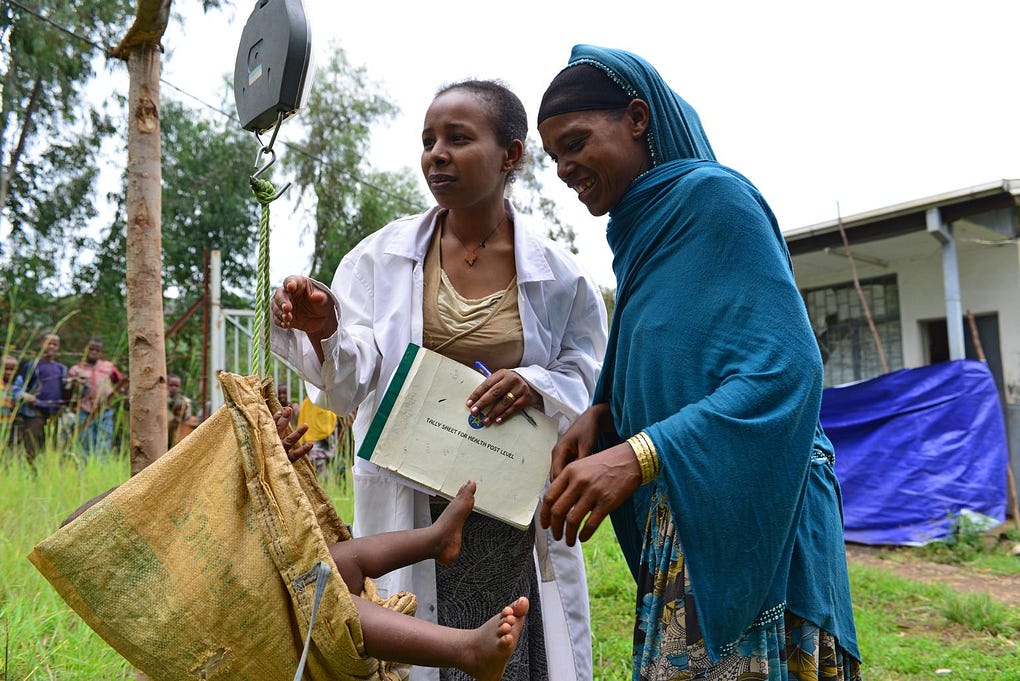
© UNICEF/NYHQ2014–3655/Nesbitt | (Left) Elsebeth Aklilu weighs a child at a local health post. A government-paid health worker, Ms. Aklilu serves her own community — a village called Maderia, in Oromia Region, Ethiopia — by educating women on ways to keep themselves and their children healthy.
31 July 2015 (UNODC)* – Each year millions of women, men and children are trafficked for profit. They are sexually exploited, made to undertake demanding and often dangerous work in homes, farms and factories across the globe, and find themselves victims of one of the many other forms of abuse such as forced marriage or organ removal.

UNODC
Yet despite the wide-spread recognition that this is one of today’s most exploitative crimes, action is lacking: more needs to be done to dismantle the organized criminal networks behind this, while at the same time it is critical that assistance to victims be stepped up.
Against this background, and with the second annual World Day against Trafficking in Persons being marked 30 July 2015, UNODC is calling for definitive and marked action to both end the impunity of traffickers, and to drastically boost the much-needed support being provided to victims.
 HUMAN WRONGS WATCH