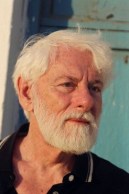
THE FLOOD of corruption affairs that is now engulfing the Netanyahu family and its assistants and servitors does not seem to diminish his popularity among those who call themselves “the People”.
Uri Avnery
On the contrary, according to the opinion polls, the voters of the other nationalist parties are rushing to the rescue of “Bibi”.
They believe that he is a great statesman, the savior of Israel, and are therefore ready to forgive and forget everything else. Huge bribes, generous gifts, everything.
Strange. Because my attitude is exactly the opposite. I am not ready to forgive “Bibi” anything for being a great statesman, because I think that he is a very minor statesman. Indeed, no statesman at all.
A wave of cold weather hitting Europe this week poses health risks, particularly to people in vulnerable situations, WHO/Europe experts on 28 February 2018 warned*.
WHO/Annalisa Buoro
Temperatures are expected to plunge below average in western European Russia, central Europe, the Balkans and the Baltic States.
“Cold, even in places where the temperatures are not at their lowest, can be harmful to people’s health in many ways. It can aggravate existing conditions and raise the risk of increased blood pressure, heart attacks and strokes. Taking preventive action can help reduce the health impacts and risks,” says Dr Zsuzsanna Jakab, WHO Regional Director for Europe.
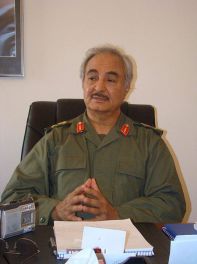
28 February 2018 (RT)* — In Libya, a dominant military figure stands out as a possible new leader of a unified country – that is, of course, if he wins at the polls – or even if he doesn’t. But can the UN or the West even organize an election?
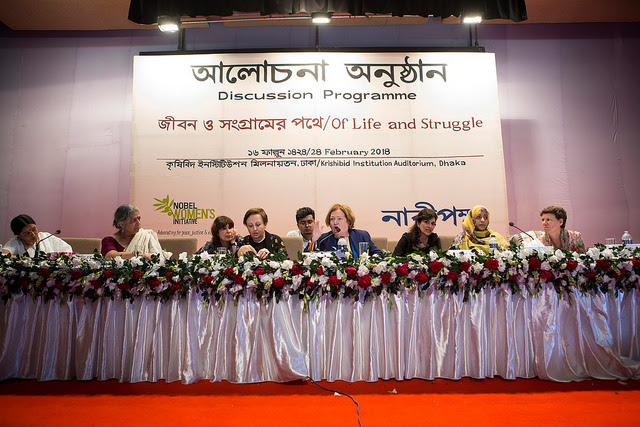
1 March 2018 — On the final two days of the Standing with Rohingya Women delegation, Shirin Ebadi, Tawakkol Karman, and Mairead Maguire brought the stories of the women they met to the Prime Minister of Bangladesh, diplomats, the media, and members of civil society in Dhaka. The women called on each group to take action, with their powerful message:
“This is genocide. We cannot remain silent. Silence is complicity.”
As well, the three laureates have called for an international arms embargo on Burma. They also said the Rohingya should only be returned to Burma if they go voluntarily and must be granted citizenship.
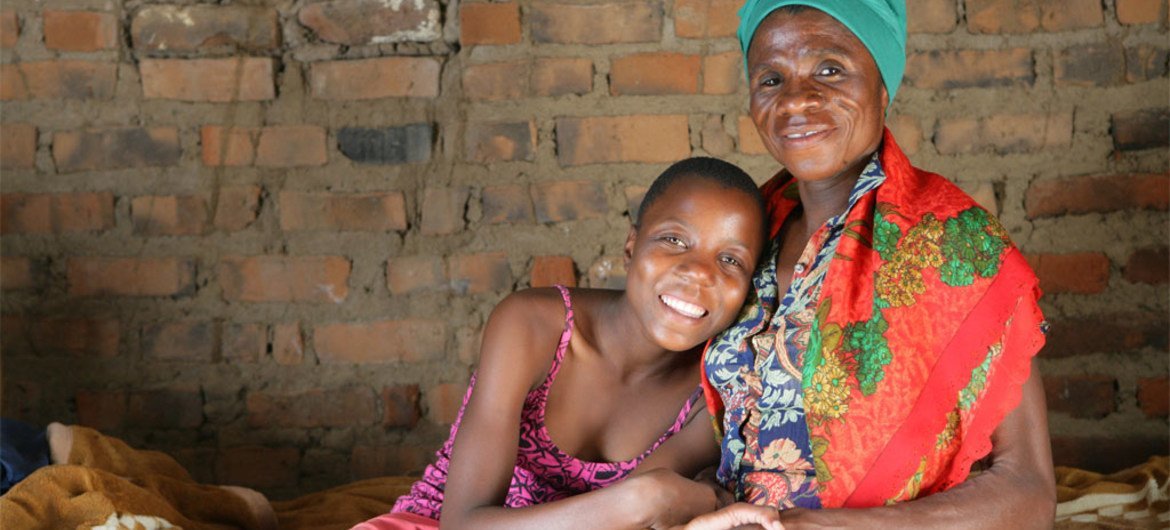
To mark Zero Discrimination Day (1 March), the United Nations agency coordinating the global effort to tackle HIV/AIDS is challenging people to recognize where everyday discrimination takes place and take action to stop it by asking themselves simple questions: ‘What if the person you bought your vegetables from was living with HIV? Would you buy tomatoes from him?’
UNICEF/G. Pirozzi | HIV positive Monica and her granddaughter sit at home on a bed in their village of Makuzeze, Zimbabwe.
“We will never guarantee the right to health and end the AIDS epidemic if we exclude people,” said the Executive Director of the Joint United Nations Programme on HIV/AIDS (UNAIDS), Michel Sidibé.
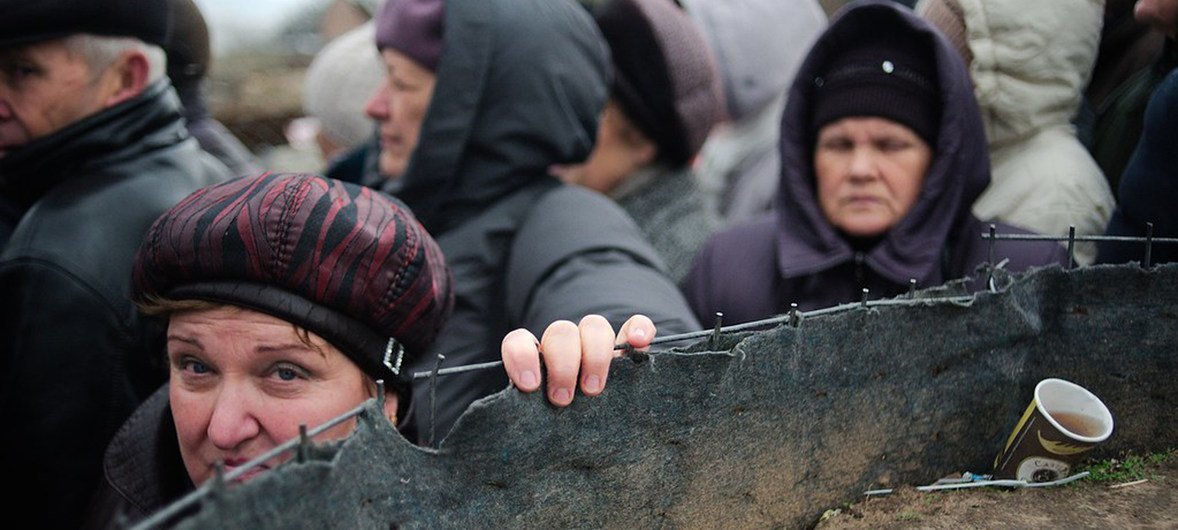
With 4.4 million people in Ukraine soon to enter a fifth year of conflict, the international community has an important role to play in supporting conflict resolution and bringing about lasting peace – the only durable humanitarian solution for the affected population, a senior United Nations official has said.
Photo: Volodymyr Shuvayev | People crossing the ‘contact line’ at Stanytsia Luhanska which is the only one operational entry/exit checkpoint in Luhansk province, Ukraine. Source: UN News Centre.
.
“This crisis is happening in Europe’s backyard, yet it is largely forgotten by the world,” UN Assistant Secretary-General for Humanitarian Affairs Ursula Mueller told a European conference on the humanitarian crisis in eastern Ukraine and the way forward, held on 28 February 2018 in Brussels, Belgium.
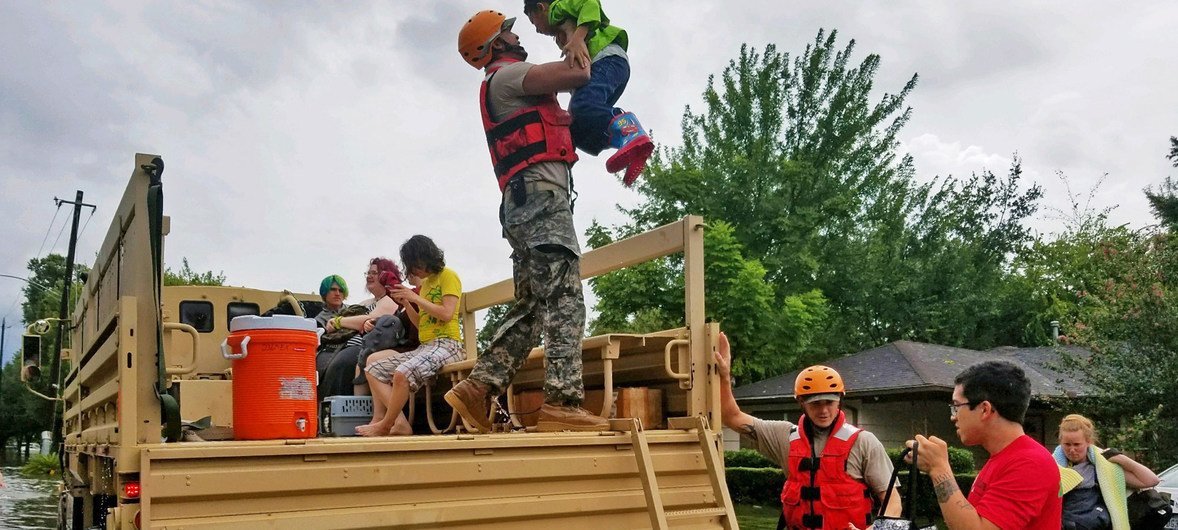
The United Nations Office for Disaster Risk Reduction (UNISDR) kick-offed on 1 March 2018 a “historic” new effort to collect comprehensive global data on disaster losses.
U.S. Department of Defense | Texas National Guard soldiers assist residents affected by flooding caused by Hurricane Harvey in Houston (August 27th 2017). | Source: UN News Centre.
“It is impossible to prevent disasters and to manage risk if a country is not measuring its disaster losses, particularly at the local level, for both small-scale and large-scale events,” said the Secretary-General’s newly appointed Special Representative of the for Disaster Risk Reduction, Mami Mizutori.

 HUMAN WRONGS WATCH