Human Wrongs Watch
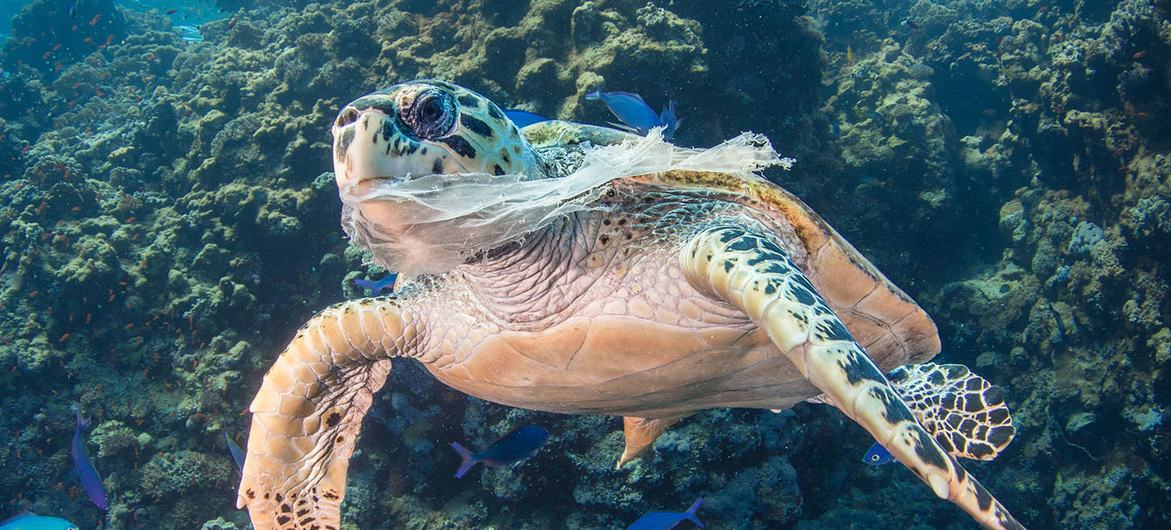
7 June 2018 — An underwater photographer’s chance encounter with a starving turtle led to a personal “awakening” about the dangers discarded plastic poses to sea life in the world’s oceans.
'Unseen' News and Views
7 June 2018 — An underwater photographer’s chance encounter with a starving turtle led to a personal “awakening” about the dangers discarded plastic poses to sea life in the world’s oceans.
ILO Director-General Guy Ryder highlighted the importance of addressing the root causes of child labour, including in unpaid family work in agriculture. He spoke at a panel on child labour held on the sidelines of the International Labour Conference.
Despite ample food supplies, persistent conflicts and adverse climate shocks are taking a toll on global food security, according to a new report launched on 7 June 2018 by the United Nation’s agriculture agency.

Refugees’ life jackets in Parliament Square, London. Howard Lake/Flickr. CC (by-sa)
Have you ever stopped to consider what happens to the bodies of undocumented migrants when they die trying to reach the shores of Europe? Who they are, who mourns their loss, where and how they are buried?
Yemen, 6 June 2018 (IOM)* – Tragedy struck migrants trying to cross from the Horn of Africa to find employment in Yemen and the Gulf, when their vessel capsized in high waves as it approached its destination in the early hours of 6 June.
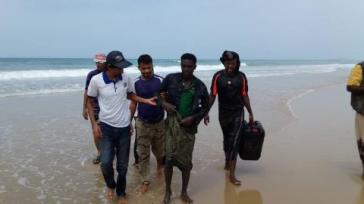
IOM Yemen staff assist a migrant who survived drowning. Photo: IOM
UN Migration Agency staff were on the scene providing assistance to the traumatized survivors. IOM staff reported that 46 migrants had drowned, 37 men and 9 women. A further 16 remain missing, presumed dead.
At least 100 migrants crammed onto a smuggler’s boat that left the port of Bossaso, Somalia on 5 June.
The alleged extra-judicial killing of suspected drug offenders must be “immediately halted” and their perpetrators brought to justice, UN human rights chief Zeid Ra’ad Al Hussein on 6 June 2018 said.
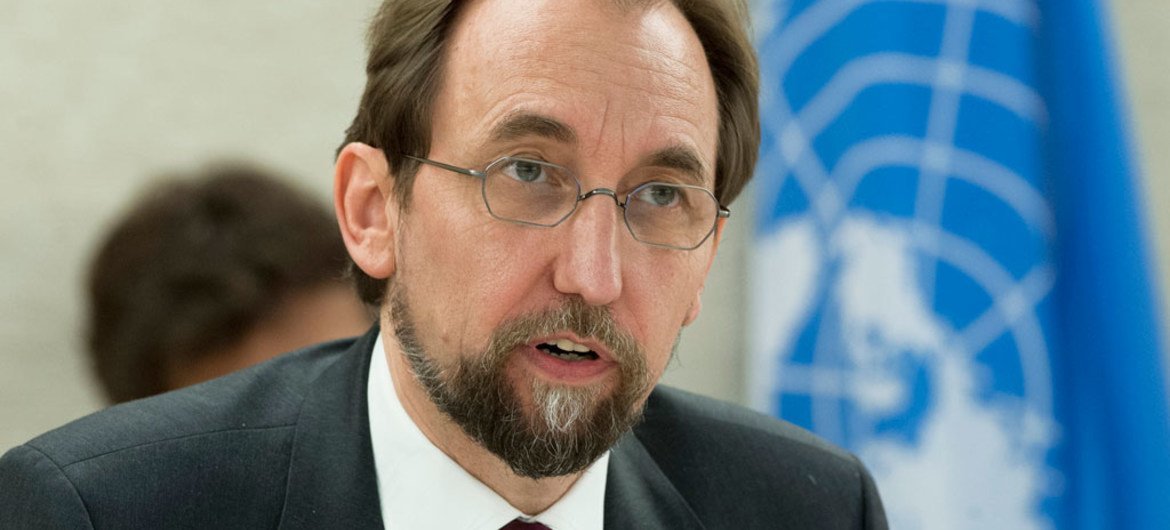
Zeid Ra’ad Al Hussein. UN Photo/Jean-Marc Ferré
In his appeal to the government of Bangladesh, Zeid described official declarations that none of the victims was innocent as “dangerous… and indicative of a total disregard for the rule of law”.
Everyone has the right to life, the High Commissioner continued in his statement, and people “do not lose their human rights, because they sell drugs”. In addition to those allegedly killed in the anti-narcotics drive, 13,000 people have also been reportedly arrested.

A roadside mural in Auckland, New Zealand. Chris Christian/Flickr. CC (by-nc)
New Zealand is a unusual context in which to explore the dynamics of sex worker-led organising against exploitation and the influence and impacts of the anti-trafficking framework on sex workers’ lives.
By Ann Garrison*
4 Jun 2018 – TRANSCEND Media Service — Syria has long dominated international headlines while the big powers discuss the possibility of dividing it into smaller, more homogeneous states along ethnic or religious lines.

Ann Garrison
The Democratic Republic of Congo is rarely if ever at the top of the Western headlines, but heads of state and so-called experts have long made similar proposals to carve out new, smaller, more homogeneous nations in Congo’s resource-rich eastern provinces.
I spoke with Congolese scholar and activist Boniface Musavuli about the plans.
Ann Garrison: Boniface, can you summarize the history of proposals to divide up the eastern provinces of the Democratic Republic of the Congo?
Boniface Musavuli: Attempts to break up the Congo began as soon as the country became independent in 1960. First there was the Katangese secession, from 1960 to 1963, led by Moïse Tshombe with the support of Belgium, the colonial power that Congo had just freed itself from, in name at least.
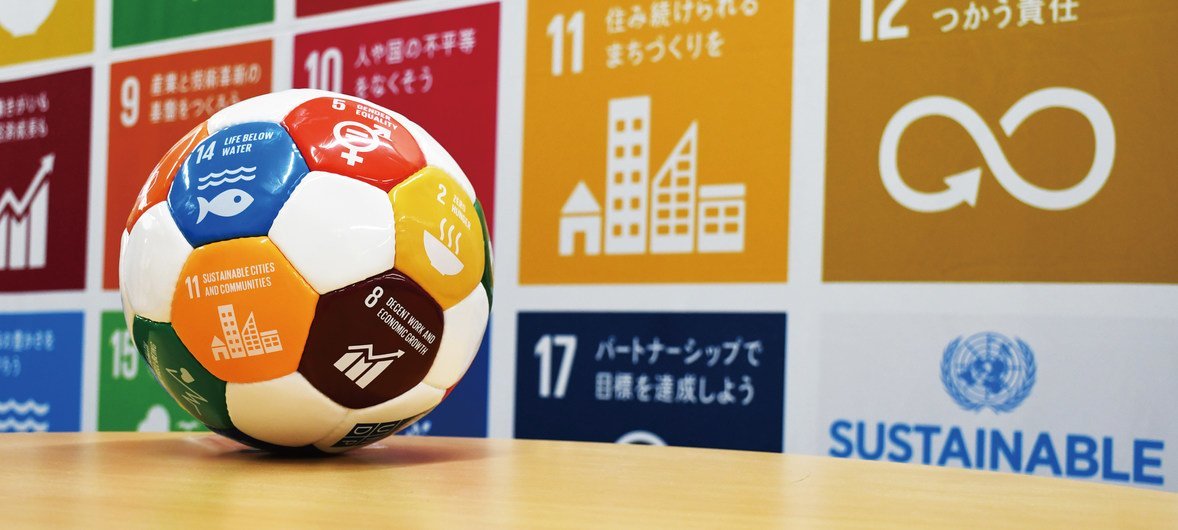
Sports scandals, including allegations of endemic corruption and the involvement of organized crime, threaten to undermine the sector’s potential to contribute to peace and global development, a senior United Nations official on 5 June 2018 said.
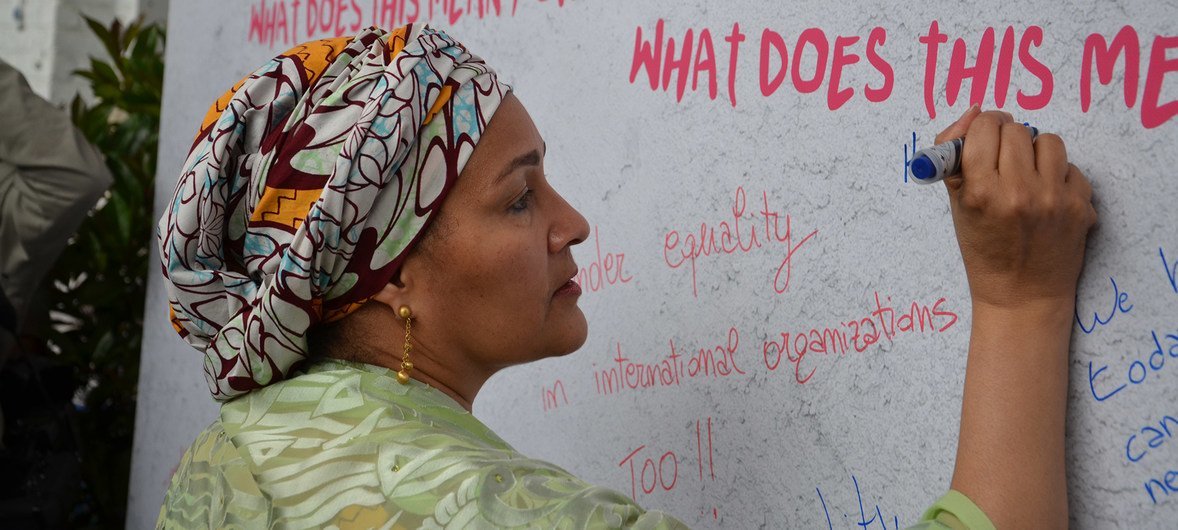
The launch of a new partnership between the United Nations and European Union, is an essential tool to make violence against women and girls “a thing of the past”, said UN Deputy Secretary-General Amina Mohammed on 5 June 2018.

 HUMAN WRONGS WATCH