Geneva,24 July 2018 (IOM)*– IOM, the UN Migration Agency, reports that 53,269 migrants and refugees entered Europe by sea through 22 July 2018. That total compares to 110,603 at this time last year, and 244,722 at this time in 2016.
Arrivals to Spain (see chart below) this month have overtaken those to Italy. To date just over 36 per cent of all Mediterranean irregular migrants have come via the Western Mediterranean route, whose irregular migration volume has more than tripled those registered at this time last year.
Arrivals to Italy are nearly identical, but still trail Spain by just over 1,600 arrivals. Greece counts about 29 per cent of all arrivals.
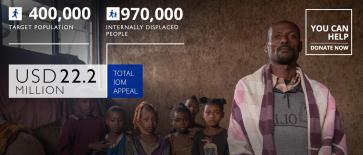
Dilla (IOM)* – Today (24/07), IOM the UN Migration Agency launched an appeal for USD 22,200,000 to respond to the internal displacement crisis in Ethiopia’s Gedeo (SNNPR region) and West Guji (Oromia region) zones.
.
.
Since April 2018, some 970,000 people have fled their homes due to fighting between communities along the border of the two regions; the vast majority were displaced in June alone.
São Paulo (Human Rights Watch)* – Rural residents are being poisoned in Brazil from pesticides sprayed near their homes, schools, and workplaces, Human Rights Watch said in a report released on 20 July 2018.
22 July 2018 (openDemocrcay)* — Transnational corporations have become the dominant force directing our world. Humanity is accelerating toward a precipice of overconsumption, and the large transnationals are the primary agents driving us there.
“My current home is in Geneva, where I am a traveller, photographer and intern at UNFPA. I moved here from Russia at 22.
Before that, my first independent international travel was to the USA at the age of 18 — I was a part of a Work & Travel programme and worked in a beachwear shop in South Carolina, struggling with my very poor English.
Afterwards, I realized that I had the sense of belonging that is so present in the Russian cultural code but somehow in a different way than what was expected of me.
23 July 2018 (UN Women)* – UN Women Executive Director Phumzile Mlambo-Ngcuka on 23 July 2018 began an official visit to Senegal, to highlight the importance women’s economic empowerment in the agricultural sector, encourage the repeal of discriminatory laws and to promote women’s leadership and political participation across the country.
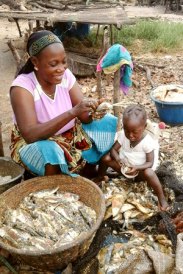
A mother and daughter removing fish scales and peeling off skins in Kafountine. Photo: UN Women Senegal.
Women farmers make up to 70 per cent of the workforce and produce more than 80 per cent of crops in Senegal, especially food crops.
Yet, women farmers lack access to land, skills, financial resources and markets, compared to their male counterparts.
As part of her stay, the Executive Director will visit Réseau des Femmes Agricultrices du Nord, a network of women farmers of the North, who produce and trade rice.
23 July, 2018 (UN Women)* — Matcha Phorn-in is the Executive Director of Sangsan Anakot Yaowachon, a civil society organization working with young people from marginalized communities, many of whom are indigenous, in disaster-prone Thai villages at the border with Myanmar. Phorn-in is from an ethnic minority and identifies as a lesbian feminist human-rights defender.
Matcha Phorn-in. Photo: UN Women/ Pathumporn Thongking
India must revise its planned new legislation to tackle trafficking in persons so that the measures proposed are in line with international human rights law, on 23 July 2018 said two independent UN human rights experts.
Italian Coastguard/Massimo Sestini The Italian Navy rescues migrants in the Mediterranean Sea. | Photo from UN News Centre.
Maria Grazia Giammarinaro, Special Rapporteur on trafficking in persons, and Urmila Boola, Special Rapporteur on contemporary forms of slavery, said in a statement that they were “gravely concerned” about the bill as presented by the Government to the Indian Parliament last week.
From arbitrary detentions and deliberate deprivation, to attacks against civilians and forced displacements, the UN High Commissioner for Human Rights, Zeid Ra’ad Al Hussein, expressed “acute concerns” on Monday 23 July 2018 over the current human rights situation in the Occupied Palestinian Territory.
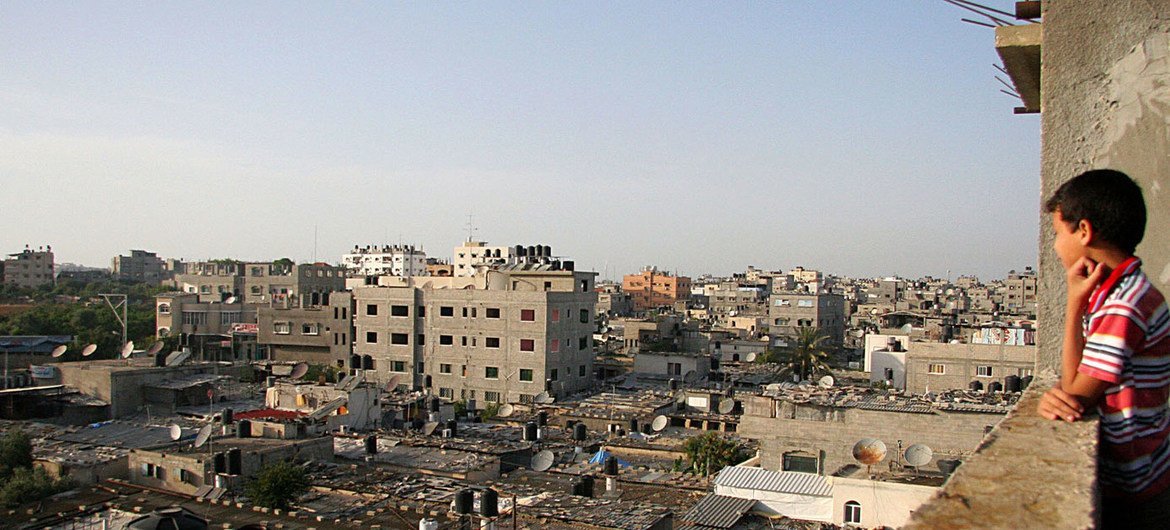
Suhair Karam/IRIN | A view of Jabalia refugee camp. Jabalia is the largest of the Gaza Strip’s eight refugee camps. It is located north of Gaza City, close to a village of the same name.
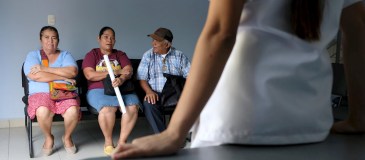
23 July 2018 (UNHCR)* — On a sweltering afternoon, an elderly couple sit in the waiting room at the free health clinic holding hands, while a young mother waits for a medical appointment with her toddler napping in her lap.





 HUMAN WRONGS WATCH