20 September 2018 – Each year the International Day of Peace is observed around the world on 21 September. The General Assembly has declared this as a day devoted to strengthening the ideals of peace, both within and among all nations and peoples.*
Children in Zataari Camp in Jordan. Photo credit UN/Sahem Rababah
The United Nations Member States adopted the 17 Sustainable Development Goals in 2015 because they understood that it would not be possible to build a peaceful world if steps were not taken to achieve economic and social development for all people everywhere, and ensure that their rights were protected.
Despite the significant global outrage at US President Donald Trump and his supporters – best highlighted by the Pew surveys and more viscerally by the enormous anti-Trump protests in London in July 2018 – anti-Americanism is less apparent under Trump than it was under President George W. Bush.
Shortly into the Bush presidency, a wave of books such as Why do People Hate America?became bestsellers. This was part of a lively debate at the time about what constituted anti-Americanism.
Open, predictable and fair global food markets can help strengthen climate change response efforts and contribute to fighting hunger, says new report.
ROME, 17 September 2018 (FAO)*– With climate change poised to alter significantly the ability of many world regions to produce food, it is expected that international trade in agricultural products will have an increasingly important contribution to feeding the planet and responding to climate-related hunger flare-ups, says a new report by the UN’s Food and Agriculture Organization (FAO).
International trade rules established under the auspices of the WTO and newer mechanisms created under the Paris Agreement aimed at responding to climate change can be mutually supportive, argues The State of Agricultural Commodity Markets, 2018.
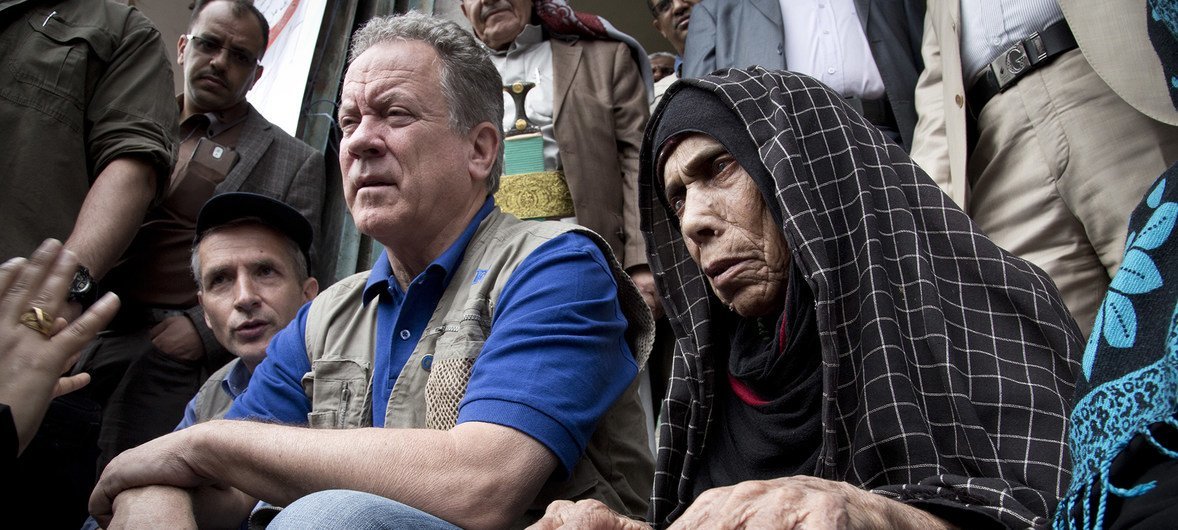
As conflict continues to rage in Yemen, leading to widespread economic hardship and a rampant inflation, the World Food Programme (WFP) is sounding the alarm over soaring food prices that are affecting millions of Yemenis.
WFP/Marco Frattini | David Beasley, the head of the World Food Program, visiting Sanaa, Yemen, where the world’s worst hunger crisis has been unfolding for at least a year.
“My primary concern is the innocent children, women and men of Yemen, and I urge all parties to end the fighting and support efforts to build peace,” said David Beasley, WFP Executive Director, in a statement on 19 September 2018.
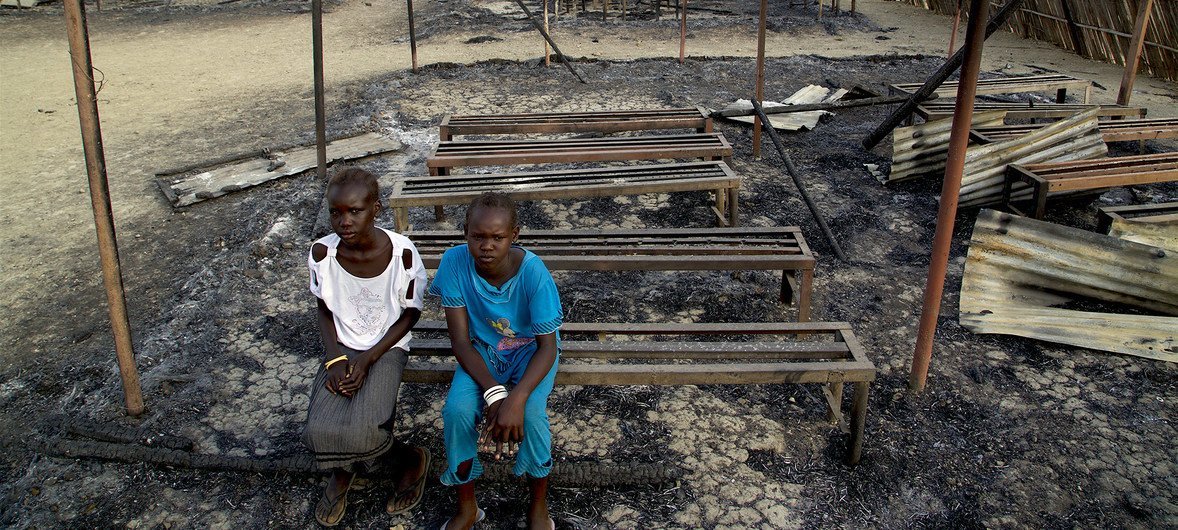
19 September 2018 – Childhood is a time for growth, a time for school. But conflict or disaster are depriving 104 million young people between the ages of five and 17 of that foundation, according to a new study by the United Nations Children’s Fund (UNICEF).
UNICEF/Hakim George | On 3 March 2016, Chubat (right), 12, sits with her friend in the burned ruins of her school in Malakal, South Sudan.
The report, A future stolen: young and out-of-school, looks at the education situation of children and young people from pre-primary to upper secondary age across all countries, including those affected by humanitarian emergencies.
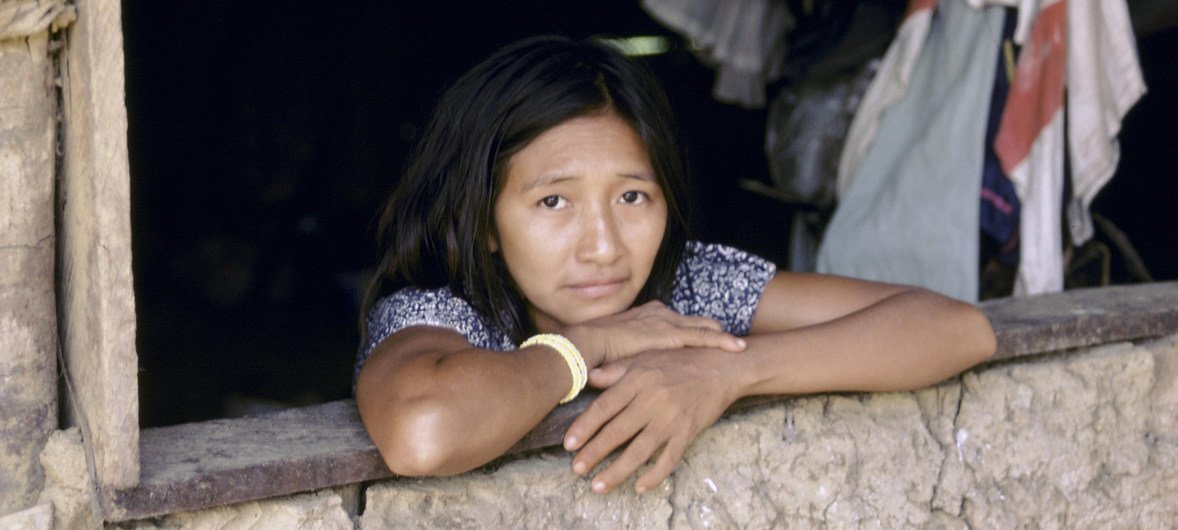
Progress that destroys traditional culture, language, land and human heritage “is not development, but willful destruction”, the UN Deputy High Commissioner for Human Rights on 19 September 2018 said, in defence of indigenous peoples everywhere.
World Bank/Yosef Hadar | Indigenous woman looks out of window. Brazil. | Photo from UN News.
Kate Gilmore’s comments were followed by the UN Special Rapporteur on the rights of indigenous peoples, Victoria Tauli Corpuz, who expressed concern at a “drastic increase” in attacks against indigenous peoples, and efforts to criminalize them.


 HUMAN WRONGS WATCH