Raising the alarm over the rapidly deteriorating humanitarian situation in Yemen, the top United Nations relief official on 21 September 2018 underscored the need for all parties to avoid further military activity around Hudaydah port – the vital lifeline through which food and fuel flows into the war-torn country.
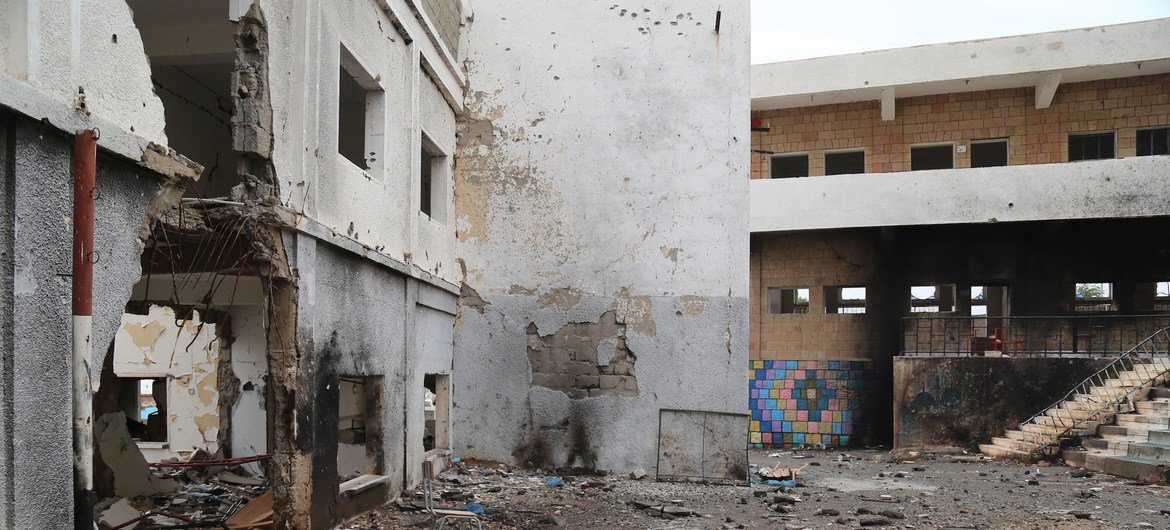
UNICEF/Basha | A school in the city of Taiz, in south-western Yemen, bears the scars of intense fighting.
“It is far from clear that the recent intensification of fighting is producing any winners,” Mark Lowcock, the UN Emergency Relief Coordinator, told the Security Council.
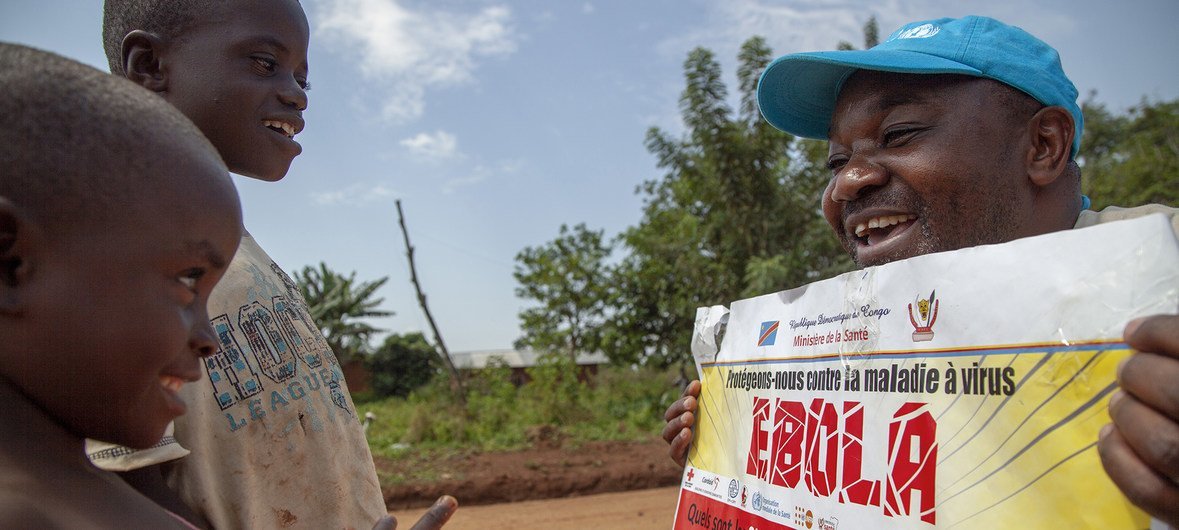
New Ebola virus hotspots in the Democratic Republic of the Congo (DRC) are threatening progress made in tackling the deadly disease and increasing its risk of spreading, the World Health Organization (WHO) on 21 September 2018warned.
To date, there have been 142 cases of Ebola in the country’s north-east, with 97 deaths. According to WHO, the cities of Beni and Butembo, in North Kivu, have become the new hotspots for the disease.
More one in 20 deaths in 2016 – 3 million people, mostly men – were caused by harmful use of alcohol, according a report released on 21 September 2018 by the World Health Organization (WHO).
WHO/Sergey Volkov | An inebriated man is sleeping on a bench in a park, Moscow, Russia.
“Far too many people, their families and communities suffer the consequences of the harmful use of alcohol through violence, injuries, mental health problems and diseases like cancer and stroke,” said Tedros Adhanom Ghebreyesus, WHO’s Director-General, adding that “it’s time to step up action to prevent this serious threat to the development of healthy societies.”
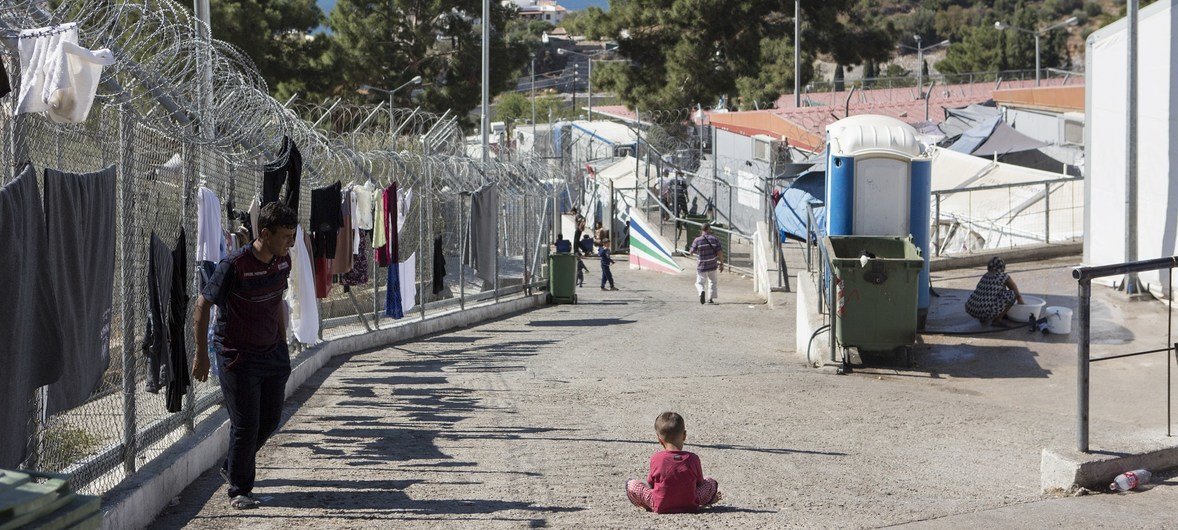
Overcrowding in Greek island reception centres for refugees and migrants has made conditions for children there increasingly “dire and dangerous”, the United Nations Children’s Fund (UNICEF) on 21 September 2018 said, warning that “severe emotional distress” affects many and that self-harm is a “possibility”.
UNHCR/Yorgos Kyvernitis | Refugee families struggling on the Greek island of Samos.
In an appeal to the authorities to do more to speed up the transfer of vulnerable people to the mainland, Lucio Melandri, UNICEF Country Coordinator in Greece, noted that the number of vulnerable children arriving on the islands in 2018 compared with last year had risen by one-third.
Half of all people living in poverty are younger than 18 years old, according to estimates from a new report released on 20 September 2018 by the United Nations Development Programme (UNDP) and partners.
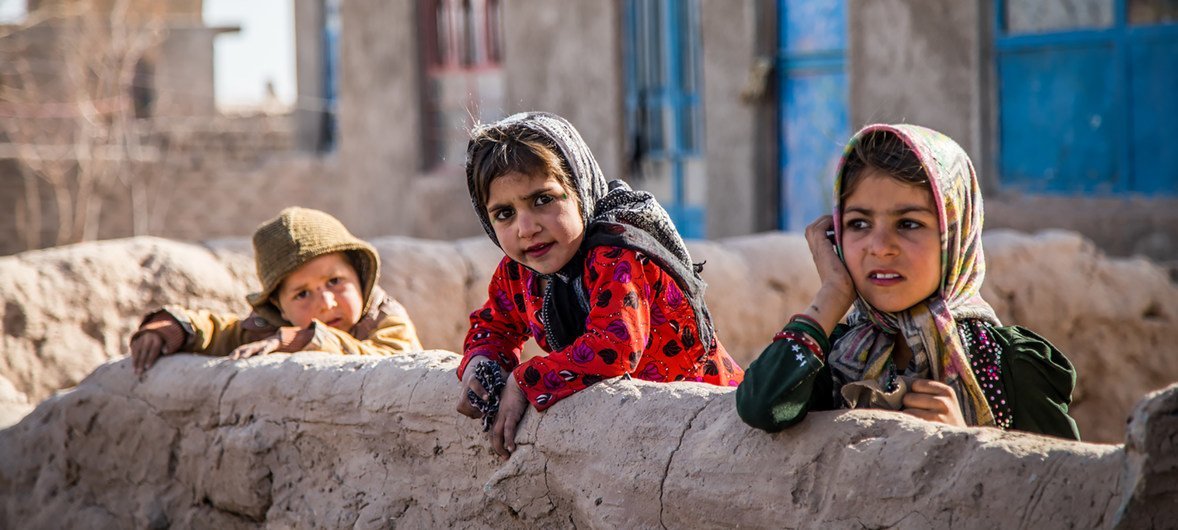
UNDP/S. Omer Sadaat | Children in Shade Bara village, Herat province, Afghanistan.
The new figures in the 2018 global Multidimensional Poverty Index (MPI) show that in 104 primarily low- and middle-income countries, 662 million children are considered poor according to multiple different indicators. In 35 of these countries.
Children account for at least 50 per cent of the total.
20 September 2018 – Each year the International Day of Peace is observed around the world on 21 September. The General Assembly has declared this as a day devoted to strengthening the ideals of peace, both within and among all nations and peoples.*
Children in Zataari Camp in Jordan. Photo credit UN/Sahem Rababah
The United Nations Member States adopted the 17 Sustainable Development Goals in 2015 because they understood that it would not be possible to build a peaceful world if steps were not taken to achieve economic and social development for all people everywhere, and ensure that their rights were protected.
Despite the significant global outrage at US President Donald Trump and his supporters – best highlighted by the Pew surveys and more viscerally by the enormous anti-Trump protests in London in July 2018 – anti-Americanism is less apparent under Trump than it was under President George W. Bush.
Shortly into the Bush presidency, a wave of books such as Why do People Hate America?became bestsellers. This was part of a lively debate at the time about what constituted anti-Americanism.
Open, predictable and fair global food markets can help strengthen climate change response efforts and contribute to fighting hunger, says new report.
ROME, 17 September 2018 (FAO)*– With climate change poised to alter significantly the ability of many world regions to produce food, it is expected that international trade in agricultural products will have an increasingly important contribution to feeding the planet and responding to climate-related hunger flare-ups, says a new report by the UN’s Food and Agriculture Organization (FAO).
International trade rules established under the auspices of the WTO and newer mechanisms created under the Paris Agreement aimed at responding to climate change can be mutually supportive, argues The State of Agricultural Commodity Markets, 2018.
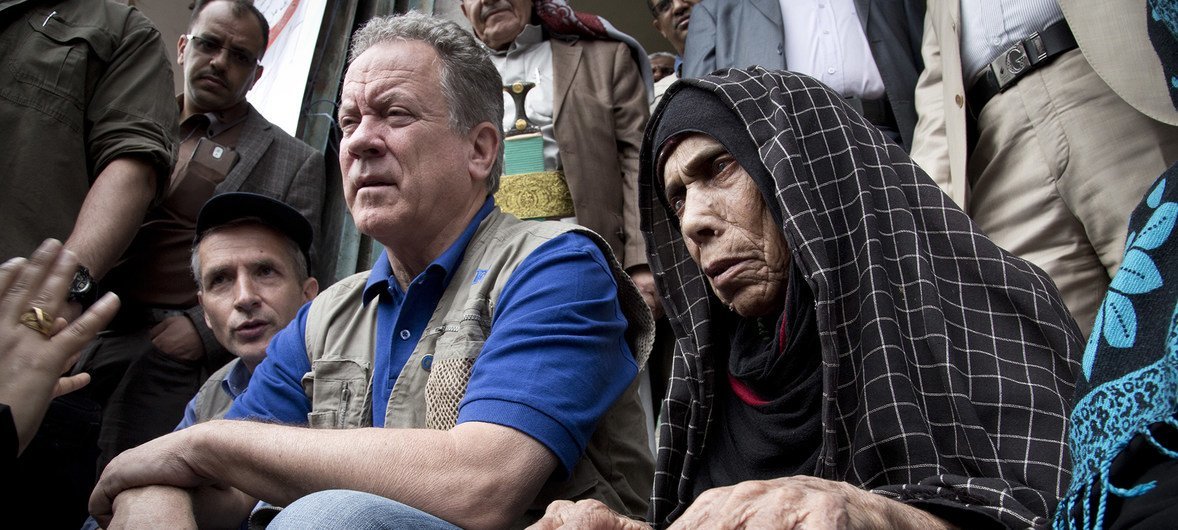
As conflict continues to rage in Yemen, leading to widespread economic hardship and a rampant inflation, the World Food Programme (WFP) is sounding the alarm over soaring food prices that are affecting millions of Yemenis.
WFP/Marco Frattini | David Beasley, the head of the World Food Program, visiting Sanaa, Yemen, where the world’s worst hunger crisis has been unfolding for at least a year.
“My primary concern is the innocent children, women and men of Yemen, and I urge all parties to end the fighting and support efforts to build peace,” said David Beasley, WFP Executive Director, in a statement on 19 September 2018.
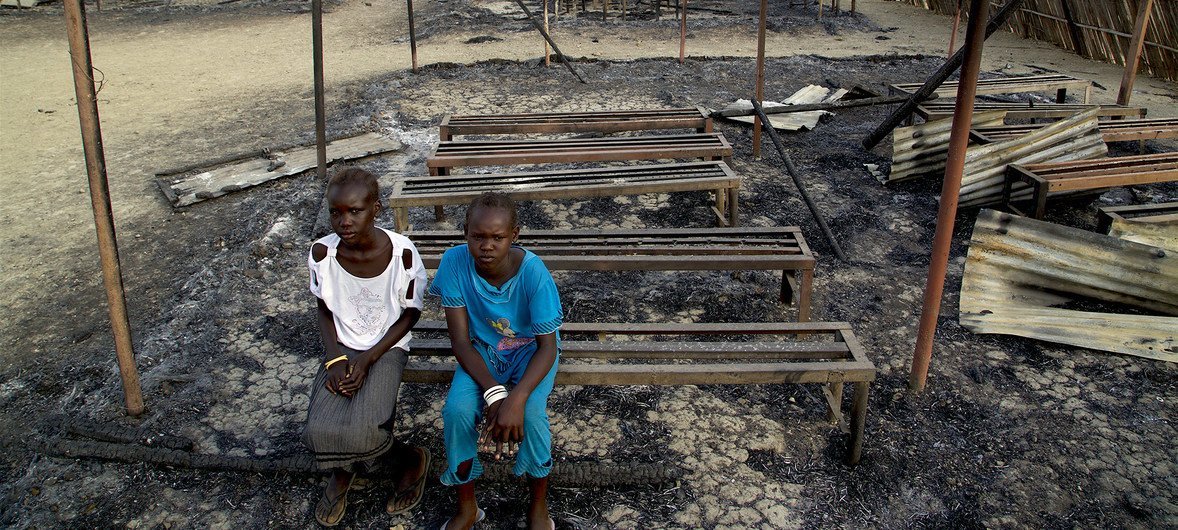
19 September 2018 – Childhood is a time for growth, a time for school. But conflict or disaster are depriving 104 million young people between the ages of five and 17 of that foundation, according to a new study by the United Nations Children’s Fund (UNICEF).
UNICEF/Hakim George | On 3 March 2016, Chubat (right), 12, sits with her friend in the burned ruins of her school in Malakal, South Sudan.
The report, A future stolen: young and out-of-school, looks at the education situation of children and young people from pre-primary to upper secondary age across all countries, including those affected by humanitarian emergencies.



 HUMAN WRONGS WATCH