27 June 2019 (UN Environment)* — As September’s UN Climate Action Summit fast approaches and the mercury rises across Europe and India, the pressure is on to find workable solutions that can quickly turn down the planet’s thermostat.
There is an obvious focus on cutting carbon dioxide emissions, the chief culprit for climate change, but there also lies a huge opportunity in reducing methane emissions from the oil and gas industry.
Methane is responsible for at least a quarter of global warming and is over 80 times more powerful than carbon dioxide as a warming gas over a twenty-year timeframe.
FAO Conference side event explores obstacles such as urbanization, inequality, obesity and natural disasters.
A street scene in Nepal.
ROME, 25 June 2019 (FAO)*– Progress towards the Sustainable Development Goal of Zero Hunger has slowed in Asia and the Pacific, despite strong economic advances, and highlighting the need for concerted policy actions to tackle the increasingly complex nature of challenges ahead, representatives of FAO Member Countries heard during an event on the sidelines of the 41st Session of the FAO Conference.
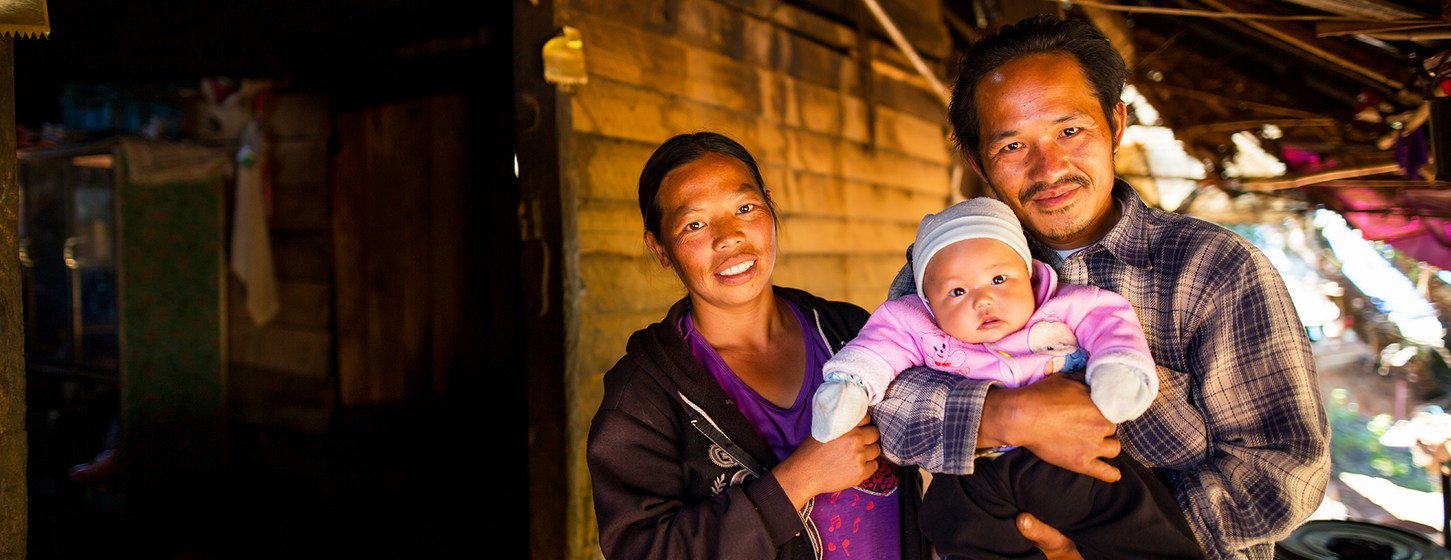
28 June 2019 — Mother of three, Mhee Saesong, a strawberry farmer from Chiang Mai in the north of Thailand, has always struggled alongside her husband to provide for her family. She describes how, in the past, when her two older children became sick, she was unable to afford to take them to hospital.
But that changed following the birth of her third child, Monluck, and the introduction of a nationwide child support grant worth just under US$20 per month. “I was so happy when I heard this news,” Mhee says. “Before, I didn’t have money to take my children to see doctors.”
27 June 2019 (Wall Street International)* — Our inability to disconnect from the Internet and the social media overalls, can often leave us feeling so empty as to have forgotten what compels us; what drives us to engage with the world, which is certainly far beyond the bits.
Transfixed by the digital-glow, we remain convinced we are somehow less than the woman with the perfect body and angel face, less than the man with the Ferrari and less than the successful employee with several awards and the big house in California.
Dakar(Norwegian Refugee Council)* – UN aid agencies and NGOs on 27 June 2019 warned that surging armed violence in the Sahel has propelled forced displacement and humanitarian emergency to unprecedented levels. They called for stepped-up support and greater efforts to address the causes of the region’s crises.
Displaced women at one of the informal sites hosting displaced families in Maiduguri, north-east Nigeria. Photo: Hajer Naili/NRC
In the past year, around 1 million people had to flee their homes due to insecurity and violence. In Burkina Faso, Mali and western Niger displacement has increased five-fold, and the Lake Chad Basin is witnessing a new spike in displacement and attacks. Across the Sahel, 4.2 million people are uprooted.
UNHCR seeks US$210 million to help refugees risking death, rape, arbitrary detention, forced labour and starvation as they travel towards the Mediterranean.| Español | عربي
26 June 2019 (UNHCR)* — Held captive by gun-toting smugglers at a warehouse in southern Libya, newlywed Somali refugee Maryam* was taken from her husband Ahmed* and raped – repeatedly – over several months. Only when she became pregnant was she returned to him.
UNITED NATIONS, Jun 28 2019 (IPS)* – For over 10,000 migrants fleeing to Libya from war and violence, their fate often comes down to the mercy of human traffickers or the dark unknown awaiting in detention centers.
.
The northern shores of Libya – the largest departure point for African migrants hoping to reach Europe – is a hotbed for modern-day slavery. Captured on land, intercepted at sea, cuffed and injured by militias and human traffickers, migrants are sent to detention centers and exposed to every abuse possible.
Beirut, 28 June 2019 (IOM)* –The International Organization for Migration (IOM) this month (June) noted its 100,000th resettlement of a refugee residing in Lebanon assisted in beginning a new life in a third country since fleeing the crisis in neighbouring Syria. This marks a significant milestone in IOM Lebanon’s resettlement efforts since the Syrian crisis first erupted in 2011.
Jasem, 24, and Jumana, 25, are starting the next phase of their life in France with their son and newborn twins. Photo: IOM/Muse Mohammed
The vital work of tracing people infected with deadly Ebola virus disease in north-east Democratic Republic of the Congo (DRC) is progressing, despite evidence of “several” massacres in the affected area earlier this month, the UN said on Friday [28 June 2019].
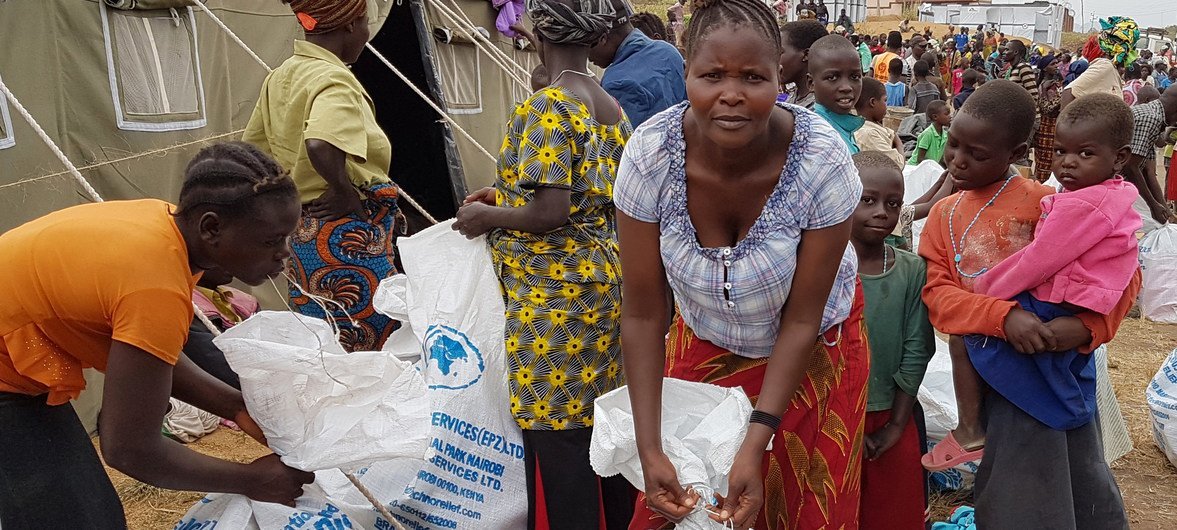
UNICEF/Madjiangar | Displaced persons collect relief supplies in Ituri province, north-east DRC. Interethnic violence has ravaged the Ituri Province since December 2017.
In an update on the situation in Ituri and North Kivu provinces, nearly 11 months after the outbreak began, the World Health Organization (WHO) reported 2,284 cases of infection so far, and 1,540 deaths.
BERLIN, 28 June 2019 (IOM)* –A new report from the International Organization for Migration’s (IOM) Global Migration Data Analysis Centre (GMDAC) highlights the need for better data on migrant deaths and disappearances, particularly those of missing migrant children.
This year’s Fatal Journeys 4 report focuses on the theme of missing migrant children, given the growing number embarking on dangerous migrant journeys.
According to IOM data, nearly 1,600 children – an average of almost one every day – were reported dead or missing between 2014 and 2018, though many more go unrecorded.
“Tragically, we have been reminded in recent days that children are among the most vulnerable groups of migrants,” said Frank Laczko, Director of IOM’s GMDAC.
 There is an obvious focus on cutting carbon dioxide emissions, the chief culprit for climate change, but there also lies a huge opportunity in reducing methane emissions from the oil and gas industry.


 .
.

 HUMAN WRONGS WATCH