12 May 2020 (United Nations)* — Living together in peace is all about accepting differences and having the ability to listen to, recognize, respect and appreciate others, as well as living in a peaceful and united way.
The United Nations Interim Force In Lebanon (UNIFIL) commemorates the International Day of Peace by releasing doves, a symbol of peace. UN Photo/Pasqual Gorriz
.
The UN General-Assembly, in its resolution 72/130, declared 16 May the International Day of Living Together in Peace, as a means of regularly mobilizing the efforts of the international community to promote peace, tolerance, inclusion, understanding and solidarity.
10 May 2020 (Wall Street International)* — The United Nations has designated the 16th of May as a day devoted to Living Together in Peace. It therefore seems appropriate to mark this day by discussing the reasons why war must be eliminated as a human institution.
11 May 2020 (UN Environment)* — Over the past few weeks there have been many reports of localized air quality improvements as the world has locked down to combat the coronavirus pandemic. However, no one should think that the climate crisis is therefore over—far from it.
The most recent data from the United States National Oceanic and Atmospheric Association (NOAA) shows global carbon dioxide (CO2) levels rising sharply.
In April 2020 the average concentration of CO2 in the atmosphere was416.21 parts per million (ppm), the highest since measurements began in Hawaii in 1958.
Furthermore, ice core records indicate that such levels have not been seen in the last 800,000 years.
“The American healthcare financing system was not built to withstand the combined impact of a pandemic and a recession,” the President of Physicians for a National Health Program Adam Gaffney said.
As health insurance is tied to employment for about half the population in the US, 43m are expected to lose their health insurance amid the pandemic. | Photo: AFP
10 May 2020 (teleSUR)* — Progressives and Medicare for All defenders in the United States (U.S.) pointed Sunday [10 May 2020] to the incoming health insurance crisis due to the massive layoffs triggered by quarantine measures to fight the spread of the new coronavirus in the country.
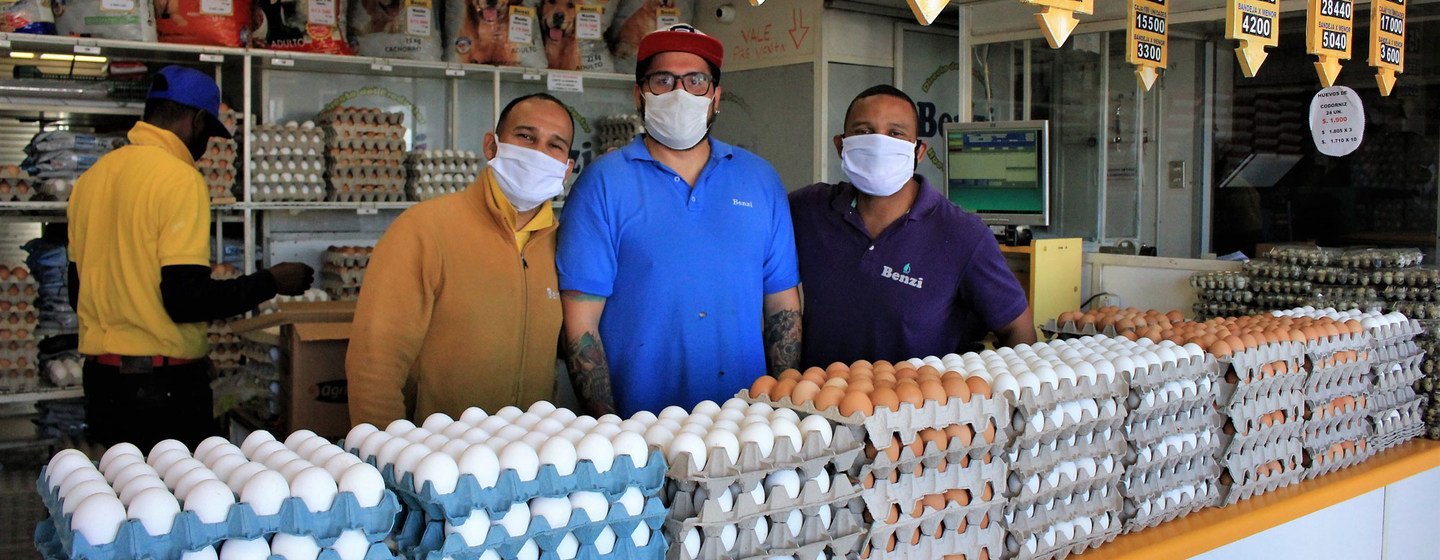
10 May 2020 (UN News)* — The UN food agency, FAO, warns that hunger and fatalities could rise significantly in urban areas, without measures to ensure that poor and vulnerable residents have access to food. In Latin America, cities are finding ways to keep food supplies flowing, despite the current restrictions on movement and supplies.
Several Latin American municipalities have been taking action to minimise the consequences of lockdown measures, and ensure that food systems do not break down, as work dries up.
Activists have condemned the government for pushing through environmentally destructive projects at a time when people are unable to protest.
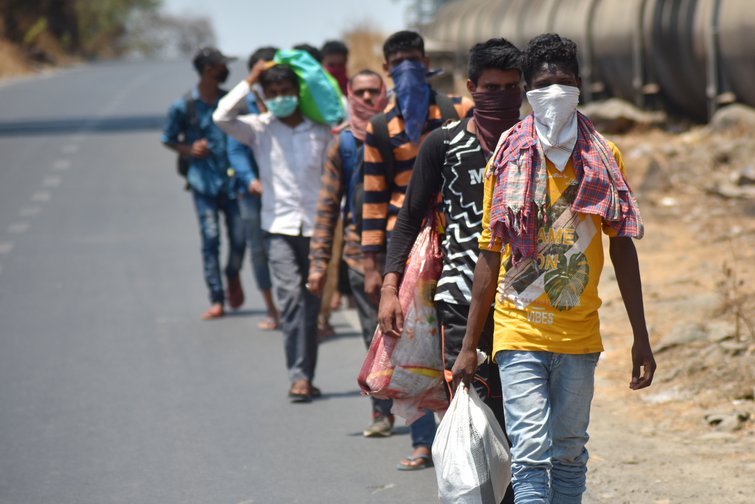
Migrant workers with their belongings walk towards their native places in a scorching heat after getting stuck for 40 days during a nationwide lockdown. Indian Prime Minister, Narendra Modi has extended the lockdown until 17 may across the country. | SOPA Images/SIPA USA/PA Images
10 May 2020 (UN News)* — The US island state of Hawaii has committed to generating 100 per cent of its power using renewable energy by 2045, demonstrating to other US states and island communities across the world, that sustainable energy can be a reality.
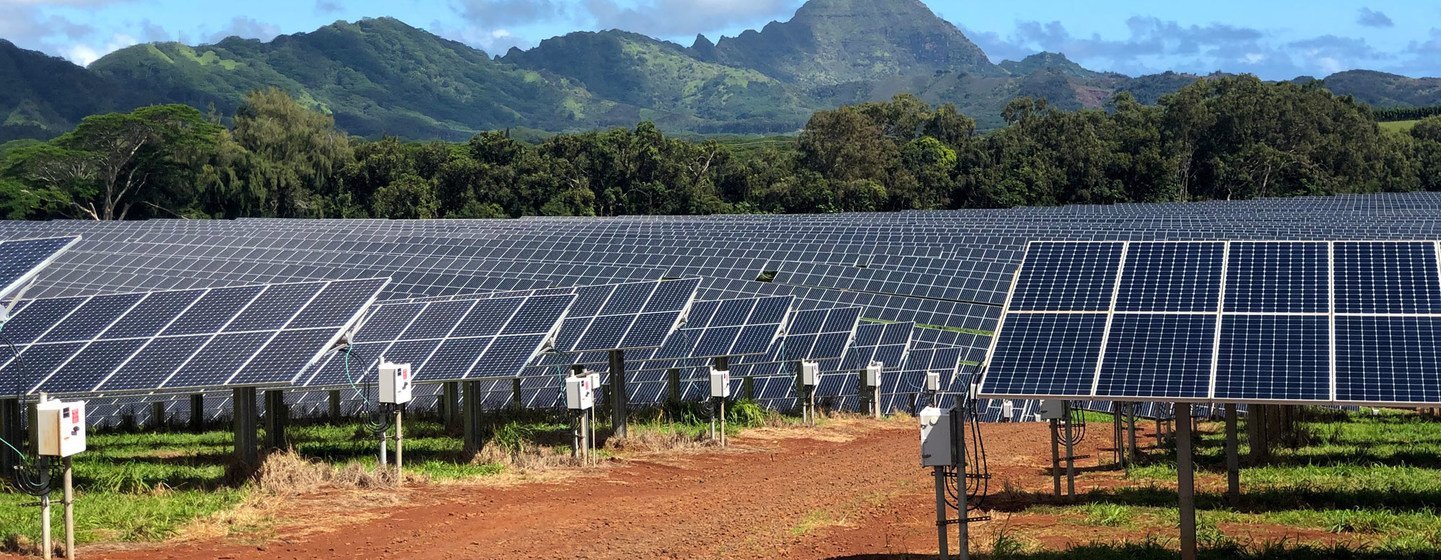
ILO Photo/Kevin Cassidy | The Kauai Island Utility Cooperative solar facility in the US state of Hawaii.
.
UN News travelled to Hawaii with the International Labour Organization (ILO) to talk to a power company executive and a sheep farmer to find out how they are contributing to that goal.
Neatly arranged rows of deep marine blue-coloured photovoltaic panels are lined up on the undulating hills of one of Hawaii’s volcanic islands, creating a sea of solar-energy generation.
10 May 2020 (Wall Street International)*— Before exploring the public health sector, it is essential to examine some long-term trends of US big business.
Over the last decades, the economic elites’ control over politics has become very strong. In 2010 the Supreme Court ruled that it was unconstitutional to prohibit that corporations and unions spend from their general treasuries to finance independent expenditures related to campaigns.
Big tech, nationalist politics, and the billionaire class have propelled a novel political economy. What impact will the virus have on this new status quo?
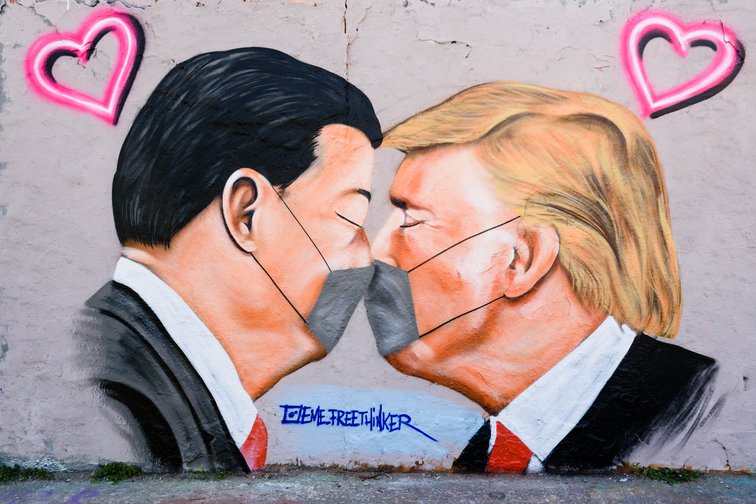
Jan Scheunert/Zuma Press/PA Images
Crisis redux
As the coronavirus and its political combatants hold the world hostage, it is pertinent to scrutinize the (geo) political and economic context within which the pandemic has emerged. Many analyses view neoliberalism as the culprit, having given rise to a dismantling and marketization of public services such as healthcare for which we are now paying the price.
8 May 2020 (Human Rights Watch)* — Amidst a disturbing global uptick in reports of domestic violence during Covid-19 lockdowns, Hungary has taken a leap backwards in protecting women. On May 5, parliament, where ruling party Fidesz has a two-thirds majority, blocked ratification of a regional treaty on violence against women.







 HUMAN WRONGS WATCH