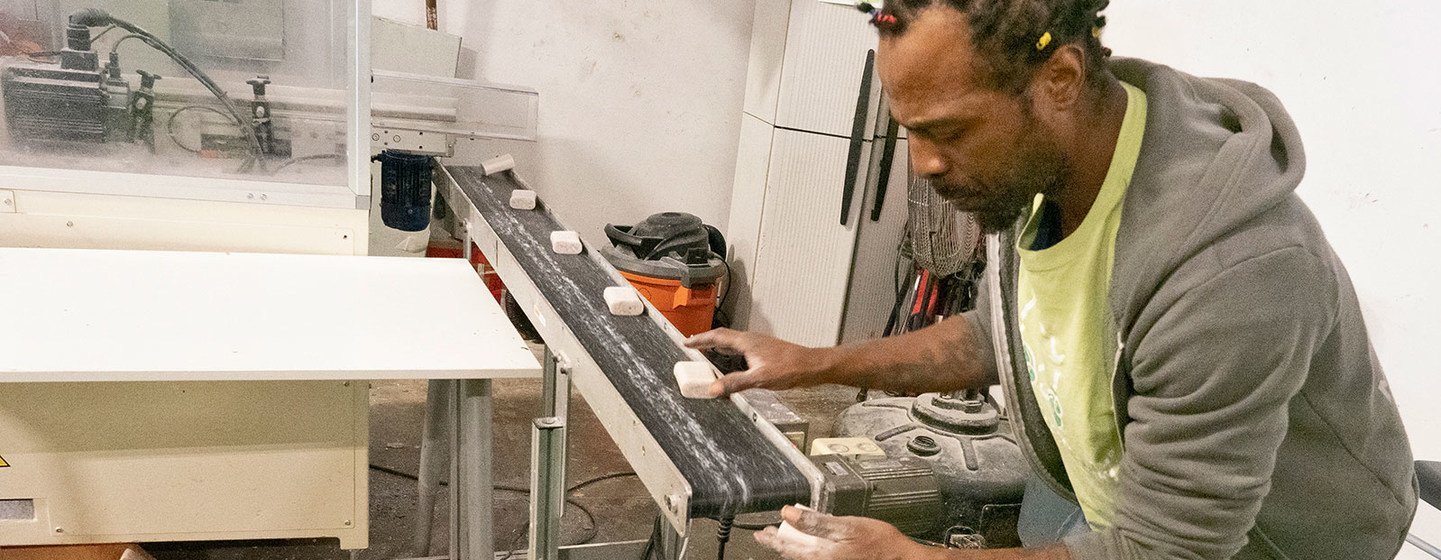
(UN News)* — Handwashing with soap and water has been identified by the World Health Organization (WHO) as an extremely important way to reduce the spread of COVID-19 but, in many countries, even basic facilities are hard to come by. On Hand Hygiene Day, marked on Tuesday [5 May 2020], we look in-depth at the work that one US-based NGO is doing, providing soap in shelters supported by the UN refugee agency (UNHCR), in Mexico.
ILO Photo/John Isaac | An employee at Clean the World collecting the completed recycled bars (the finished product for distribution) of soap coming off of the conveyor belt.
In Tijuana and Mexicali, close to the border with the US, some 30 shelters house refugees and migrants, including thousands of Nicaraguans; part of an exodus of people in Central and South America, claiming asylum from persecution and human rights abuses.
7 May 2020 (United Nations)* — “Vesak”, the Day of the Full Moon in the month of May, is the most sacred day to millions of Buddhists around the world. It was on the Day of Vesak two and a half millennia ago, in the year 623 B.C., that the Buddha was born. It was also on the Day of Vesak that the Buddha attained enlightenment, and it was on the Day of Vesak that the Buddha in his eightieth year passed away.
The UN General Assembly, by its resolution 54/115 of 1999, recognized internationally the Vesak Day [7 May]to acknowledge the contribution that Buddhism, one of the oldest religions in the world, has made for over two and a half millennia and continues to make to the spirituality of humanity.
This day is commemorated annually at the UN Headquarters and other UN offices, in consultation with the relevant UN offices and with permanent missions, which also wish to be consulted.
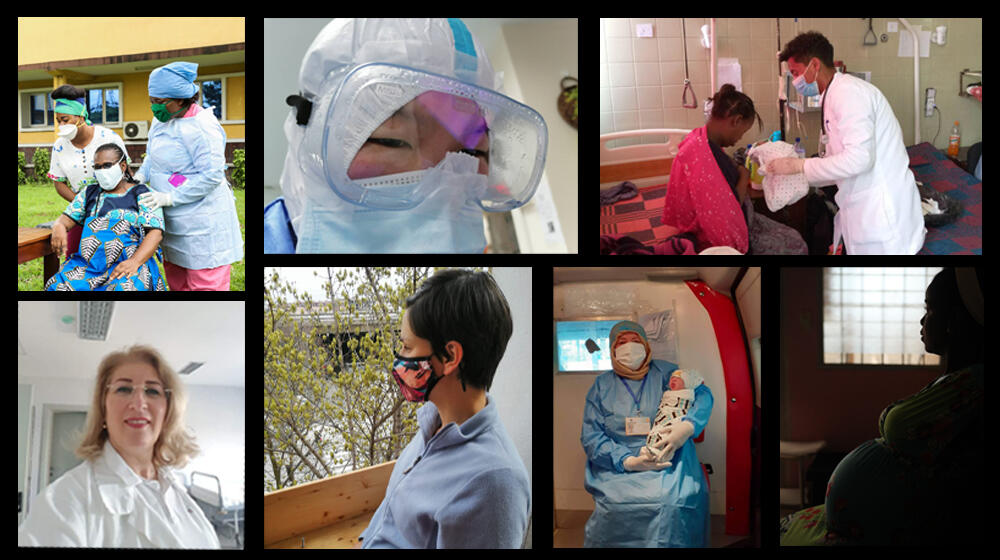
UNITED NATIONS, New York, 4 April 2020 (UNFPA)* – Around the world, May is a time to celebrate mothers and the health workers who help them enter motherhood. Dozens of countries observe Mother’s Day in May and, on 5 May, the International Day of the Midwife honours the life-saving work of midwives everywhere. Yet this May, as the COVID-19 pandemic sweeps through the world, these celebrations arrive on a sombre note.
If we connect our contemplative practices with social realities we can fashion a healthier present and a better future.
Pixabay/Alexandra_Koch. Pixabay licence.
3 May 2020 (openDemocracy)* — Over the past 12 months Transformation has been running a special series on “Mindfulness and social change,” designed to explore the relationships between contemplative practices like meditation, individual experiences of stress and strength, and structural issues in society like racism, sexism and inequality.
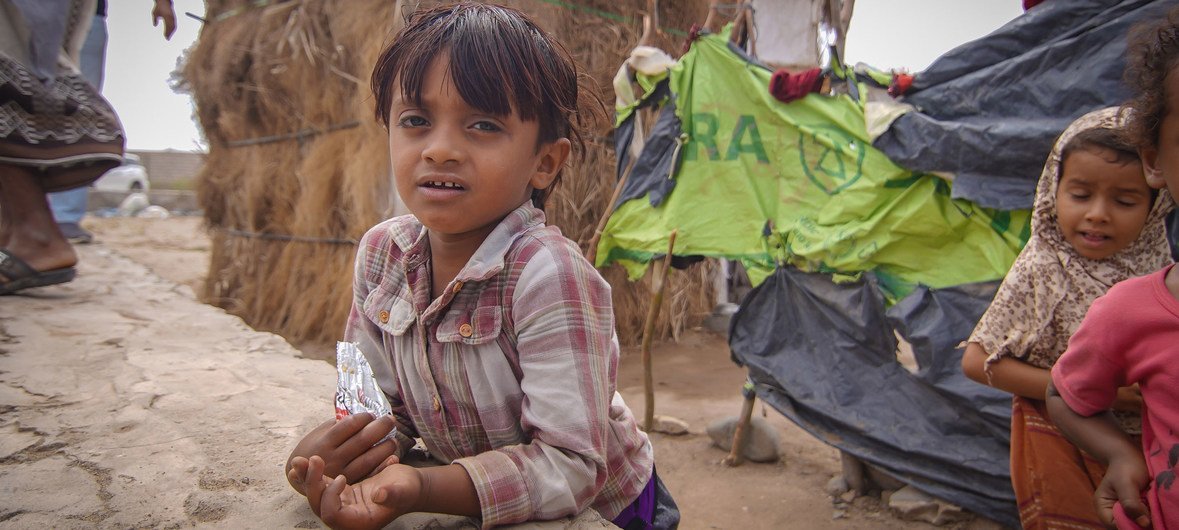
4 May 2020 (UN News)* — A new UN report finds that some 19 million children were displaced within their own countries due to conflict and violence in 2019, more than in any other year, making them among the most vulnerable to the global spread of COVID-19.
Using its fora such as the World Economic Forum – see ‘Strategic Intelligence’ – and its agents (particularly the World Health Organization, the pharmaceutical industry, governments, the medical industry and corporate media) the global elite continues to tighten its grip on the human population, bombarding us with COVID-19 propaganda to heighten people’s fear while introducing new and/or extending existing restrictions to conceal the many measures being taken to execute their ongoing coup against humanity. See ‘The Elite’s COVID-19 Coup Against a Terrified Humanity: Resisting Powerfully’.
Congress seems to be at war with the states. Only $150 billion of its nearly $3 trillion coronavirus relief package – a mere 5% – has been allocated to the 50 states; and they are not allowed to use it where they need it most, to plug the holes in their budgets caused by the mandatory shutdown.
Ellen Brown
On April 22, Senate Majority Leader Mitch McConnell said he was opposed to additional federal aid to the states, and that his preference was to allow states to go bankrupt.
No such threat looms over the banks, which have made out extremely well in this crisis.
The Federal Reserve has dropped interest rates to 0.25%, eliminated reserve requirements, and relaxed capital requirements. Banks can now borrow effectively for free, without restrictions on the money’s use.
4 May 2020 (Human Rights Watch)* — As the Covid-19 pandemic rocks the United States, it is exposing cracks in the system. The differences often split along not just socio-economic but also racial lines. Who gets to work from home and still receive a paycheck? Which kids have computers they can use to access school online? And, crucially, who gets the best – or even adequate – health care?
UNITED NATIONS, New York (UNFPA)* – A clear view of the toll of the COVID-19 pandemic is only beginning to take shape, but experts estimate the human cost could be extraordinary. The economic and physical disruptions caused by the disease could have vast consequences for the rights and health of women and girls, a new analysis by UNFPA and partners shows.





 HUMAN WRONGS WATCH