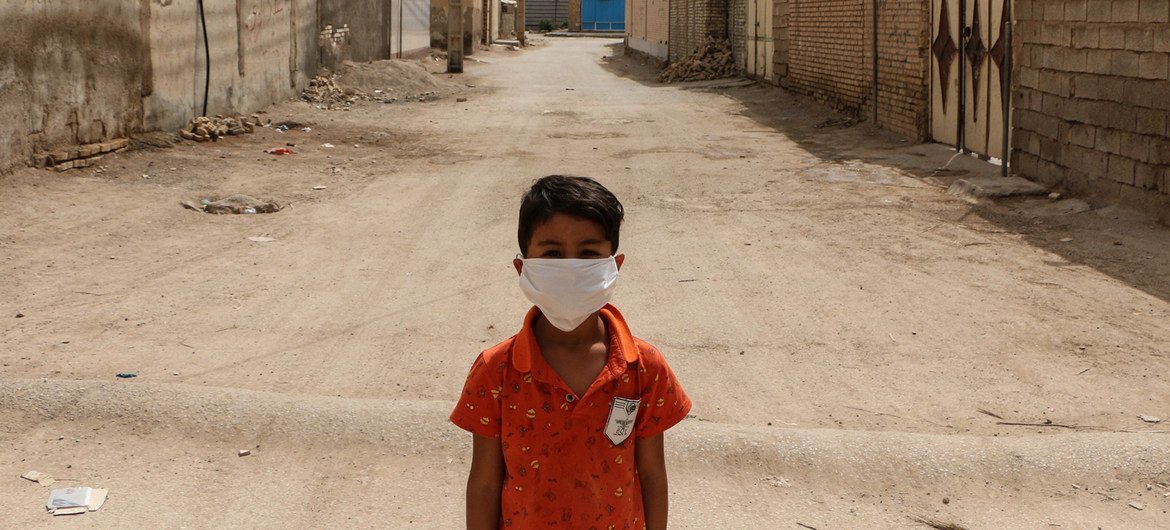
(UN News)* — A group of UN independent human rights experts have called on countries to lift – or at the very least, ease – sanctions to allow affected nations and communities access to vital supplies to fight against the global coronavirus pandemic.
People in countries under sanctions cannot protect themselves against the disease or get life-saving treatment if they fall ill because humanitarian exemptions to the sanctions are not working, the experts said in a news release on Friday [7 August 2020].
Siblings Nyamach and Nyakoang are among more than 42,000 South Sudanese refugee children in Ethiopia who are either unaccompanied or separated from their parents or guardians. | Español | Français | عربي
7 August 2020 (FAO)* — Huamani Cardenas lives in Lima, but is originally from Conayca, a rural town of roughly 1 300 people in the central highlands of Peru. When he received a delivery of fresh food from his hometown, he was thrilled. “I sincerely thank the authorities of Conayca for thinking of us,” he wrote in a social media group for young Conaycans living in Lima.
The Milne Ice Shelf lost about 80 square kilometers in July, an area larger than Manhattan island space, which is about 60 square kilometers. In 2020, polar ice reduction peaked for the last 40 years.
Glaciers on Canada’s Ellesmere Island. April, 2014. | Photo: Twitter/ @arctic_today
(teleSUR)* — The last intact ice shelf in the Canadian Arctic collapsed and lost a large part of his area due to extremely high temperatures, according to the Canadian Ice Service (CIS), as reported on Friday [7 August 2020].
UN Women statement on the International Day of the World’s Indigenous Peoples – 9 August 2020
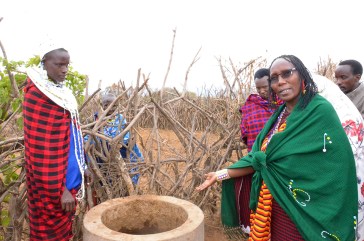
PWC Executive Director Maanda Ngoitiko during a tour in 2019, to assess how the trained women and girls were promoting use of biogas in Ngorongoro. Photo: UN Women/ Tsitsi Matope
By UN Women* – Being born an indigenous girl can be a life sentence of poverty, exclusion and discrimination, largely rooted in the historical marginalization of indigenous communities and aggravated by overlapping circumstances such as race, ethnicity, disability and location.
A participant at the World Conference on Indigenous Peoples, held at the UN Headquarters in 2014. UN Photo/Yubi Hoffmann
(United Nations)* — There are an estimated 476 million indigenous peoples in the world living across 90 countries. They make up less than 5 per cent of the world’s population, but account for 15 per cent of the poorest. They speak an overwhelming majority of the world’s estimated 7,000 languages and represent 5,000 different cultures.
Indigenous peoples are inheritors and practitioners of unique cultures and ways of relating to people and the environment. They have retained social, cultural, economic and political characteristics that are distinct from those of the dominant societies in which they live.
The Bogotá Ministry of Health have sent a Muisca nurse to Suba, in the north of Bogotá, Colombia, to check on the local Muisca indigenous population. Worldwide, over 50% of indigenous adults over age 35 have type 2 diabetes. At the same time, tuberculosis continues to disproportionately affect indigenous peoples due to poverty. These and other deseases make them even more vulnerable in times of COVID-19. Photo: PAHO/Karen González Abril.
(UN)* — While the exact origins of COVID-19 have not yet been confirmed, the link between environmental damage and pandemics is well known to leading research organizations. But there is yet another group of experts, who have been worrying about the threat of a pandemic even before COVID-19: indigenous peoples.
7 August 2020 (UN News)* — The COVID-19 pandemic has underscored the need to ensure the world’s indigenous people have control over their own communities, the UN High Commissioner for Human Rights has affirmed.
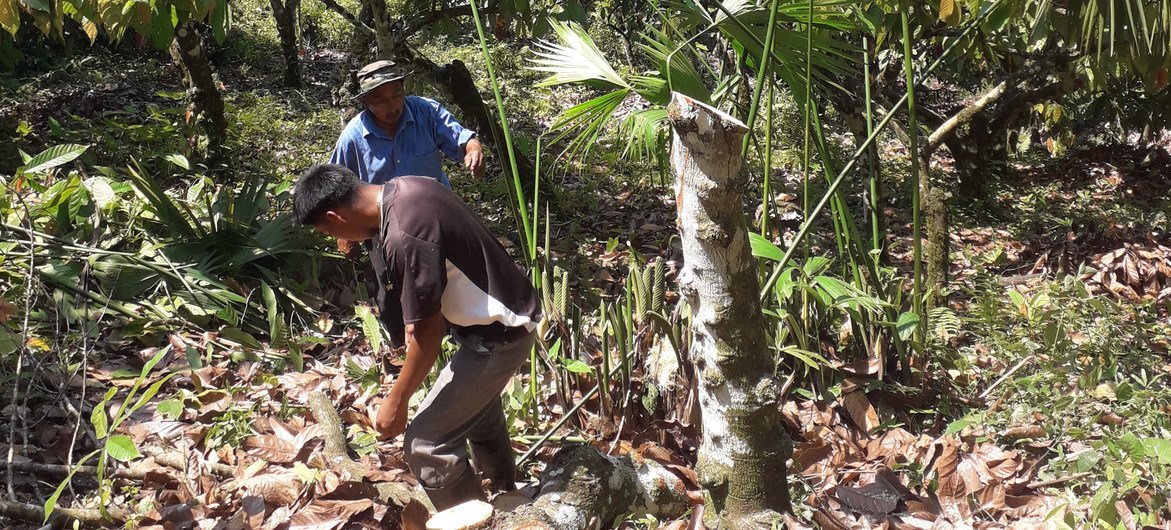
UNDP/Ya’axche | In Belize, indigenous communities are considered key allies for conservation and sustainable development efforts.
.
Michelle Bachelet described the pandemic as “a critical threat” to indigenous communities everywhere, at a time when many are also struggling against man-made environmental damage and economic depredation.
6 August 2020 (UN Environment)* — Cities are home to 55 per cent of the world’s population, all jammed together cheek-by-jowl. Little wonder, then, that cities are being hit hardest by COVID-19: an estimated 90 per cent of all reported cases have occurred in urban areas.
But the same concentration of people also makes cities the places where the battle for a green recovery from COVID-19 – which is essential to reduce future pandemic risks and fight climate change – can be won.
(Wall Street International)* — Throughout my career I have always thought that offensive security is awesome. That’s why I personally liked the term hacker, gray hat, black hat, etc. a lot because it highlights a lot of aspects in one single term. This is not necessarily an opinion everybody shares.
Being prepared and ready to engage in offensive security with the highest possible gurus, expertise, passion and dedication are the main things to achieve success in it, along with a breaker mentality to dig out the most hidden detail in a system.






 HUMAN WRONGS WATCH