24 September 2020 (Wall Street International)* — As we start the 21st century and the new millennium, our scientific and technological civilization seems to be entering a period of crisis.
Today, for the first time in history, science has given to humans the possibility of a life of comfort, free from hunger and cold, and free from the constant threat of infectious disease.
(UN News)* — Amidst a technological era that “beckons with vast opportunity”, new risks exist to global peace, stability and development, the UN chief told a side event of the General Assembly on Wednesday, aiming to help ensure access to digital technologies for all [23 September 2020].
The UN was founded 75 years ago, at the outset of the nuclear era, to provide “a global platform for addressing the world’s most pressing challenges, to secure peace and to safeguard the future for generations”, said Secretary-General António Guterres in a video message on Thursday to the high-level meeting on digital cooperation.
A new ILO analysis of the labour market impact of COVID-19 reveals a “massive” drop in labour income and a fiscal stimulus gap that threatens to increase inequality between richer and poorer countries.
Washington Bullets: A History of the CIA, Coups, and Assassinations, by Vijay Prashad, Sep 2020, 162 pp.
While vaunting itself as an oasis of democracy, the United States, in reality, has become a superpower by infiltrating foreign governments, obliterating entire cultures, and carrying out murderous military interventions in developing countries all over the world.
Washington Bullets is about U.S. imperialism—the bullets sent by various Washington, DC administrations to crush revolutions, assassinate democratically elected leaders—to destroy hope.
STOCKHOLM/CAMBRIDGE (US), Sep 23 2020 (IPS)* – As COVID-19 threatens farming communities across Africa already struggling with climate change, the continent is at a crossroads.
Million Belay
Will its people and their governments continue trying to replicate industrial farming models promoted by developed countries?
Or will they move boldly into the uncertain future, embracing ecological agriculture?.
It is time to choose. Africa is projected to overtake South Asia by 2030 as the region with the greatest number of hungry people.
An alarming 250 million people in Africa now suffer from “undernourishment,” the U.N. term for chronic hunger. If policies do not change, experts project that number to soar to 433 million in 2030.
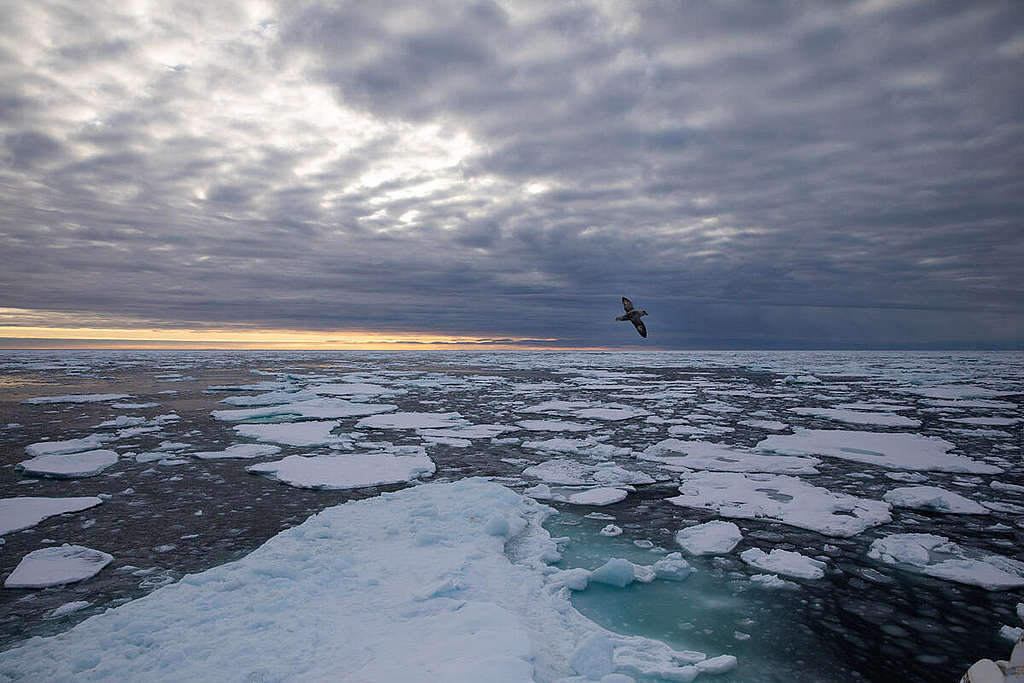
Today, scientists sounded another alarm on the impacts of the climate breakdown: the Arctic sea ice minimum has reached its 2nd lowest level since measurements began.
22 September 2020 (WMO)* — Arctic sea ice – a key climate change indicator – has reached its annual minimum extent after the summer melt season. It was the second lowest extent only after the record low observed in 2012.
.
The U.S. National Snow and Ice Data Center (NSIDC) announced that on 15 September, sea ice extent was 3.74 million square kilometers (1.44 million square miles).
22 September 2020 (FAO)* — When we go about our daily routines, most of us are unaware that beneath our feet lies an outstandingly diverse community of plants, animals and microbes that makes up our soils.
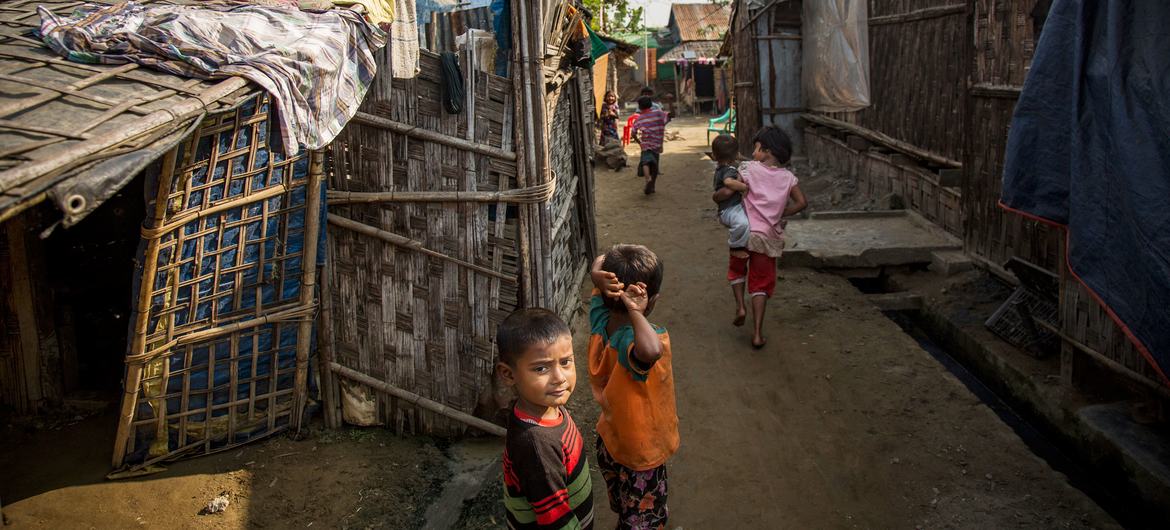
(UN News)* — The assaults by security forces in Myanmar on villages in Rakhine state “need to stop”, and a ceasefire should be declared immediately, said the UN independent rights expert on the situation across the country on Tuesday [22 September 2020].
Thomas Andrews decried the mounting toll of child casualties: “Serious questions have been raised about whether these children, and growing numbers of others, are being caught in the crossfire of war, or are being deliberately targeted,” he said.
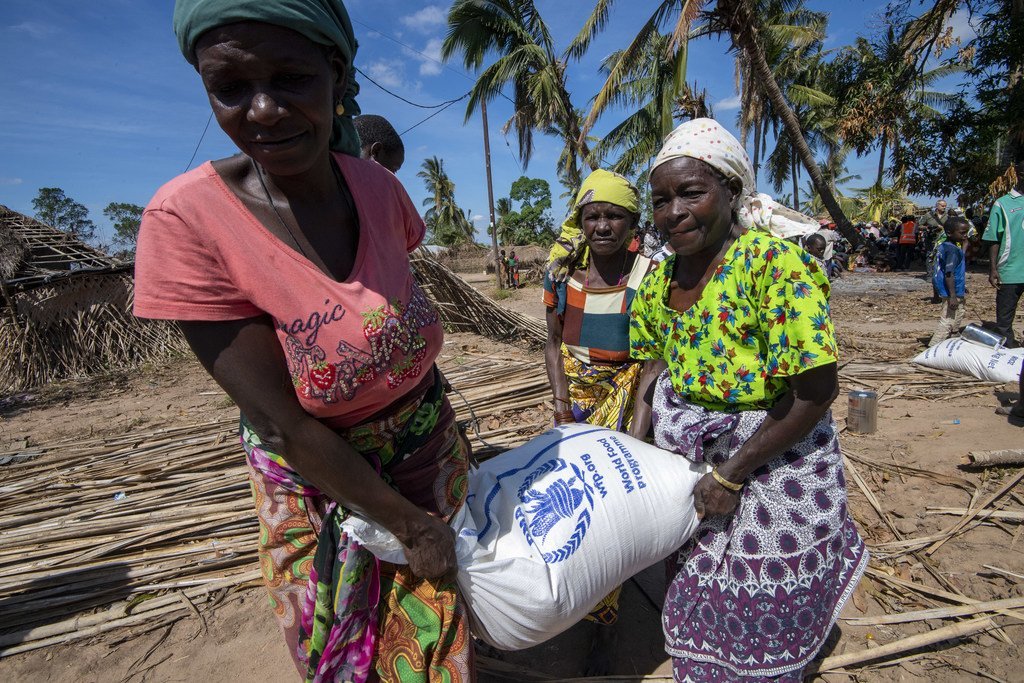
22 September 2020 (UN News)* — Worsening conflict, combined with a precarious humanitarian situation, has forced more than 300,000 people to flee their homes and villages in Mozambique’s Cabo Delgado province, leaving them completely reliant on humanitarian assistance, the UN World Food Programme (WFP) has said.
UN Photo/Eskinder Debebe | Affected communities receive WFP food relief in Nacate village, in Cabo Delgado province, Mozambique.






 HUMAN WRONGS WATCH