20/09/2020
During the pandemic, several communities entered lockdown to avoid bringing in the virus.
Posted in Latin America & Caribbean, Market Lords, Others-USA-Europe-etc., The Peoples, War Lords |
Leave a Comment »
20/09/2020
Afaf Qaddouh has taken advantage of an FAO project in Lebanon designed to make land more productive and improve land management practices. ©FAO/Ralph Azar
18 September 2020 (FAO)* — Afaf Qaddouh had assisted her father in working their land in Zawtar El Sharkiyeh in the South of Lebanon ever since she was a little girl. When he passed away, it became hers. She didn’t know then how important this land would become to her.
read more »
Posted in Asia, Climate Crisis, Market Lords, Middle East, Migrants and Refugees, Others-USA-Europe-etc., The Peoples, War Lords |
Leave a Comment »
20/09/2020
Nairobi, 17 September 2020 (UN Environment)* – The UN Environment Programme (UNEP) and adidas Runtastic are again teaming up with Internet of Elephants and other conservation organizations to challenge runners to outrun iconic endangered individual wild animals in a bid to rally support for biodiversity protection worldwide.

.
read more »
Posted in Africa, Asia, Climate Crisis, Latin America & Caribbean, Market Lords, Middle East, Migrants and Refugees, Others-USA-Europe-etc., The Peoples |
Leave a Comment »
19/09/2020
The Guardians of the Forest, a group of indigenous Guajajara in the Brazilian state of Maranhão, struggle to defend their land from invaders and to guarantee their survival in the midst of the COVID-19 pandemic.
16 September 2020 (openDemocracy)* — If we ask Olimpio Santos Guajajara when the Guardians of the Forest were founded, his answer would be very simple: in 1500, the year the Portuguese landed in Brazil with an armada under the command of Pedro Álvares Cabral.
read more »
Posted in Latin America & Caribbean, Market Lords, Migrants and Refugees, Mother Earth, Others-USA-Europe-etc., The Peoples, War Lords |
2 Comments »
19/09/2020
ROME, Sep 17 2020 (IPS)*– Concern about food loss and waste has become an increasingly important focus of attention when discussing ways to eliminate hunger which, according to the latest FAO report, already exceeds 690 million people.
 Controlling the loss and waste of food is a crucial factor in reaching the goal of eradicating hunger in the world. Credit: FAO
read more »
Posted in Africa, Asia, Latin America & Caribbean, Market Lords, Middle East, Migrants and Refugees, Mother Earth, Others-USA-Europe-etc., The Peoples |
Leave a Comment »
19/09/2020
Closing the coverage gap, worsened by COVID-19, will require additional sources of financing says a new ILO study.
Posted in Africa, Asia, Climate Crisis, Latin America & Caribbean, Market Lords, Middle East, Migrants and Refugees, Mother Earth, Others-USA-Europe-etc., The Peoples, War Lords |
Leave a Comment »
19/09/2020
More than five years of war have “devastated the lives of tens of millions of Yemenis”, with experts estimating that up to one million may have been affected by COVID-19, the UN chief told the General Assembly on Thursday [17 September 2020]. *
© UNICEF/Mahmoud Fahdl | A health care worker prepares a diphtheria vaccine at Khawr Meksar clinic in Aden, Yemen, despite the COVID-19 pandemic.
UN Secretary-General António Guterres informed a High-level Ministerial meeting, that there were more than 2,000 confirmed cases of COVID-19 in Yemen, and with war having “decimated the country’s health facilities”, the need for a negotiated political settlement to end the conflict is more urgent than ever.
read more »
Posted in Africa, Asia, Market Lords, Middle East, Migrants and Refugees, Others-USA-Europe-etc., The Peoples, War Lords |
Leave a Comment »
19/09/2020
(UN News)* — The global hunger crisis caused by conflict – and now compounded by COVID-19 – is moving into a dangerous phase, the head of the UN World Food Programme (WFP) said on Thursday [18 September 2020], stressing that without resources, a wave of famine could sweep the globe, overwhelming nations already weakened by years of instability.
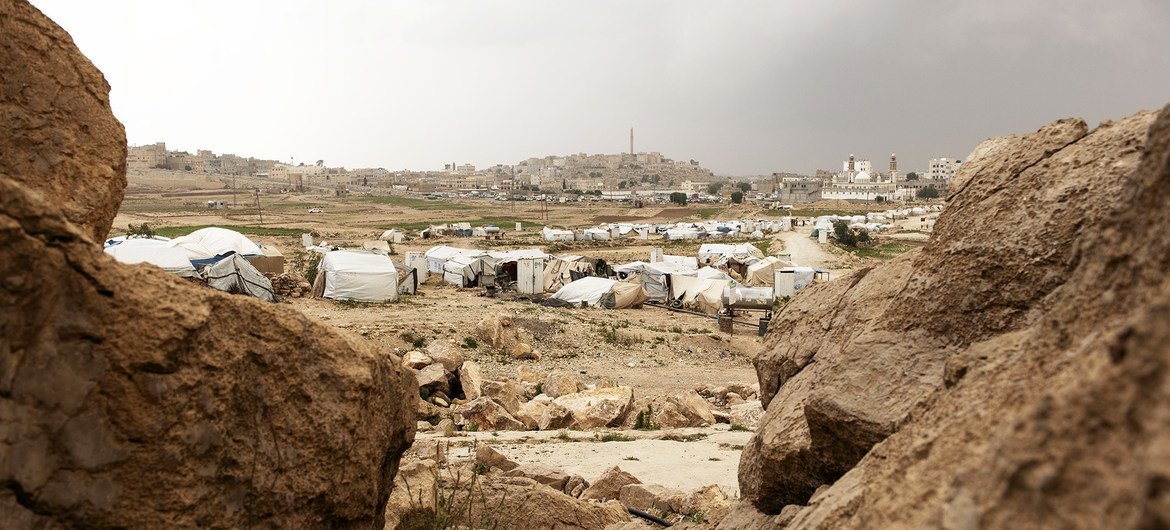
UNICEF/Alessio Romenzi | Tents and makeshift shelters at an IDP camp in Yemen. Years of conflict has left millions at crisis levels of hunger, with some facing starvation due to COVID.
“This fight…is far, far, far from over,” said WFP Executive Director David Beasley, briefing the Security Council during a virtual debate on conflict-induced hunger.
read more »
Posted in Africa, Asia, Climate Crisis, Latin America & Caribbean, Market Lords, Middle East, Migrants and Refugees, Others-USA-Europe-etc., The Peoples, War Lords |
Leave a Comment »
19/09/2020
By Hilde F. Johnson, Norway’s Former Minister of International Development*
A Nobel Peace Laureate faces his greatest test
15 September 2020 (Wall Street International)* — Eight months ago a worthy winner of the Nobel Peace Prize, Prime minister Abiy Ahmed, returned home to Addis Ababa; home to a country that has seen economic growth between 8 and 11 percent for several years, and where four Ethiopians made their way out of poverty every day; home to a people who have seen child mortality reduced by two thirds since 2000, and where access to clean drinking water has doubled in the same time period; a country reported to be opening up political space by the Nobel laureate.
read more »
Posted in Africa, Climate Crisis, Market Lords, Middle East, Migrants and Refugees, Others-USA-Europe-etc., The Peoples, War Lords |
Leave a Comment »
17/09/2020
On 14 September, the US National Hurricane Center issued advisories on five tropical cyclones over the Atlantic basin (Paulette, Rene, Sally, Teddy and Vicky). This ties the record for the most number of tropical cyclones in that basin at one time, last set in September 1971.
read more »
Posted in Africa, Asia, Climate Crisis, Market Lords, Middle East, Migrants and Refugees, Others-USA-Europe-etc., The Peoples |
Leave a Comment »





 HUMAN WRONGS WATCH