October 2020 (Wall Street International)* — Everything always the same. Repetition presides over processes, from metabolic ones to the passage of time: day, night, light, dark, birth, death, and old age. Having to make a living, having to feed, to get through life is the biggest contradiction of the process, of the dynamics of life. There is continuity only if there is maintenance. Linking dynamics to statics, movement to inertia, is dialectical. Living without contradiction is as desired as it is impossible.
The US is a hopelessly divided, and dysfunctional country
14 October2020 (Other News)* — Let’s take a look at the American elections which at this moment are important not only for the United States but also for the entire world. The American electoral system is a little known but disastrous system. It is also the most anti-democratic you can imagine.
Roberto Savio
This system is incomprehensible for a modern society but it is untouchable in the United States.
There are 50 states and each state has two senators. California has 39 million inhabitants and two senators. Wyoming has 850,000 inhabitants but also two senators.
Currently there are 47 Democratic senators (therefore 53 are Republicans) who obtained 17 million more votes than the Republicans. So the Republicans have the majority of seats despite having obtained 17 million fewer votes.
Beekeeper and entrepeneur Oralia Ruano Lima, Guatemala. PHOTO:UN Women/Rosendo Quintos.
14 October 2020 (United Nations)* — Women and girls are disadvantaged in this pandemic, a problem aggravated in rural areas. Rural women, with a crucial role in agriculture, food security and nutrition, already face struggles in their daily lives.
14 October 2020 (FAO)* — The COVID-19 global health crisis has been a time to reflect on things we truly cherish and our most basic needs. These uncertain times have made many of us rekindle our appreciation for a thing that some take for granted and many go without: food.
.
.
Food is the essence of life and the bedrock of our cultures and communities. Preserving access to safe and nutritious food is and will continue to be an essential part of the response to the COVID-19 pandemic, particularly for poor and vulnerable communities, who are hit hardest by the pandemic and resulting economic shocks.
11 October 2020 (Wall Street International)* — This series of articles will discuss the basic differences between human and computer intelligence, a particularly important distinction today, flooded as we are with predictions that artificial intelligence and robots will soon surpass human abilities. What is true and what is fiction in the conflicting stories we hear about this subject?
12 October 2020 (UN Environment)* — Looking for easy and simple ways to make high-impact, achievable steps to reduce your carbon pollution and persuade others to do the same? Here are 16 actions:
These actions, derived from experts and research by the United Nations Environment Programme (UNEP) alongside others, are featured as part the Count Us In campaign, a diverse coalition of culture, faith, sport, cities and businesses.
Organizers hope the activities and support of the partners will inspire one billion people to take practical steps to reduce carbon pollution and challenge leaders to act more boldly on climate.
Individual action can make a significant impact. Count Us In organizers estimate that if 1 billion people take practical action in their own lives, they could reduce as much as 20 per cent of global carbon emissions.
(UN News)* — The first 20 years of this century have seen a “staggering” rise in climate disasters, UN researchers said on Monday [12 October 2020], while also maintaining that “almost all nations” have failed to prevent a “wave of death and illness” caused by the COVID-19 pandemic.
Geneva, 13 October 2020 (World Meteorological Organization)* — Over the past 50 years, more than 11,000 disasters have been attributed to weather, climate and water-related hazards, involving 2 million deaths and US$ 3.6 trillion in economic losses.
Historical facts do not repeat themselves, but they can rhyme, like the verses of a long poem.
Brazilian President Jair Bolsonaro greets people during the 198th anniversary celebration of the country’s Independence Day in Brasilia, Brazil, on September 7, 2020 / Lucio Tavora /PA Images
7 October 2020 (openDemocracy)* — Historical facts do not repeat themselves, but they can rhyme, like the verses of a long poem. I heard this phrase from my friend Sidney Chalhoub, a prestigious historian and professor at Harvard University.
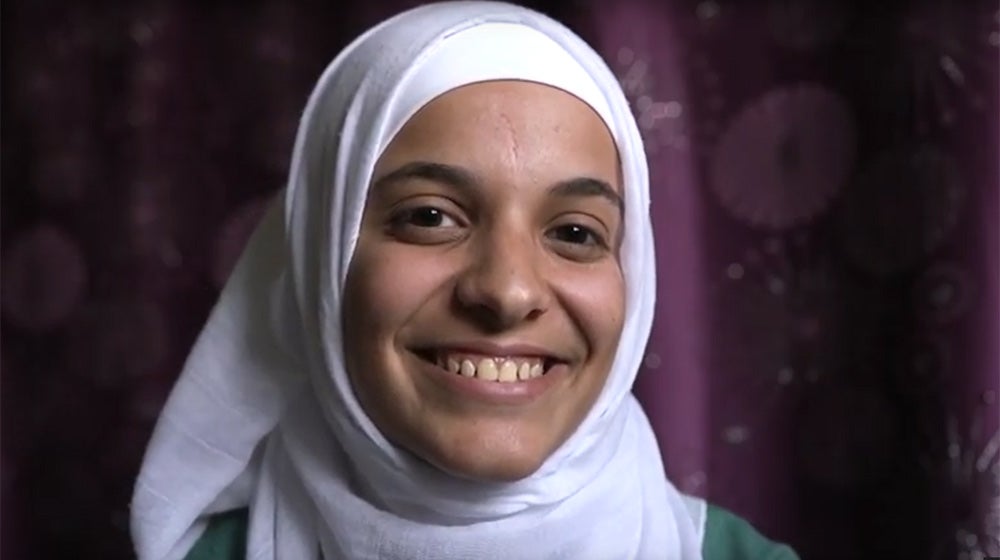
New York, 10 October 2020 (UNFPA)* – On 11 October, organizations and activists around the world will mark the International Day of the Girl Child, shining a spotlight on the rights, needs, vulnerabilities, contributions and future potential of girls everywhere.
The theme for the day is “My Voice, Our Equal Future” because girls’ voices are seldom heard – not in the halls of governments, nor in homes or classrooms.
But what do we learn when we finally listen to girls?


 HUMAN WRONGS WATCH