A recent report from the United Nations Environment Programme (UNEP) found the world is in the grip of an epidemic of food wastage. In 2019, consumers tossed away nearly a billion tonnes of food, or 17 per cent of all the fare they bought.
A Beginner’s Guide to Sustainable Farming
All told that costs economiesabout $3 trillion every year. And to top it all off, some farming practices have been linked to the emergence of zoonotic diseases, such as COVID-19.
Often Left Without Savings or Any Other Income, Widows Are Especially Exposed to Sudden Loss of Employment, with Serious Consequences, Including Increased Susceptibility to Human Trafficking
Human Wrongs Watch
By Phumzile Mlambo-Ngcuka, Executive Director of UN Women*

Phumzile Mlambo-Ngcuka
The COVID-19 pandemic has strained health systems, widened socio-economic gaps, and shifted strategic, political, and funding priorities, all of which disproportionately affect women and girls, particularly those who are most marginalized.
The doubled risk of death for men from COVID-19 has not only created more widows; the pandemic has in many cases magnified the impact of the challenges they face, for example when confronted by extreme poverty from being disinherited from land and property with no alternative source of support.
Invisible Women, Invisible Problems
22 June 2021 (United Nations)* — For many women around the world, the devastating loss of a partner is magnified by a long-term fight for their basic rights and dignity.
Despite the fact that there are more than 258 million widows around the world, widows have historically been left unseen, unsupported, and unmeasured in our societies.
Today, as armed conflicts, displacement and migration, and the COVID-19 pandemic leave tens of thousands of women newly widowed and many others whose partners are missing or disappeared, the unique experiences and needs of widows must be brought to the forefront, with their voices leading the way.
Is the Real Reason the US Is So Interested in What’s Going on in Xinjiang Because It Contains So Much Oil?
Human Wrongs Watch
21 Jun, 2021 (RT)* — The Americans have made a lot of noise about the Uighurs, but given the region’s strategic importance to China and its richness in natural resources, that may be more about geopolitical machinations than human rights.
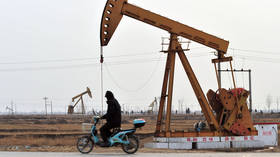
Last week, China made a significant announcement that went somewhat under the radar. In the Xinjiang autonomous region in the far west, its oil companies have discovered an oil reserve that amounts to nearly one billion tons. This is the largest found in China in decades, and adds to an ever-growing number of discoveries in this region.
Africa Can Be Self-Sufficient in Rice Production
Human Wrongs Watch
– Every year, people in Sub-Saharan Africa consume 34 million tons of milled rice, of which 43 percent is imported. But the COVID-19 pandemic has greatly hampered supply chains, making it difficult for imported rice to reach the continent. Indeed, if immediate action is not taken, the supply shortfall will further strain the region’s food systems which are already impacted by the pandemic.

The Same Shady People Own Big Pharma and the Media
Human Wrongs Watch
By Joseph Mercola, M.D. – TRANSCEND Media Service*
- Big Pharma and mainstream media are largely owned by two asset management firms: BlackRock and Vanguard
- Drug companies are driving COVID-19 responses — all of which, so far, have endangered rather than optimized public health — and mainstream media have been willing accomplices in spreading their propaganda, a false official narrative that leads the public astray and fosters fear based on lies
- Vanguard and BlackRock are the top two owners of Time Warner, Comcast, Disney and News Corp, four of the six media companies that control more than 90% of the U.S. media landscape