17/06/2021
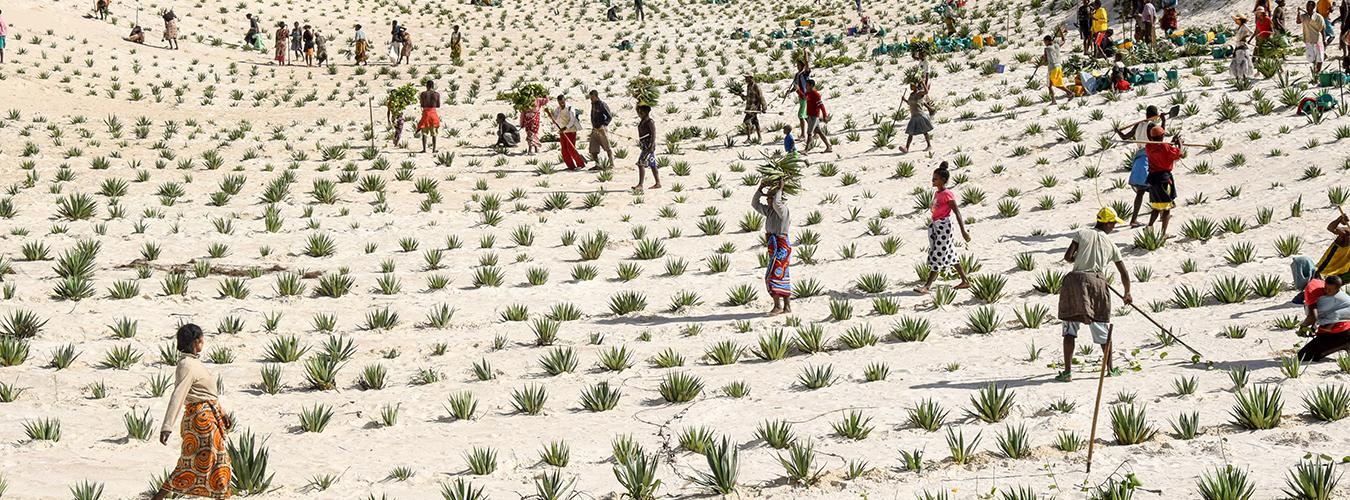
In Faux-Cap, Madagascar, the dunes and their strong winds pose a threat to their crops. With the greenest weapons, its inhabitants worked for 120 days to secure 75 hectares of dunes. Once settled, the risk is over. PHOTO:UNDP Madagascar
16 June 2021 (United Nations)* — The 2021 Desertification and Drought Day to be held on 17 June will focus on turning degraded land into healthy land. Restoring degraded land brings economic resilience, creates jobs, raises incomes and increases food security.
read more »
Posted in Africa, Asia, Climate Crisis, Latin America & Caribbean, Market Lords, Middle East, Migrants and Refugees, Mother Earth, Others-USA-Europe-etc., The Peoples |
Leave a Comment »
16/06/2021
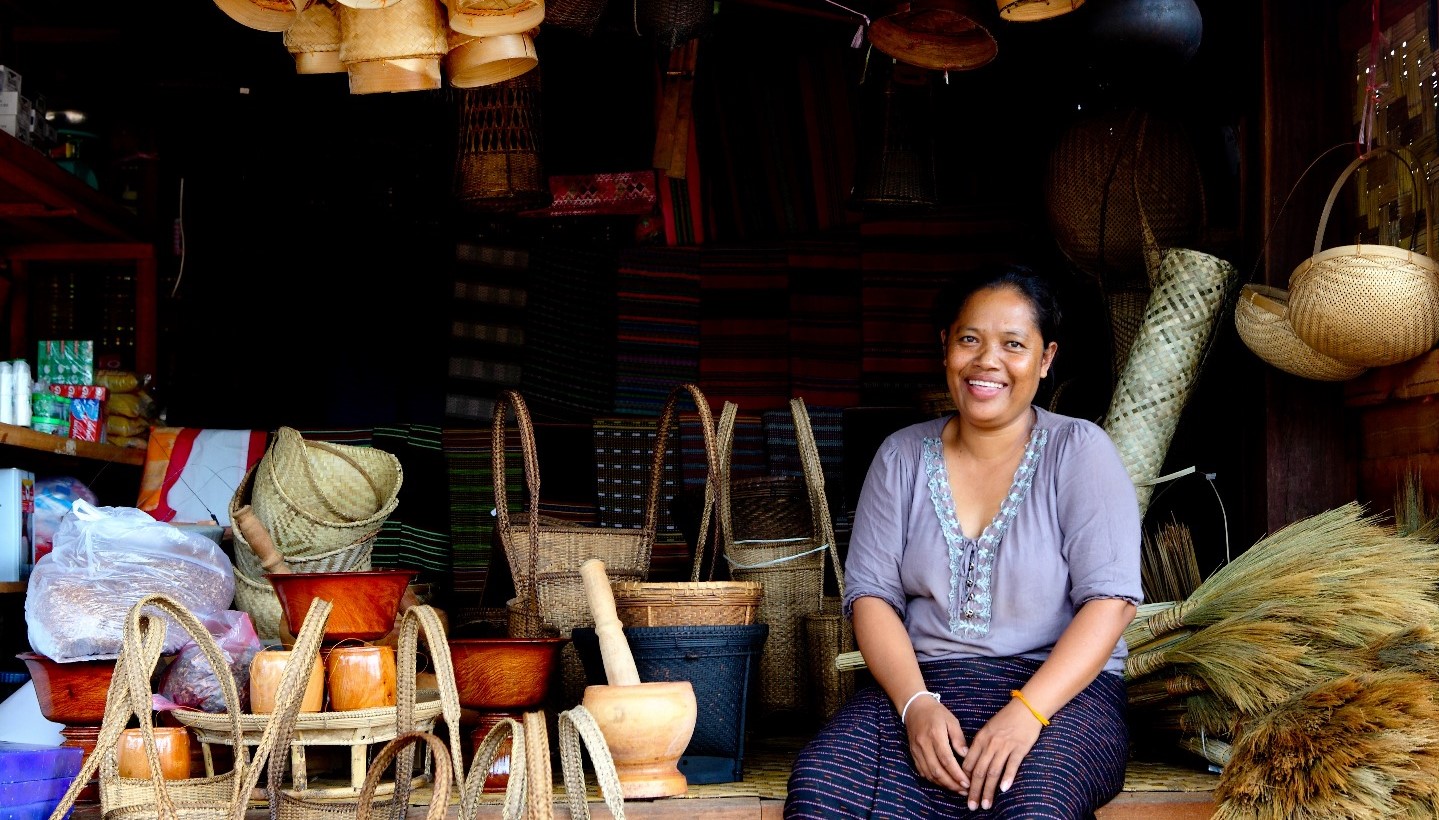 ©IFAD/GMB Akash
15 June 2021 (IFAD)* — Every year, on 16 June, the International Day of Family Remittances (IDFR) is observed to raise further awareness on the abnegation and sacrifice of migrant workers, who support their families and communities of origin through the money they send back home, particularly in these times of crisis.
This year, the IDFR lauds the human spirit and resilience of over 200 million migrants who defied predictions of the pandemic and continued to send money home to their countries of origin.
read more »
Posted in Africa, Asia, Climate Crisis, Latin America & Caribbean, Market Lords, Middle East, Migrants and Refugees, Mother Earth, Others-USA-Europe-etc., The Peoples, War Lords |
Leave a Comment »
16/06/2021

Over 200 million migrant workers sent US$554 billion back to their families in remittance-reliant countries in 2019. PHOTO:© IFAD
16 June 2021 (United Nations)* — The International Day of Family Remittances (IDFR) was adopted by the United Nations General Assembly and is observed on 16 June. The IDFR recognizes more than 200 million migrant workers, women and men, who send money home to over 800 million family members.
read more »
Posted in Africa, Asia, Climate Crisis, Latin America & Caribbean, Market Lords, Middle East, Migrants and Refugees, Mother Earth, Others-USA-Europe-etc., The Peoples, War Lords |
Leave a Comment »
16/06/2021
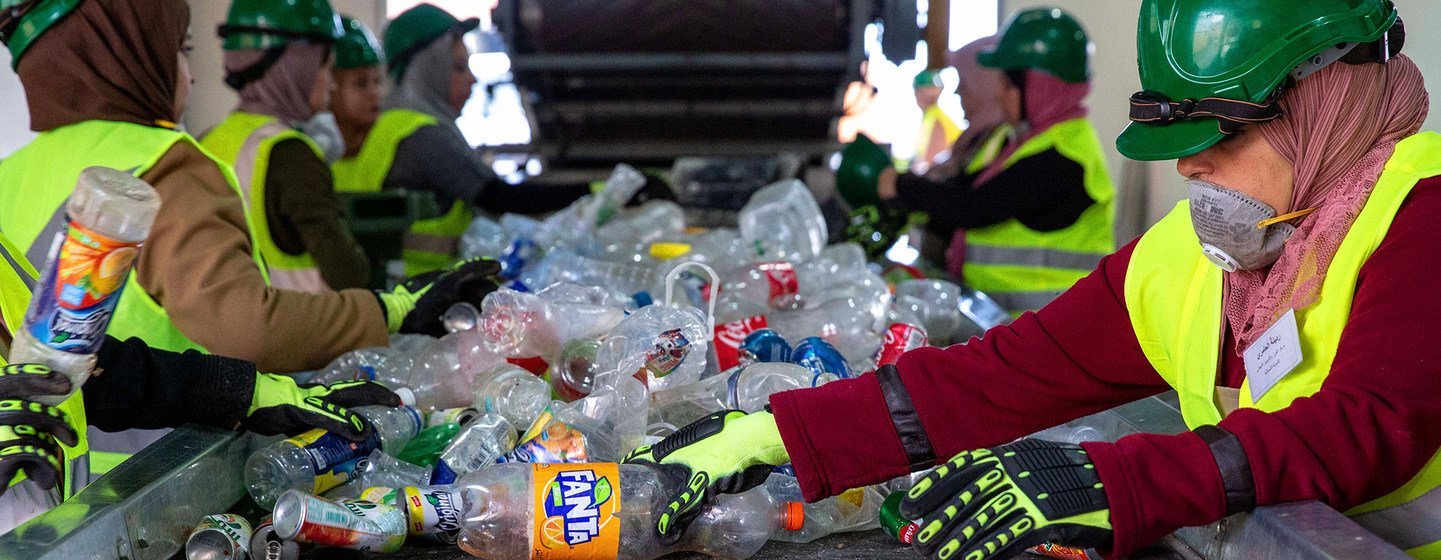
(UN News)* — Due to the ever-increasing demands of the global economy, the resources of the planet are being used up at an alarming rate and waste and pollution are growing fast. The idea of a more sustainable “circular economy” is gaining traction, but what does this concept mean, and can it help save the planet?
UNDP/Sumaya Agha | Women sort plastic at a recycling plant in Jordan.
1) Business as usual, the path to catastrophe
Unless we make some major adjustments to the way the planet is run, many observers believe that business as usual puts us on a path to catastrophe.
Around 90 per cent of global biodiversity loss and water stress (when the demand for water is greater than the available amount), and a significant proportion of the harmful emissions that are driving climate change, is caused by the way we use and process natural resources.
read more »
Posted in Africa, Asia, Climate Crisis, Latin America & Caribbean, Market Lords, Middle East, Migrants and Refugees, Mother Earth, Others-USA-Europe-etc., The Peoples |
Leave a Comment »
14/06/2021

Left: A market vendor sells produce at Victoria Market in Port Victoria, Seychelles. Right: 64 years old, Christine Banlog, has been a market woman for 22 years. She is widowed, and raising her three grandchildren in Nyalla, Cameroon. PHOTO:UN Women/Ryan Brown
.
(United Nations)* — Although all age groups are at risk of contracting
COVID-19, older persons are at a significantly higher risk of mortality and severe disease following infection, with those over 80 years old dying at five times the average rate.
.
An estimated 66% of people aged 70 and over have at least one underlying condition, placing them at increased risk of severe impact from COVID-19.
Posted in Africa, Asia, Latin America & Caribbean, Market Lords, Middle East, Migrants and Refugees, Others-USA-Europe-etc., The Peoples, War Lords |
Leave a Comment »
14/06/2021
Children around the world are being poisoned by lead on a massive and previously unrecognized scale.
.

UNICEF/UNI118470/Noorani
Lead is a highly poisonous element that is responsible for nearly 1.5 per cent of annual global deaths – almost as many deaths as from HIV and AIDS, and more than from malaria.
Nearly a third of the world’s children – up to 800 million children – are affected by lead poisoning.
read more »
Posted in Africa, Asia, Latin America & Caribbean, Market Lords, Middle East, Migrants and Refugees, Mother Earth, Others-USA-Europe-etc., The Peoples |
Leave a Comment »
14/06/2021
(FAO)* — Cotton is one of the most common fabrics in the world, from its origins in ancient India to the modern garments many of us wear today. This durable, versatile and naturally organic fabric is made from the white, fluffy fibres around the seeds of cotton plants.
Cotton is one of the most popular fabrics around the world, but, in some countries, child labour is common in its production. ©FAO/Swiatoslaw Wojtkowiak
However, the backstory of cotton is more complicated. Its production is heavily dependent on natural resources and labour; and unfortunately, child labour is often a part of this.
read more »
Posted in Africa, Asia, Latin America & Caribbean, Market Lords, Middle East, Migrants and Refugees, Mother Earth, Others-USA-Europe-etc., The Peoples, War Lords |
Leave a Comment »
14/06/2021

Children from Collège du Léman and the International School of Geneva performed on the World Day Against Child Labour event (12.06.2017) at 106th Session of the International Labour Conference.
PHOTO:© Crozet / Pouteau
Posted in Africa, Asia, Latin America & Caribbean, Market Lords, Middle East, Migrants and Refugees, Others-USA-Europe-etc., The Peoples |
Leave a Comment »
14/06/2021
The International Labour Organization and UNICEF warn nine million additional children at risk as a result of COVID-19 pandemic.
Posted in Africa, Asia, Latin America & Caribbean, Market Lords, Middle East, Migrants and Refugees, Mother Earth, Others-USA-Europe-etc., The Peoples, War Lords |
Leave a Comment »

 HUMAN WRONGS WATCH