— As much needed aid starts to trickle into besieged Gaza, a war over facts is ratcheting up as conflicting narratives about the situation on the ground are being fuelled by social media.
Harmful disinformation about the ongoing conflict in the wake of the 7 October attacks by Hamas against Israel continues to circulate online, with potentially dangerous consequences on the ground.
While misinformation refers to the accidental spread of falsehoods, disinformation can be circulated intentionally by State or non-State actors, including during an armed conflict, to influence public or political opinion; it can affect all areas of development, from peace and security to humanitarian aid.
UNITED NATIONS, Oct 272023 (IPS)* – Last August, 91 UN member states, “in a demonstration of solidarity and commitment”, signed a U.S.-Led Joint Communiqué condemning the Use of Food as a Weapon of War.
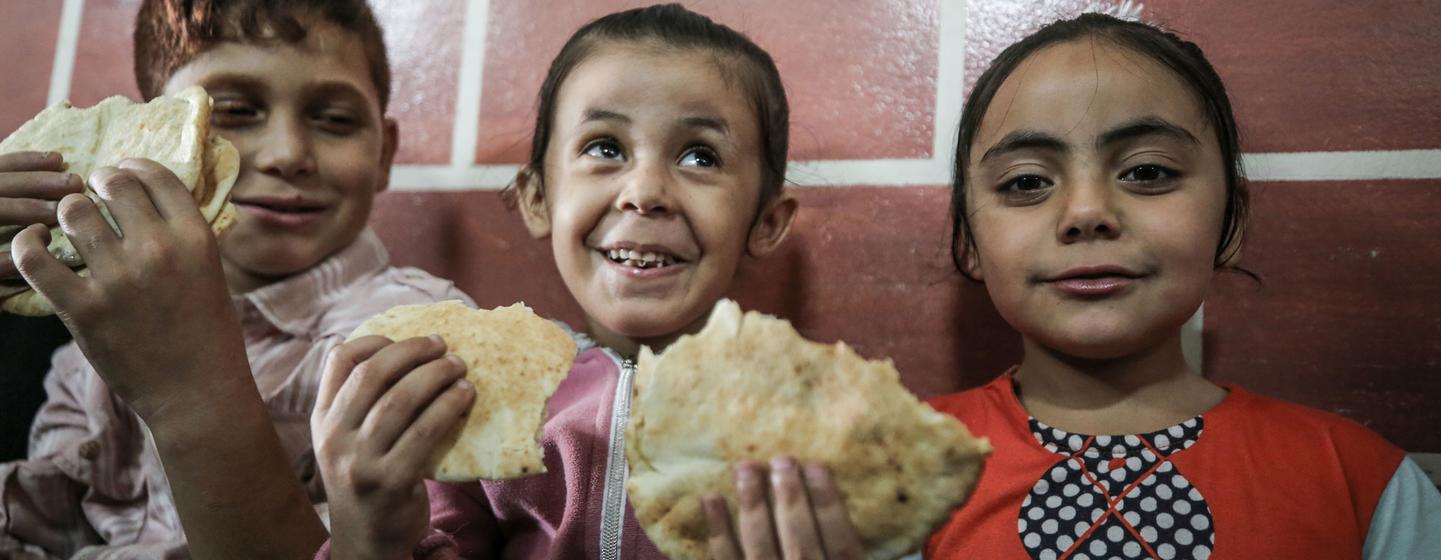
A young girl eats bread distributed by World Food Programme, at a school shelter in Gaza. Credit: WFP/Ali Jadallah
Roughly 345 million people – in 79 countries – face acute food insecurity, often caused or exacerbated by armed conflicts, the US said, pointing out that the joint communiqué was born out of the United States’ resolve to once again use its UN Security Council presidency to draw attention to conflict-induced food insecurity.

 HUMAN WRONGS WATCH