Archive for February 15th, 2024

15/02/2024

U.S. Chooses Genocide Over Diplomacy in the Middle East

Human Wrongs Watch

By Medea Benjamin and Nicolas J. S. Davies – TRANSCEND Media Service*

On February 7, 2024, a U.S. drone strike assassinated an Iraqi militia leader, Abu Baqir al-Saadi, in the heart of Baghdad. This was a further U.S. escalation in a major new front in the U.S.-Israeli war on the Middle East, centered on the Israeli genocide in Gaza, but already also including ethnic cleansing in the West Bank, Israeli attacks on Lebanon and Syria, and the U.S. and U.K.’s bombing of Yemen.
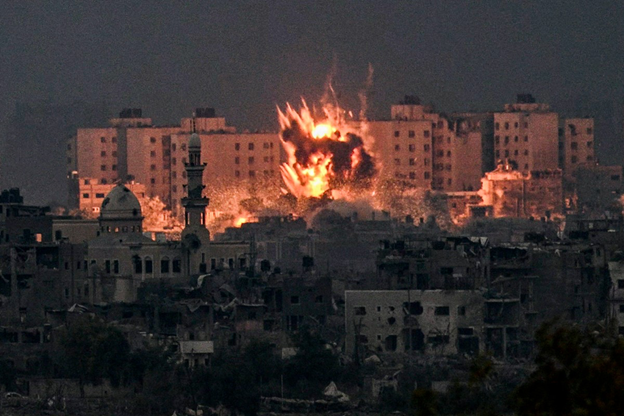
Israeli airstrike on an apartment building in Rafah, the last refuge in southern Gaza, Feb 2024. Photo credit: MENAFN

read more »

15/02/2024

‘Military Operations in Rafah Could Lead to a Slaughter in Gaza’

Human Wrongs Watch

Today in Rafah, despite the chaos, continued bombardment, the fear and the ongoing displacement, UNRWA teams are still working and delivering critical food supplies. UNRWA

13 February 2024 (OCHA)* — The scenario we have long dreaded is unraveling at alarming speed.

More than half of Gaza’s population – well over 1 million people – are crammed in Rafah, staring death in the face: They have little to eat, hardly any access to medical care, nowhere to sleep, nowhere safe to go. 

They, like the entire population of Gaza, are the victims of an assault that is unparalleled in its intensity, brutality and scope. More than 28,000 people – mostly women and children – have been killed across Gaza, according to the Ministry of Health.

read more »

15/02/2024

North Ignores ‘Perfect Storm’ in Global South

Human Wrongs Watch

KATHMANDU, Nepal, Feb 14 2024 (IPS)* A gathering ‘perfect storm’ – due to various developments, several quite deliberate – now threatens much devastation in the global South, likely to most hurt the poorest and most vulnerable.

Jomo Kwame Sundaram

Globalisation’s protracted decline
The age of globalization had mixed consequences, unevenly incorporating national markets for labour, goods and even some services.

It ended gradually, with the trend far more pronounced following the protracted worldwide stagnation since the 2008 global financial crisis.

Sometimes still referred to as the Great Recession, Western central banks resorted to unconventional monetary policies, mainly ‘quantitative easing’, to keep their economies afloat.

But easier credit enabled more financialization and indebtedness, rather than recovery, let alone sustainable development.

read more »