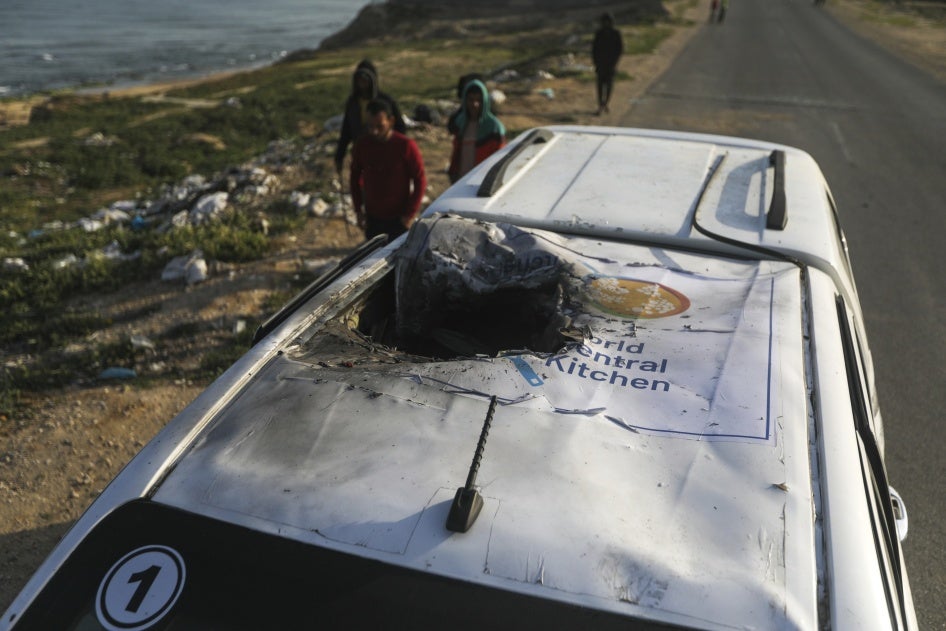
(Jerusalem) –Israeli forces have carried out at least eight strikes on aid workers’ convoys and premises in Gaza since October 2023, even though aid groups had provided their coordinates to the Israeli authorities to ensure their protection, Human Rights Watch said on 14 May 2024.
Seeds are emblematic of the connections between our lives, our food, our health and our freedom. They are the first link in the food chain. They embody our heritage and enfold the future evolution of life.
Global Context: Seeds and GMOs
The cultivation of seeds and their free exchange among farmers is the core foundation of our biodiversity and our food security. To have control over seeds is to have control over our lives, our food and our freedom.
Bio-imperialism severely threatens this freedom today through intellectual property rights.
Despite two decades of worldwide efforts, more than 4,000 precious wildlife species still fall prey to trafficking every year, a new report by the UN crime and drugs prevention office, UNODC, showed on Monday [].
Play video
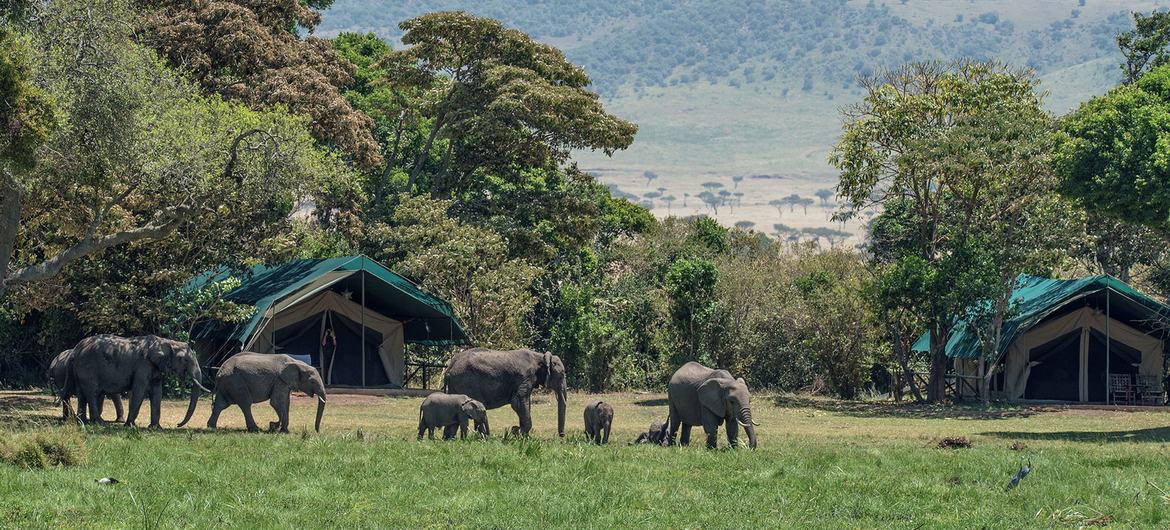
Unsplash/David Clode | A herd of elephants heads to a waterhole at a tourist safari camp in the Masai Mara, Kenya.
“Wildlife crime inflicts untold harm upon nature and it also jeopardizes livelihoods, public health, good governance and our planet’s ability to fight climate change,” said Ghada Waly, UNODC Executive Director.
The agency’s World Wildlife Crime Report takes stock of the efforts to counter poaching worldwide. Although there are positive signs that trafficking of some iconic species has decreased, including elephants and rhinoceroses – thanks to the dismantling of large trafficking networks and the suppression of demand in key markets – the overall picture is still gloomy for thousands of protected plants and animals.
This is a summary of what was said by UNICEF Spokesperson James Elder – to whom quoted text may be attributed – at 7 May 2024‘s press briefing at the Palais des Nations in Geneva
UNICEF/UNI521730/El BabaChildren stand in front of the tent where they are staying with their families in Rafah, the Gaza Strip.
(UNICEF)* -– “Every warning. Every story of children killed and wounded. Every image of heartbreak and bloodshed. Every mind-boggling piece of data on the number of children and mothers killed; of homes and hospitals destroyed. All Ignored.
“Our worst fear – Gazans’ nightmare – appears to be a reality. A reality that those holding power have the ability to prevent.
— The deep ocean — 200 to over 10.000 meters below the surface — is one of Earth’s last untouched frontiers, but it is under threat from a nascent industry: deep sea mining. Some countries and corporations are racing to extract metals and minerals like cobalt, nickel, manganese, copper from the seabed, pretending that those minerals are needed for a clean energy transition.
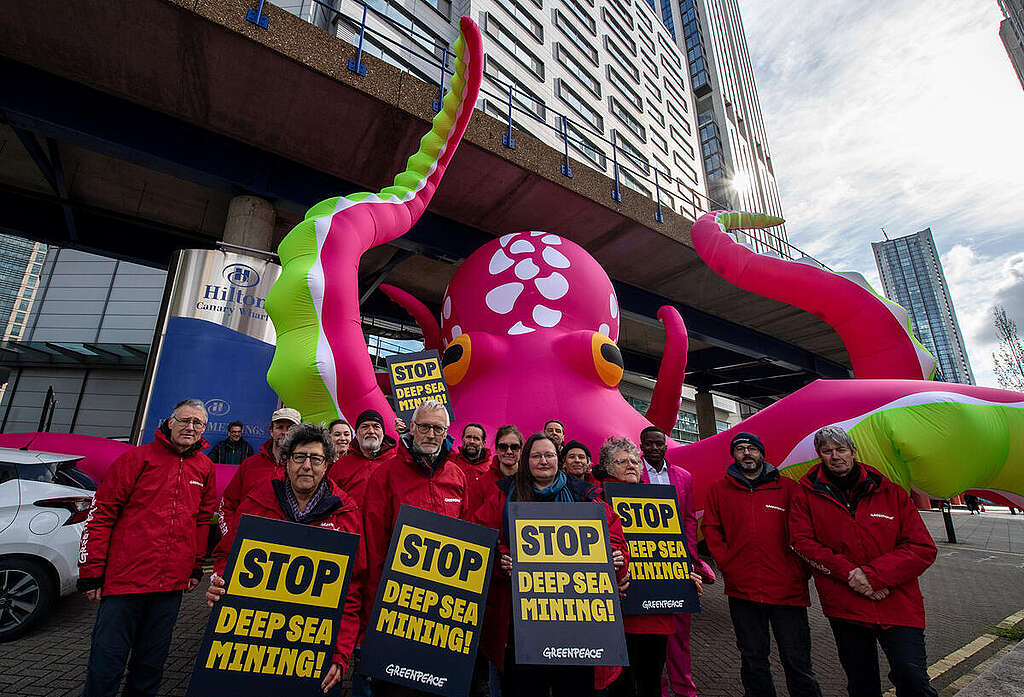
Greenpeace activists crash Deep Sea Mining Summit in London in April 2024 with a giant octopus to show wherever the deep sea mining industry goes, they’ll be there to stop them.
.
As if it was not enough to plan to destroy fragile ecosystems, some deep sea mining companies are now marketing deep sea minerals as necessary to strengthen military power, exacerbating geopolitical tensions between world superpowers with worrying implications for global peace and stability.
Asia remained the world’s most disaster-hit region from weather, climate and water-related hazards in 2023. Floods and storms caused the highest number of reported casualties and economic losses, whilst the impact of heatwaves became more severe, according to a new report from the World Meteorological Organization (WMO).
Adobe Stock/martinhosmat083
The State of the Climate in Asia 2023 report highlighted the accelerating rate of key climate change indicators such as surface temperature, glacier retreat and sea level rise, which will have major repercussions for societies, economies and ecosystems in the region.
In 2023, sea-surface temperatures in the north-west Pacific Ocean were the highest on record. Even the Arctic Ocean suffered a marine heatwave.
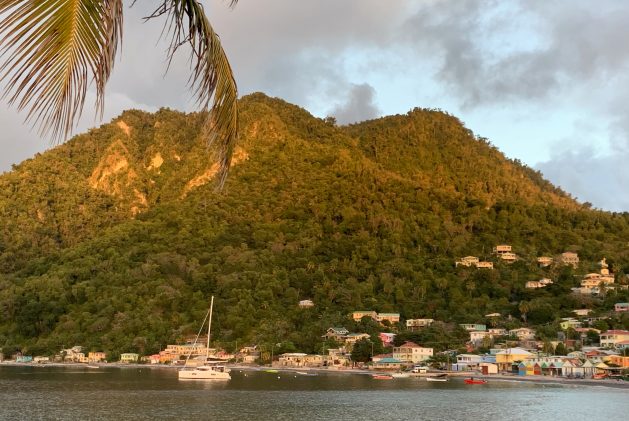
The World Meteorological Organization’s State of the Climate in Latin America and the Caribbean report documents the Region’s struggles with the devastating impacts of climate change, and urges action to reduce the burden of disasters.
The coastal village of Scotts Head, Dominica: The 2023 State of the Climate in Latin America and the Caribbean report is calling for robust early warning systems to safeguard small island developing states from rising sea levels and other impacts of climate change. Credit: Alison Kentish/IPS
DOMINICA, May 10 2024 (IPS)* –Every year for the last four years, a collaborative effort involving scientists and other experts has assessed the state of the climate in Latin America and the Caribbean. The findings have revealed increasingly alarming trends for the world’s second-most disaster-prone region.
Devastating flooding in East Africa is claiming an increasing number of casualties, destroying infrastructure and crops and killing livestock and wildlife. An incoming tropical cyclone is set to worsen the situation by bringing yet more heavy rainfall to the worst affected countries, including the United Republic of Tanzania and Kenya.
Credit: Copernicus EC Sentinel2 satellite
.
Kenyan President William Ruto addressed the nation, outlining a series of measures to deal with the emergency, including evacuations and urgent health provisions. Water dams are overflowing, roads and bridges have been destroyed, and schools are closed. As of 3 May, 210 people have been killed and many more injured, he said.
10 May 2024 — It was the warmest April on record – the eleventh month in a row of record global temperatures, according to Europe’s Copernicus Climate Change Service (C3S). Sea surface temperatures have been record high for the past 13 months.
The monthly report highlights the extraordinary duration of record temperatures fuelled by the naturally occurring El Niño event and the additional energy trapped in the atmosphere and ocean by greenhouse gases from human activities.
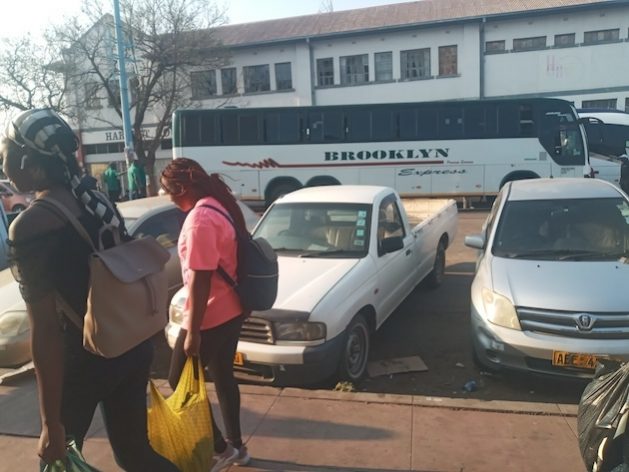
BULAWAYO, May 8 2024 (IPS)* – While there have been a record number of displaced people worldwide, according to a new report by the International Organization for Migration (IOM), migrant remittances are promoting human development.
Migrants use a cross-border bus in Bulawayo to enter South Africa. Credit: Ignatius Banda/IPS
Millions of people from developing countries rely on money sent from abroad by relatives, helping drive local economies marked by high unemployment and poverty, according to humanitarian agencies that include the World Bank.




 HUMAN WRONGS WATCH