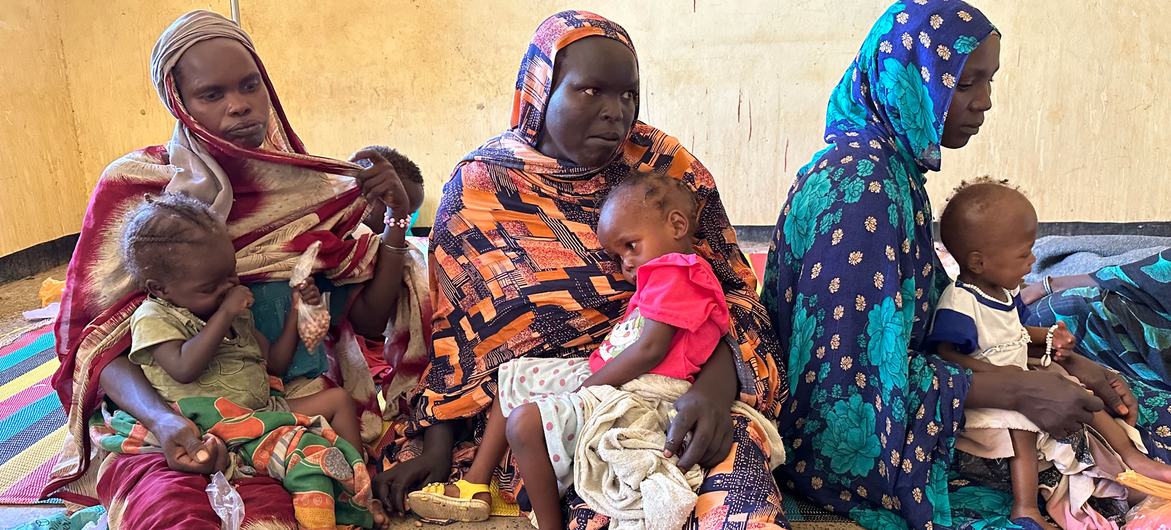
(UN News)* — Nearly two million children suffering from severe wasting are at risk of death due to funding shortages for life-saving Ready-to-use-Therapeutic-Food (RUTF) to treat the condition, which is the most dangerous form of malnutrition.
The warning comes from UN children’s agency UNICEF which said levels of severe wasting in children under five remain gravely high in several countries due to conflict, economic shocks and climate crises.
Deadly condition
Severe wasting – also known as severe acute malnutrition – is caused by a lack of nutritious and safe foods and repeated bouts of disease, such as diarrhoea, measles and malaria.
In a world characterized by an unprecedented level of economic development, technological means and financial resources, millions of persons are living in extreme poverty, a moral outrage, according to the UN. Poverty is not solely an economic issue, but rather a multidimensional phenomenon that encompasses a lack of both income and the basic capabilities to live in dignity.
Nearly 1,000 social protection measures introduced by governments across 171 countries, only 18 per cent focused on women’s economic security. Credit: iStock/Down to Earth
Rural earn 82% for every dollar that men earn. Climate change has a more pronounced impact on women, primarily indigenous and peasant women
Achieving gender equality and empowering women is not only the right thing to do but is a critical ingredient in the fight against extreme poverty, hunger and climate change.
Women engaged in wage employment in agriculture earn 82 cents for every dollar that men earn, according to a recent FAO report. PHOTO:Sasint/Adobe Stock
As farmers, women have learned how to cope with and adapt to climate change, for example, by practicing sustainable agriculture in harmony with nature, switching to drought-resistant seeds, employing low-impact or organic soil management techniques, or leading community-based reforestation and restoration efforts.


 HUMAN WRONGS WATCH