Nearly 116 million people in eight African countries, hardest hit by severe water crises, lack access to drinking water.
Globally, flash floods have become 20 times more frequent between 2000 and 2022
Water-Driven Hunger: How the Climate Crisis Fuels Africa’s Food Emergency – OXFAM International.
The climate crisis has dramatically worsened water scarcity in Eastern and Southern Africa over the past few decades, leaving nearly 116 million people –or 40 percent of the population – without safe drinking water, according to a new Oxfam report.
BANGUI PREFECTURE/BIRAO, The Central African Republic, 19 March 2025 – “Life is dangerous for women in this camp,” said Mariam Zakaria, 32, who recently fled brutal violence and conflict in Sudan, returning to the Central African Republic, her home country.
“If you want to work, someone might not hire you unless they can take advantage of you. And if a woman doesn’t accept, her children will get nothing to eat.”
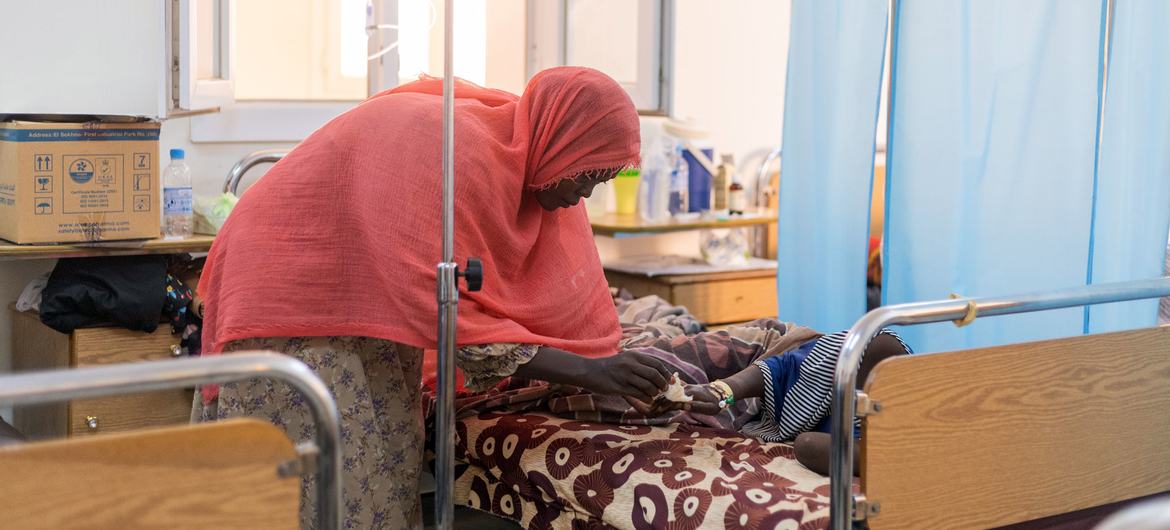
()* — The UN Children’s Fund (UNICEF) on Friday strongly condemned the looting of vital humanitarian supplies from Al Bashair Hospital in the Sudanese capital, Khartoum, warning that the theft puts thousands of malnourished children and mothers at risk.
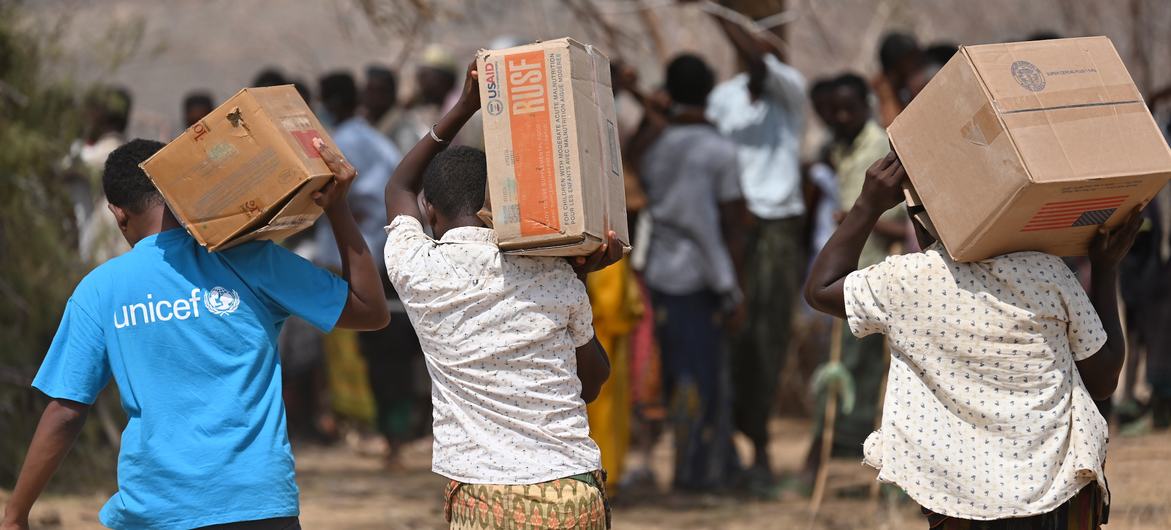
(UN News)* — Children, refugees and displaced people worldwide are paying the price for the deep-seated funding crisis that has engulfed the international aid sector, made worse by pronounced cuts in Washington, the UN children’s and refugee agencies said on Friday .
20 March 2025 — Somalia is enduring a drought of crippling intensity, driven by failed rains and a brutal dry season, known as Jilal. The projections are dire: over four million people could face crisis-level hunger by April 2025.
Hawa Ali collects water from a newly renovated shallow well in Shamindo village, Jowhar district. Photo: Abdulkadir Mohamed/NRC
Berlin/ Geneva, 21 March 2025 – At least 8,938 people died on migration routes worldwide in 2024, making it the deadliest year on record, according to new data collected by the International Organization for Migration (IOM).
Omar, an Ethiopian migrant, is treated for dehydration and exhaustion by IOM’s Mobile Unit in the Djiboutian desert. Chances of survival are low for migrants crossing the desert in extreme temperatures and the weakest are often left behind. Photo: IOM 2020/Alexander Bee
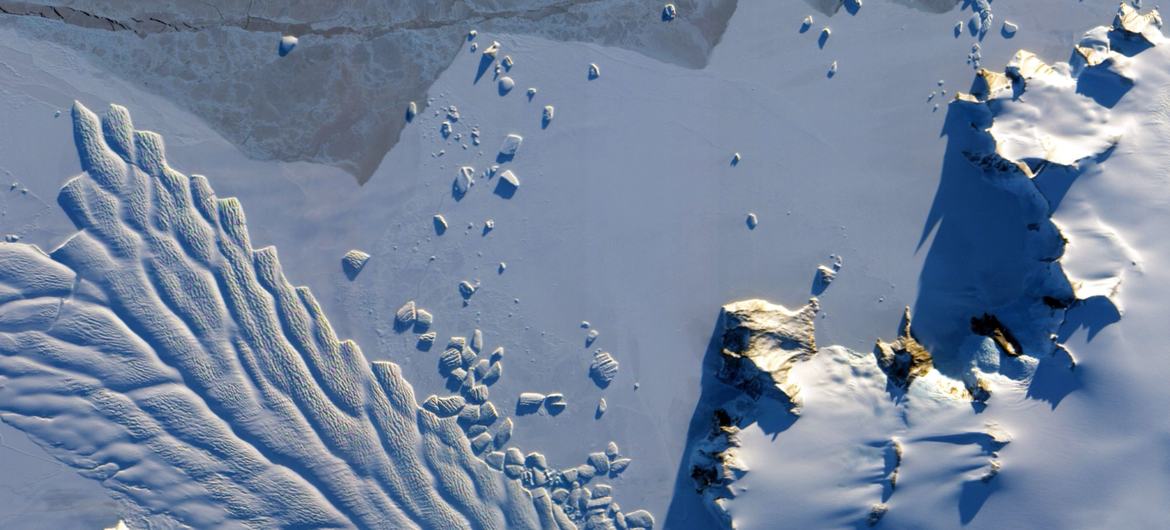
(UN News)* — Glaciers in many regions will not survive the 21st century if they keep melting at the current rate, potentially jeopardising hundreds of millions of people living downstream, UN climate experts said on the first World Day for Glaciers.
MONTEVIDEO, Uruguay / LONDON, Mar 20 2025 (IPS)* – In a world of overlapping crises, from brutal conflicts and democratic regression to climate breakdown and astronomic levels of economic inequality, one vital force stands as a shield and solution: civil society.
Credit: Bryan Dozier/Middle East Images/AFP via Getty Images
12 March 2025 — “She can’t sit or walk. And she hasn’t started talking,” Anowara says of 14-month-old Rifa. “I want my baby to smile, walk, and talk.”
UNICEF/UNI622146/Njiokiktjien
Rifa is one of thousands of young children who are dangerously malnourished in the world’s largest refugee settlement, in Cox’s Bazar, southern Bangladesh.
Port-au-Prince,18 March 2025 – In just one month, intense violence has forced over 60,000 people to flee—yet another record in Haiti’s worsening humanitarian situation.
Crowded corridors replace classrooms in this school, now a displacement site in Haiti’s capital. IOM’s support—from medical aid to hygiene kits—helps ensure the well-being of families seeking safety. Credit: IOM 2024 / Antoine Lemonnier
 Water-Driven Hunger: How the Climate Crisis Fuels Africa’s Food Emergency – OXFAM International.




 HUMAN WRONGS WATCH