Myanmar, 21 May 2025 – When a 7.7 magnitude earthquake struck central Myanmar in late March of this year, 76-year-old Daw Khin Yee was at home with her daughter. In what felt like a split second, she was buried under the rubble, unable to move.
Daw Khin Yee and her grandchild are among many who survived the devastating Myanmar earthquake. Photo: IOM/Nang Seng Nang
In excruciating pain, Daw Khin remembers feeling bricks fall on her “like rain”. “I told my daughter, ‘You can’t get me out alone, you need help,’” she recounts. “There was a large stone above me, and I just prayed that it wouldn’t fall.”
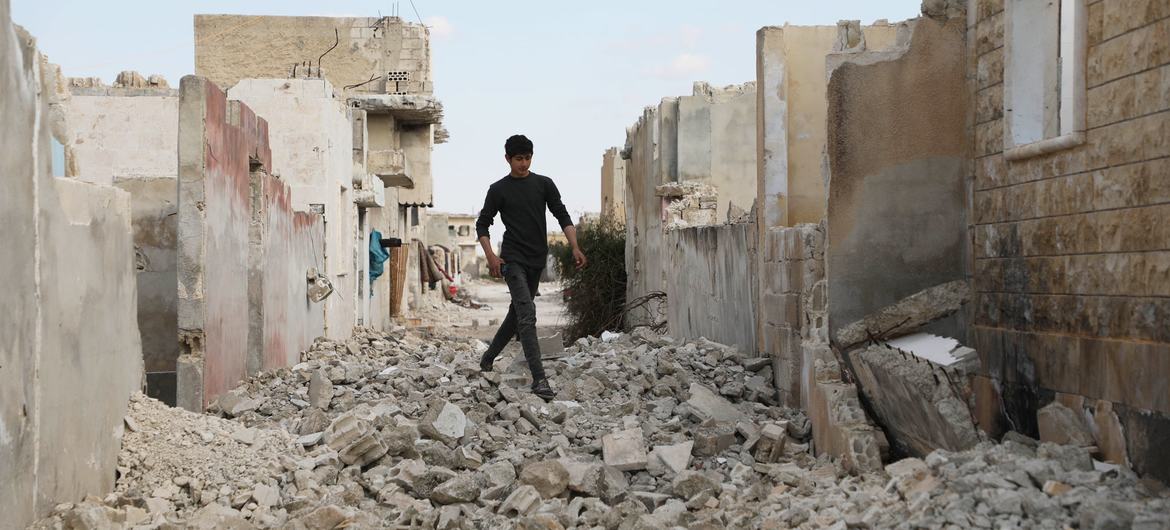
(UN News)* — Millions of people in Syria continue to face mortal danger from unexploded munitions, disease and malnutrition and more international support is urgently required, senior UN aid officials said on Friday .
Wrapping up a visit to the country, Edem Wosornu, who heads operations and advocacy for the UN humanitarian affairs coordination office (OCHA) said that she could “feel the momentum for change” on the ground after years of suffering and hardship under the Assad regime ended with its overthrow last December.
But formidable challenges remain as 16.5 million Syrians require humanitarian assistance and protection, andneeds are “staggering”.
(UN News)* — Women and clerical workers face the highest risk of their roles being radically transformed by Artificial Intelligence, prompting calls for inclusive policy responses.
One in four jobs worldwide is potentially exposed to what’s known as Generative Artificial Intelligence – or Generative AI (GenAI) – according to a new joint study from the UN labour agency (ILO) and Poland’s National Research Institute.
The study finds that transforming job descriptions, not widespread job loss, is the more likely result.


 HUMAN WRONGS WATCH