How conflict and extreme weather have displaced millions and fuelled severe food insecurity in the Horn of Africa country
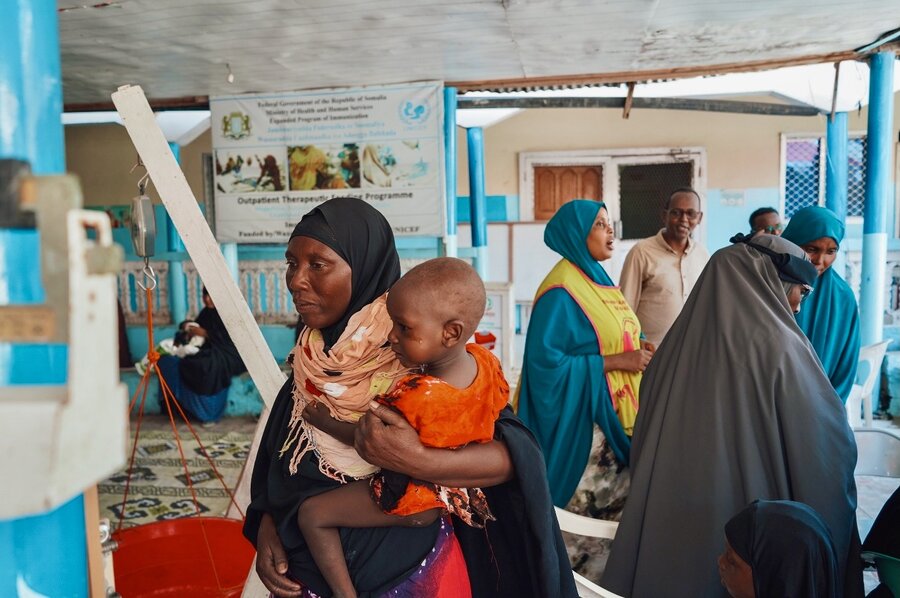
Farhia Ali and her daughter Ruqiya at a health clinic in Mogadishu. The family counts among the many displaced people sheltering in Somalia’s capital and other urban areas. Photo: WFP/Sara Cuevas Gallardo
—The cramped streets of Mogadishu buzz with cars, donkey-drawn carts and three-wheeled vehicles known as tuk-tuks – all competing to navigate the slippery, muddy channels carved out by unexpectedly heavy rains.
Somalia’s unpredictable weather has struck again. The rainy season, marked by a massive and deadly downpour hitting the capital in May, has destroyed homes and infrastructure. But the upcoming dry season risks wreaking even more devastation.
The world’s richest 1% increased their wealth by more than $33.9 trillion in real terms since 2015, reveals new Oxfam analysis ahead of the world’s largest development financing talks in a decade, in Seville, Spain.
Almost a billion of us go to bed hungry every night. Not because there isn’t enough food for everyone, but because of the deep injustice in the way food is produced and accessed. | OXFAM.
This is more than enough to eliminate annual poverty 22 times over at the World Bank’s highest poverty line of $8.30 a day.
The wealth of just 3,000 billionaires has surged $6.5 trillion in real terms since 2015, and now comprises the equivalent of 14.6% of global GDP.
(UN News)* — A decade after the adoption of the Sustainable Development Goals (SDGs), development is facing serious headwinds – including what UN officials describe as a “silent crisis” of surging debt service payments in low-income countries.

 HUMAN WRONGS WATCH