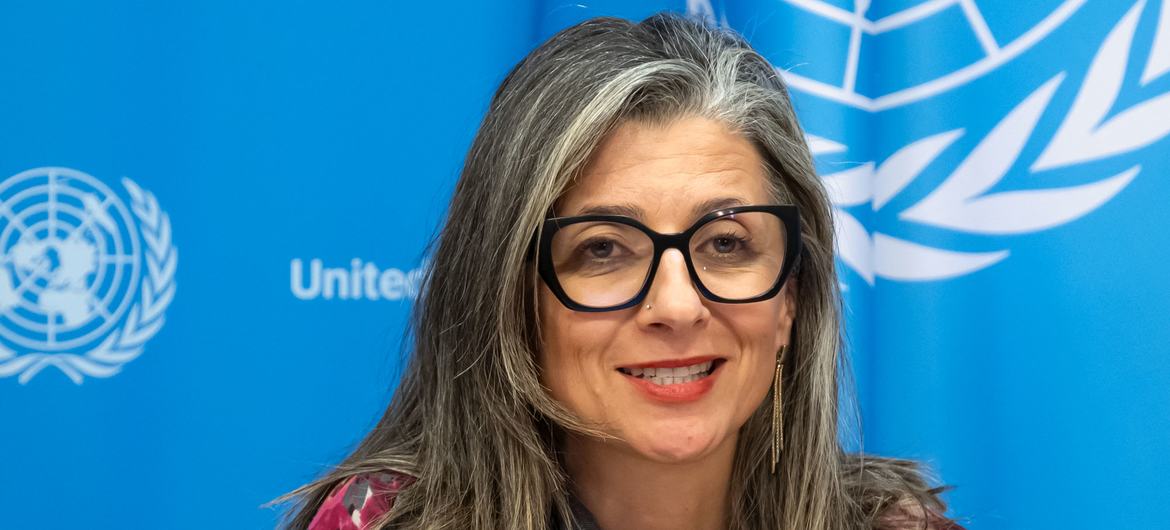
(UN News)* —Top UN human rights officials have voiced serious concern over the imposition of sanctions by the United States targeting Francesca Albanese, a UN-appointed independent expert on the Occupied Palestinian Territory.
UN Photo/Mark Garten | Francesca Albanese, Special Rapporteur on the situation of human rights in the Palestinian Territory occupied since 1967.
They’re calling for the decision to be reversed, warning it could undermine the wider international human rights system.
The sanctions were announced by US Secretary of State Marco Rubio on Wednesday under a Presidential Executive Order.
Mr. Rubio alleged that Ms. Albanese had “directly engaged with the International Criminal Court (ICC) in efforts to investigate, arrest, detain, or prosecute nationals of the United States or Israel, without the consent of those two countries,” which he called a “gross infringement” on national sovereignty.
The US and Israel are not parties to the Rome Statute, the international treaty that established the ICC.
On July 9, the US government imposed sanctions on UN Human Rights Council-appointed Special Rapporteur on the situation of human rights in the Palestinian Territory occupied since 1967 Francesca Albanese under an executive order issued by President Donald Trump in February 2025.
In response, the following quote can be attributed to Liz Evenson, international justice director at Human Rights Watch:
“The US government’s decision to sanction Albanese for seeking justice through the International Criminal Court is actually all about silencing a UN expert for doing her job, speaking truth about Israeli violations against Palestinians and calling on governments and corporations not to be complicit…
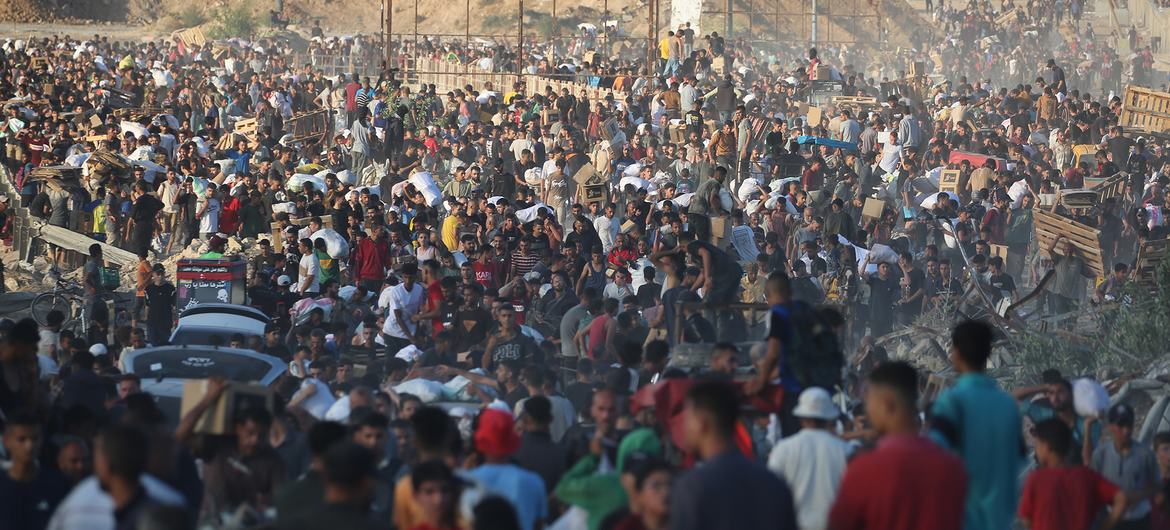
(UN News)* — Following the deaths of several children in an Israeli strike on Palestinians waiting in line for nutritional supplements in central Gaza on Thursday , UN humanitarian officials have once again condemned the killings of people at aid distribution sites in the enclave.
UN Human Rights Office (OHCHR) spokesperson Ravina Shamdasani told reporters in Geneva on Friday that “we’ve raised concerns about atrocity crimes having been committed andthe risk of further atrocity crimes, where people are lining up for essential supplies such as food and medicine and where they are being attacked, where again… they have a choice between being shot or being fed”.
(UN News)* —The head of the UN Children’s Fund (UNICEF) has voiced deep dismay over the “unconscionable” killing of children during an aid distribution in the central Gaza Strip on Thursday .
Catherine Russell said she was appalled by the reported killing of 15 Palestinians, including nine children and four women, who were waiting in line for nutritional supplements provided by Project Hope, a UNICEF partner organization.
But the United Nations Population Fund (UNFPA)’s State of World Population report shows the real issue is a lack of reproductive agency—many people, especially youth, are unable to have the children they want.
The World Population Day 2025 [11 July] highlights this challenge, focusing on the largest-ever generation of young people.
The theme, “Empowering young people to create the families they want in a fair and hopeful world,” calls for ensuring youth have the rights, tools, and opportunities to shape their futures.
Young people are already driving change, but face major obstacles: economic insecurity, gender inequality, limited healthcare and education, climate disruption, and conflict.



 HUMAN WRONGS WATCH