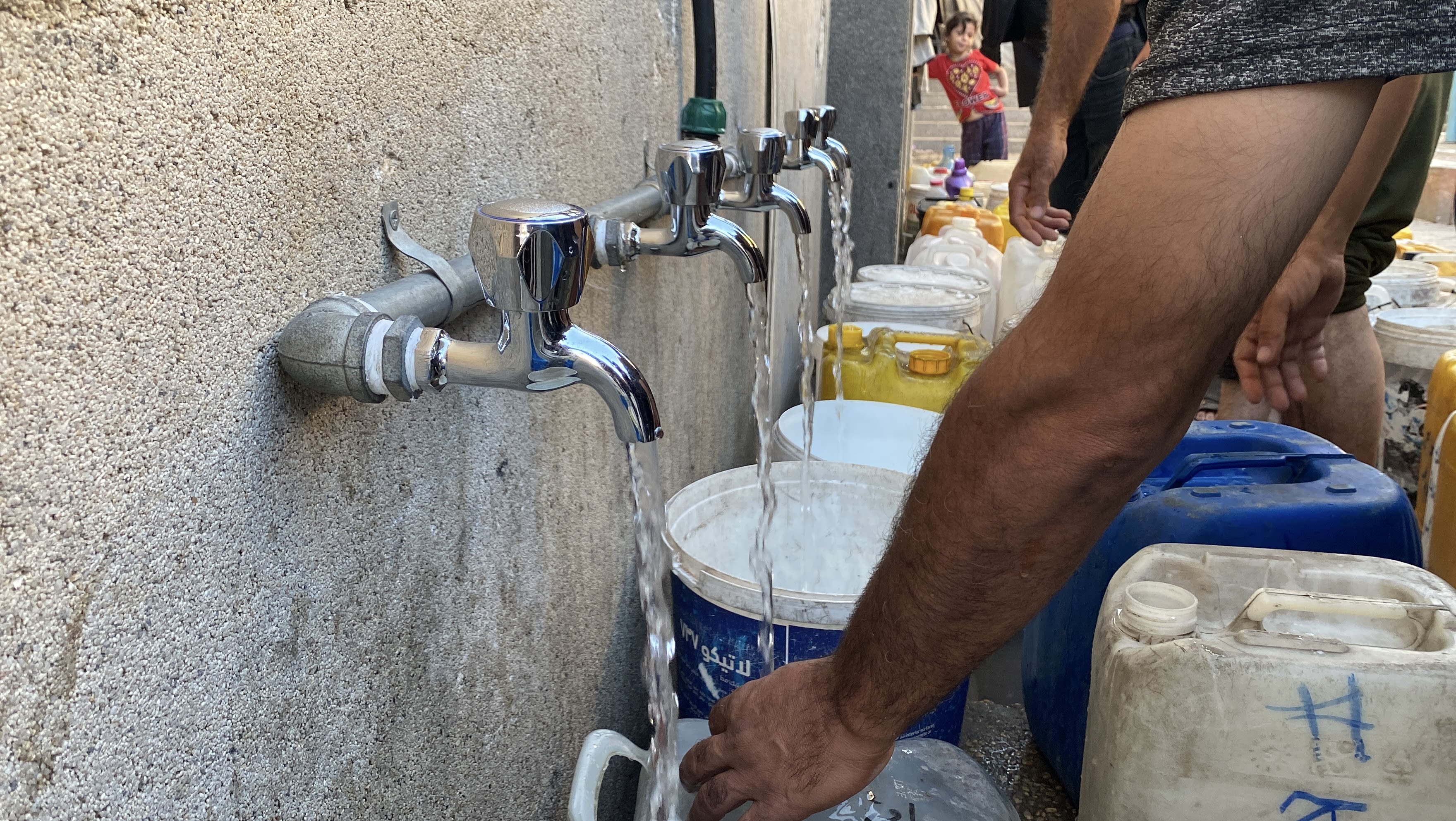
7 September 2025 —In the midst of bombing, shelling and access denial, the Norwegian Refugee Council (NRC) continues to deliver safe water to thousands of Palestinians in Gaza.
Photo: Nasser Harara/NRC
Since October 2023, Israel has repeatedly attacked water facilities, wells, pipelines, desalination units and sewage systems in Gaza.
(UN News)* — Sanctions imposed by the United States on three prominent and well-respected Palestinian human rights groups are “completely unacceptable and should be withdrawn”, UN human rights chief Volker Türk said on Friday [].
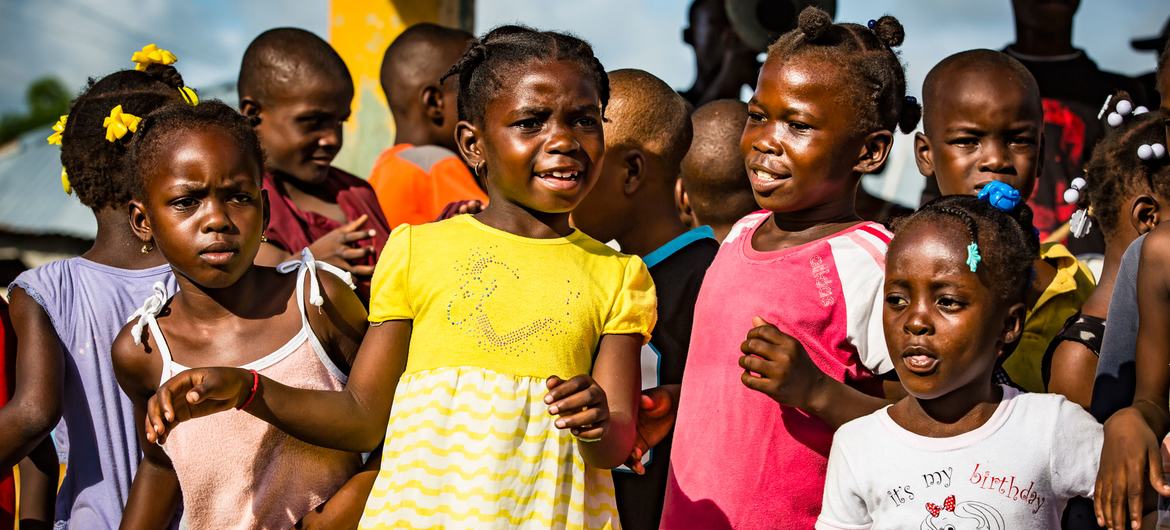
(UN News)* — Governments, academia and other stakeholders must “double down on delivering reparatory justice” for people from the African diaspora, the UN human rights office, OHCHR, said in a report published on Wednesday [].
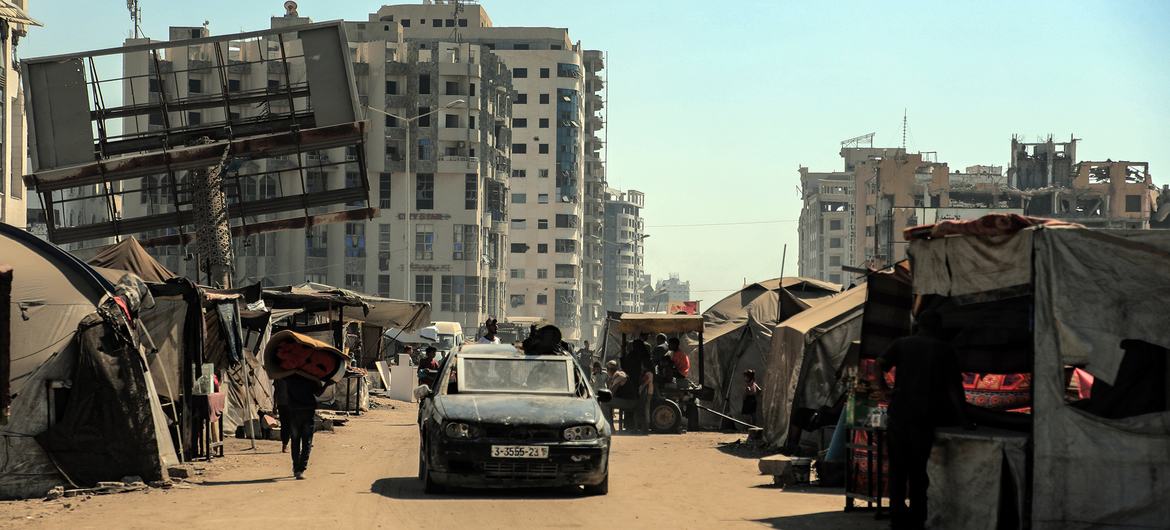
(UN News)* —A senior official from the UN human rights office, OHCHR, said on Thursday [] he was extremely concerned over intensifying Israeli military operations in northern Gaza – including Gaza City – and warned against any attempt to annex parts of the West Bank.
Ajith Sunghay, Head of OHCHR’s Office in the Occupied Palestinian Territory (OPT), told UN News that the escalation has caused extensive destruction to residential buildings in southern parts of North Gaza governorate and in northeastern areas of Gaza City.
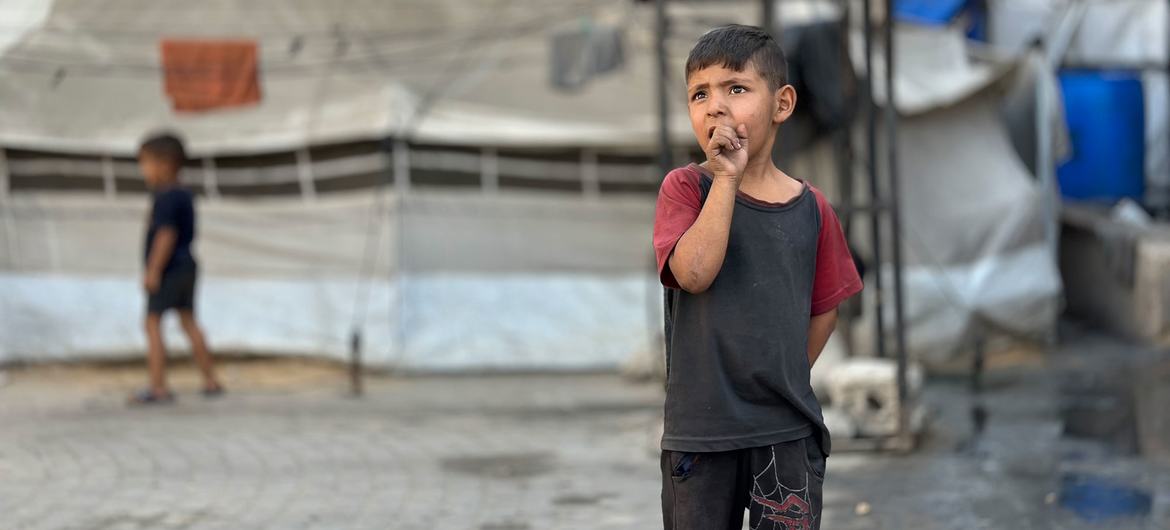
(UN News)* —The UN Children’s Fund (UNICEF) called on Thursday [] for the international community to do everything possible to prevent catastrophe in Gaza City as Israel ramps up military operations ahead of a planned full takeover.
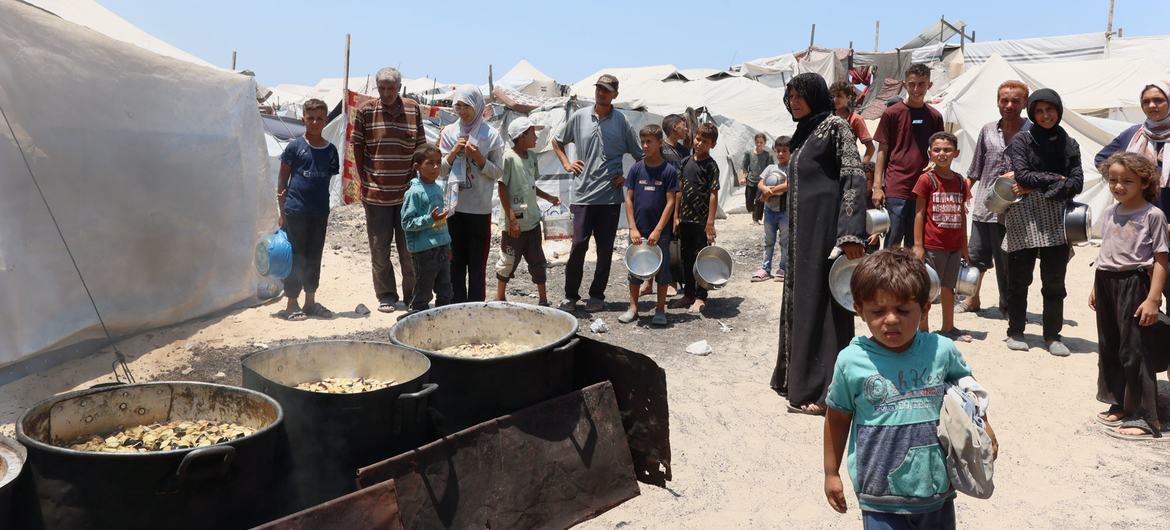
UN News | Families seek food at a community kitchen in western Gaza City.
Tess Ingram, Communication Manager for UNICEF’s Middle East and North Africa Regional Office, recently spent nine days there, describing it as “a city of fear, flight and funerals.”
“The last refuge for families in the northern Gaza Strip is fast becoming a place where childhood cannot survive,” she said, speaking from the enclave to journalists in New York.
2 September 2025 —More than 1 billion people are living with mental health disorders, according to new data released by the World Health Organization (WHO), with conditions such as anxiety and depression inflicting immense human and economic tolls.
WHO / Christopher Black | Community mental health teams are one way of providing mental health care, Ukraine, 2023.
While many countries have bolstered their mental health policies and programmes, greater investment and action are needed globally to scale up services to protect and promote people’s mental health.
Mental health conditions such as anxiety and depression are highly prevalent in all countries and communities, affecting people of all ages and income levels.
4 September 2025 — In this Q&A, Human Rights Watch examines the application of the right to reparation to redress past and present harms stemming from colonial atrocities, including enslavement,[1]systemic racial inequalities, and other related human rights violations.
4 September 2025 — Rich countries have broken their climate finance promises to a key grouping of eight highly vulnerable African countries..
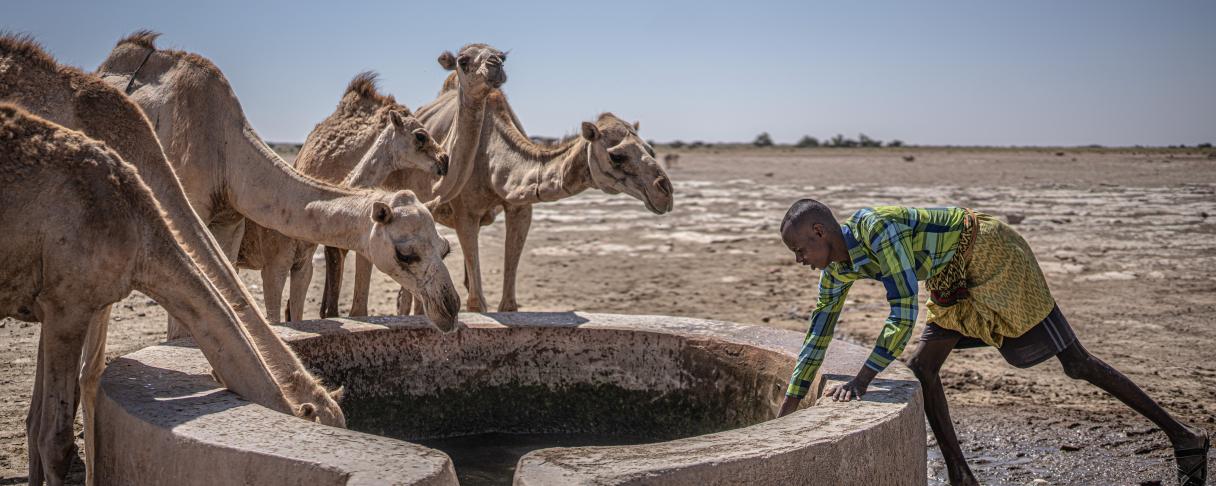
A group of shepherds and their livestock arrive in the community of Sincaro, in the Sanag region, Somalia, where Oxfam has built a water supply system for people and animals. Credit: Pablo Tosco/ Oxfam
Djibouti, Eritrea, Ethiopia, Kenya, Somalia, South Sudan, Sudan and Uganda – collectively called the IGAD region – have together received, on average, $1.7 billion annually, between 2013 to 2022, in “grant equivalents”, being the true value of climate support after interest and debt repayments.
UNITED NATIONS, Sep 4 2025 (IPS)* –– 2025 has been marked by a significant escalation of the climate crisis and its effects on vulnerable populations, as the World Meteorological Organization (WMO) warns that average global temperatures could exceed the 1.5°C threshold within the next five years.
.
A family prepares a banner to protest the effects of climate change on children outside their house in the village of Patzité, Quiché, Guatemala. Credit: UNICEF/Patricia Willocq
In Latin America and the Caribbean, rising temperatures and emissions continue to strain access to essential services and deepen poverty, particularly among children.
(UN News)* — Global education funding is facing sharp reductions that could leave an extra six million children out of school by 2026, the UN Children’s Fund (UNICEF) warned on Wednesday [3 September 2025].
Official Development Assistance (ODA) for education is projected to fall by $3.2 billion – a 24 per cent drop from 2023 – with just three donor governments accounting for nearly 80 per cent of the cuts.
Such a decline would push the number of out-of-school children worldwide from 272 million to 278 million, UNICEF said – the equivalent of shutting every primary school in Germany and Italy combined.
“Every dollar cut from education is not just a budgetary decision, it’s a child’s future hanging in the balance,” said UNICEF Executive Director Catherine Russell.




 HUMAN WRONGS WATCH