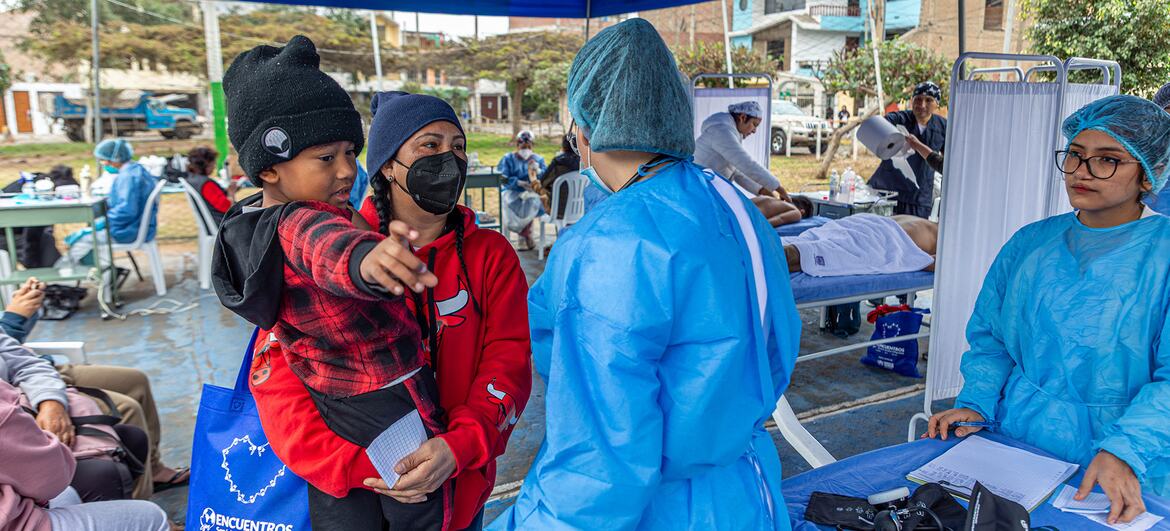
Venezuela’s political shock has sharpened global attention on a country already facing one of the world’s largest humanitarian and displacement crises. For the United Nations, the priority remains unchanged: protecting lives, sustaining basic services and supporting Venezuelans at home and across the region.
— Venezuela has endured years of economic collapse, political instability, hyperinflation and economic sanctions from Washington, compounded by floods, landslides and other climate shocks.
— According to the UN aid coordination office, OCHA, 7.9 million people— more than a quarter of the population — need urgent humanitarian assistance.
“We always pray for peace. But unfortunately, we have gotten into a rocky start for 2026,” Larry C. Johnson, former Central Intelligence Agency analyst told his Norwegian interviewer and International Relations Professor Glen Diesen in Oslo on 4 January.
Maung Zarni
Of course, Johnson was referring to Washington’s most recent brazen act of attacking Venezuela and kidnapping its sitting President Nicolas Maduro and his wife Cilia Flores, former head of the National Assembly in the wee hours of January 3.
To belabour the obvious, US President Donald J. Trump is proving to be yet another aggressor in the White House despite the schizophrenic claims that he has ended eight wars, for which he practically demanded the 2025 Nobel Peace Prize.
For the coveted “peace” prize, the Norwegian Nobel Committee, however, opted for a more suitable candidate, whom the committee gift-wrapped as “a democrat”. Her qualification?
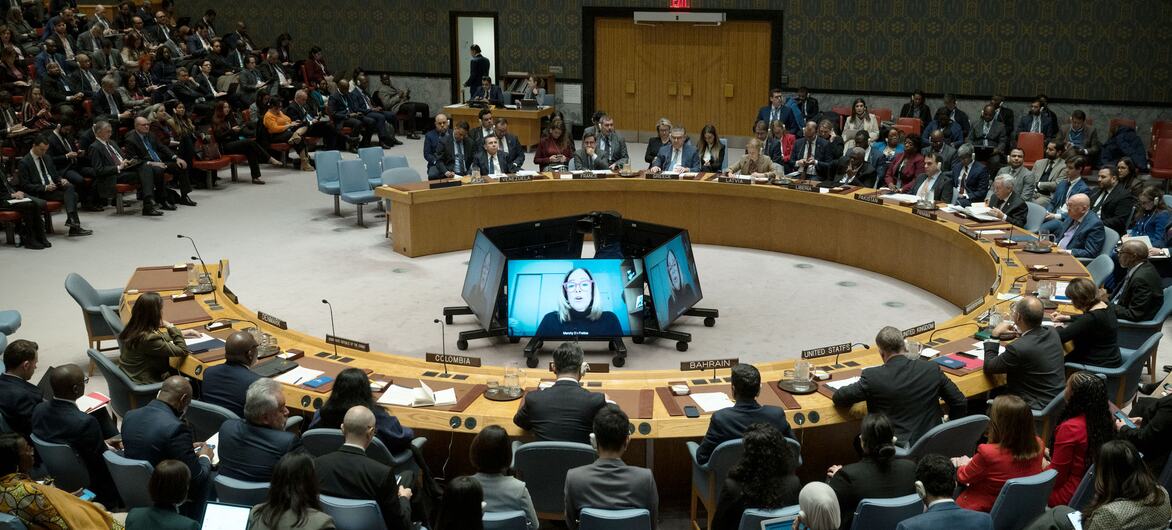
(UN News)* — Invoking the bedrock principle prohibiting the use of force against the territory and independence of any State, the UN Secretary-General told the Security Council on Monday [] there must be “full respect” for the UN Charter, in the face of the United States military intervention in Venezuela and seizure of President Nicolás Maduro.
UN Photo/Mark Garten | A wide view of the Security Council meeting on the situation in Venezuela.
In a statement delivered by Under-Secretary-General for Political Affairs Rosemary DiCarlo, António Guterres said the Council was meeting “at a grave time” following the 3 January US military action in Venezuela.
 HUMAN WRONGS WATCH