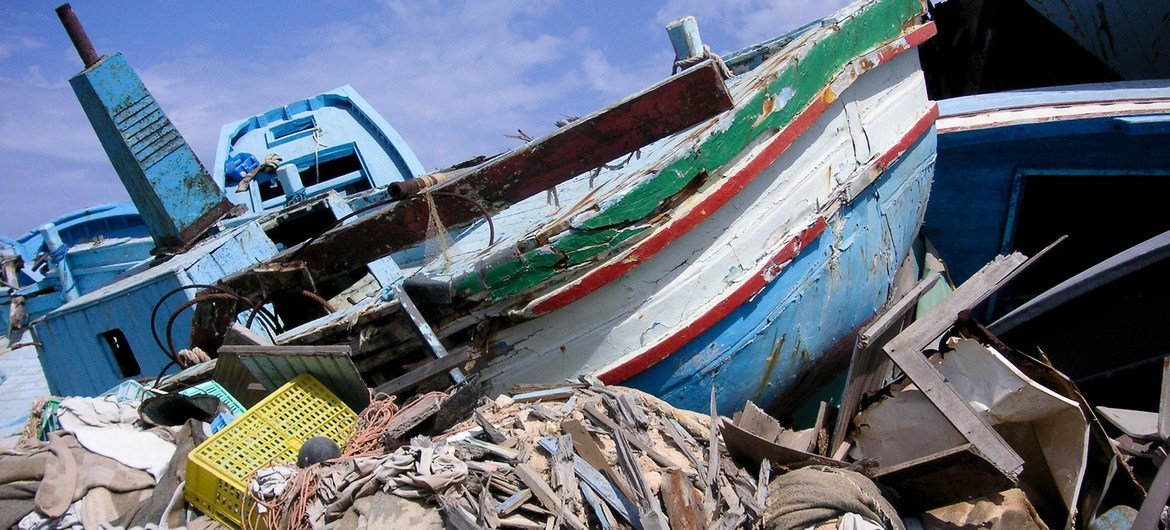
(UN News)* — A sharp increase in the deaths and disappearances of migrants at sea heading to Spain’s Canary Islands, along the West African coast, is a cause for “extreme concern” the UN’s migration agency, IOM, said on Friday [24 September 2021].
IOM/Peter Schatzer | Conflict and poverty continue to compel people to undertake extremely perilous journeys at sea.
By the end of last month, the International Organization for Migration’s (IOM) Missing Migrants Project recorded 785 people, including 177 women and 50 children, who had died or disappeared this year.
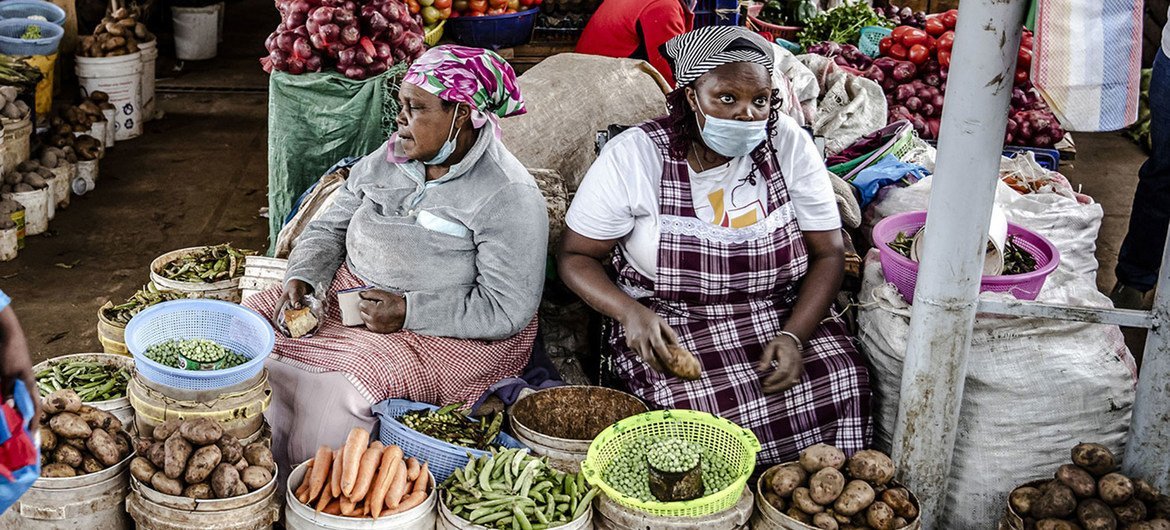
23 September 2021 (UN News)* — Every day, hundreds of millions of people go to bed hungry. Three billion people cannot afford a healthy diet. Two billion are overweight or obese and yet 462 million, are underweight. Nearly a third of all food that is produced, is lost or wasted.
FAO/Luis Tato | Women vendors sell fresh vegetables at a market in Limuru, Kenya.
These are just some of the problems and contradictions laid bare by the UN Secretary-General on Thursday [23 September 2021] at the opening of the landmark UN Food Systems Summit, that is bringing together farmers and fishers, youth, Indigenous Peoples, Heads of State, governments and many more, in an effort to transform the sector and get the world back on track to achieve all 17 Sustainable Development Goals (SDGs) by 2030.
A guest looks at pictures from the ‘Against Nuclear Arms’ exhibit, presented on August 2009 at UN Headquarters. UN Photo/Paulo Filgueiras
From the very start, addressing the existential threat of nuclear weapons has been central to the work of the United Nations.
In 1946, the very first General Assembly resolution sought “the elimination from national armaments of atomic weapons and of all other major weapons adaptable to mass destruction.”
Seventy-six years later, we have yet to achieve that resolution’s goals.
Sculpture depicting St. George slaying the dragon. The dragon is created from fragments of Soviet SS-20 and United States Pershing nuclear missiles. PHOTO:UN Photo/Milton Grant
24 September 2021 (United Nations)* — Achieving global nuclear disarmament is one of the oldest goals of the United Nations.
It was the subject of the General Assembly’s first resolution in 1946, which established the Atomic Energy Commission (dissolved in 1952), with a mandate to make specific proposals for the control of nuclear energy and the elimination of atomic weapons and all other major weapons adaptable to mass destruction.
LETHBRIDGE, Canada, Sep 22 2021 (IPS)* – Food processing extends shelf-life and can transforms raw food into attractive, marketable products. It can also prevent contamination. The transformation can involve numerous physical and chemical processes such as mincing, cooking, canning, liquefaction, pickling, macerating, emulsification, irradiation and lyophilization.
Processed, canned food lines the shelves at a Canadian supermarket. Credit: Trevor Page
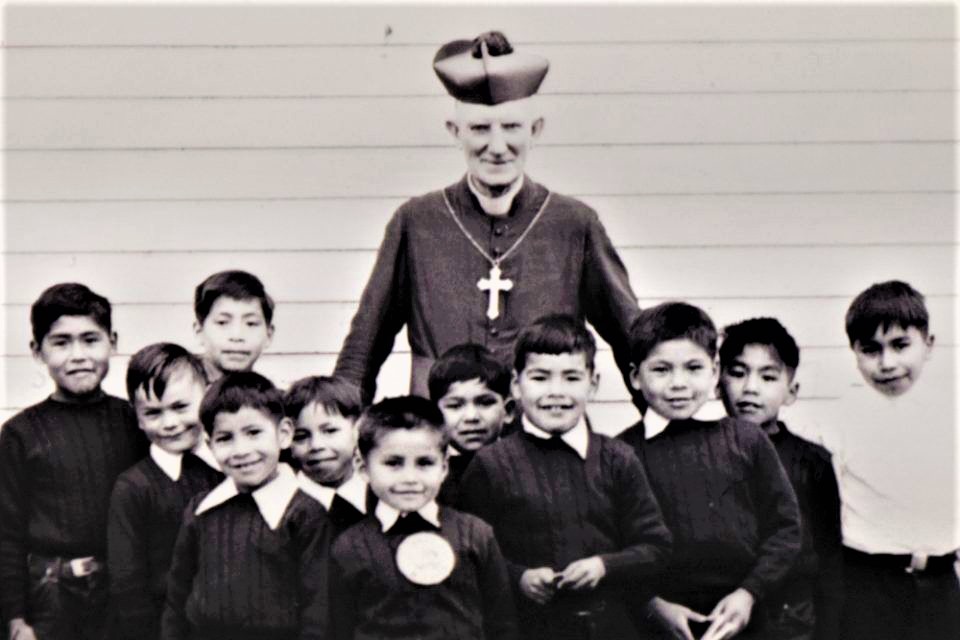
The Oppression of Indigenous Peoples in the Name of Religion
“Dr. Livingstone, I presume?”[1] are the famous words of a reporter, from the New York Herald, Mr Morton Stanley[2], who was dispatched to the Dark Continent[3]: Africa, to search and locate Dr. David Livingstone, who was gone missing and found him in the city of Ujiji[4]on Lake Tanganyika in 1871[5].
Dr. Livingstone was a physician, journalist, explorer, and an empire builder. However, first and foremost he was a missionary who embarked upon the Lord’s work to convert the heathens[6] in Africa to Christianity[7], the religion of the coloniser, which was his priority to eradicate the God of the “pagans”[8] in Africa.
New York, 21 September 2021 (UNEP)* – Today, at Climate Week NYC 2021, the UN Environment Programme (UNEP), Global Environment Facility (GEF) and partners launched UrbanShift – a new global initiative to improve lives and transform cities into green and liveable spaces that address climate change, biodiversity loss and pollution.
Cities are home to 4.2 billion people, more than half of the world’s population. But they face growing challenges – from floods, storms and heatwaves triggered by the climate crisis to dangerous air quality, lack of affordable housing and deep social divides.
(FAO)* — The running fresh water of the Amazon River is a welcoming sound to the peoples of the indigenous resguardo (reserve) in Puerto Nariño, southern Colombia.
This watercourse is the only access to the banks of rivers, lakes, flood plains and mainland areas that connect the 22 communities where the Tikuna, Cocama and Yagua peoples live.
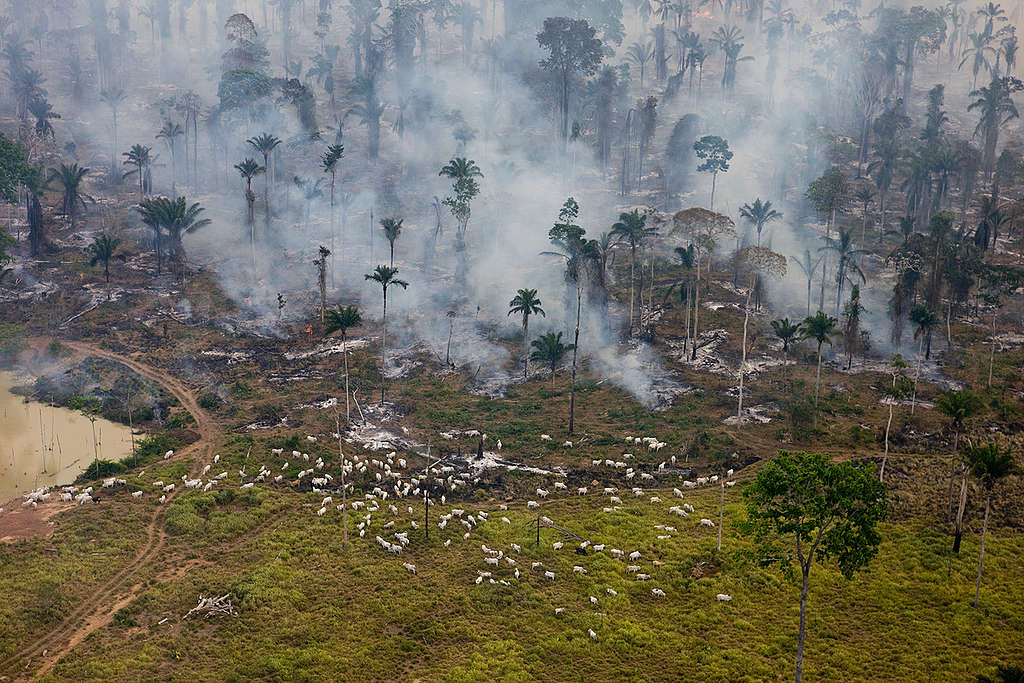
(Greenpeace International)* — Scientists couldn’t be more clear. For humanity to avoid climate disaster and remain below the 1.5°C threshold set out in the 2015 Paris Climate Agreement, society must radically transform. We need to change our energy, transport, and food systems fundamentally and quickly.
Why food? According to scientists from the UN’s Intergovernmental Panel on Climate Change (IPCC), land use for farming is responsible for one-quarter of all global greenhouse gas emissions (GHGs).





 HUMAN WRONGS WATCH