UNITED NATIONS, Sep 15 2025 (IPS)* – When the high-level meeting of over 150 world political leaders takes place September 22-30, thousands of non-governmental organizations (NGOs) and their accredited UN representatives will either be banned from the UN premises or permitted into the building on a strictly restricted basis– as it happens every year.
This year will not be an exception to the rule.
The International Campaign to Abolish Nuclear Weapons (ICAN) is a coalition of non-governmental organizations (NGOs) in over 100 countries promoting adherence to, and implementation of, the United Nations nuclear weapons ban treaty. Credit: ICAN
SANTIAGO, Chile, Sep 12 2025 (IPS)** – At eighty, the United Nations is bogged down by structural limitations and political divisions that render it powerless to act decisively – nowhere more clearly than in the Gaza genocide.
There is only one treaty in the world that, despite its limitations, binds nations together: the United Nations Charter. Representatives of fifty nations wrote and ratified the UN Charter in 1945, with others joining in the years that followed.
The charter itself only sets the terms for the behaviour of nations. It does not and cannot create a new world. It depends on individual nations to either live by the charter or die without it.
Women carry out at least two and a half times more unpaid household and care work than men
.
Women in the health and care sector face a larger gender pay gap than in other economic sectors, earning on average 24 per cent less than their male peers. PHOTO:ILO
The International Equal Pay Day, celebrated on 18 September, represents the longstanding efforts towards the achievement of equal pay for work of equal value.
It further builds on the United Nations’ commitment to human rights and against all forms of discrimination, including discrimination against women and girls.
Across all regions, women are paid less than men, with the gender pay gap estimated at around 20 per cent globally.
(Beirut) – Hundreds of migrant workers employed in Saudi Arabia by the manufacturing and supply company Sendan International did not receive their salaries for up to eight months, Human Rights Watch said on 10 September 2025.
They include workers employed in state-owned oil company Aramco project sites.
Migrant workers were often stranded without pay for months, forced into undocumented status, or left with no choice but to return home at their own expense, abandoning outstanding wages and benefits.
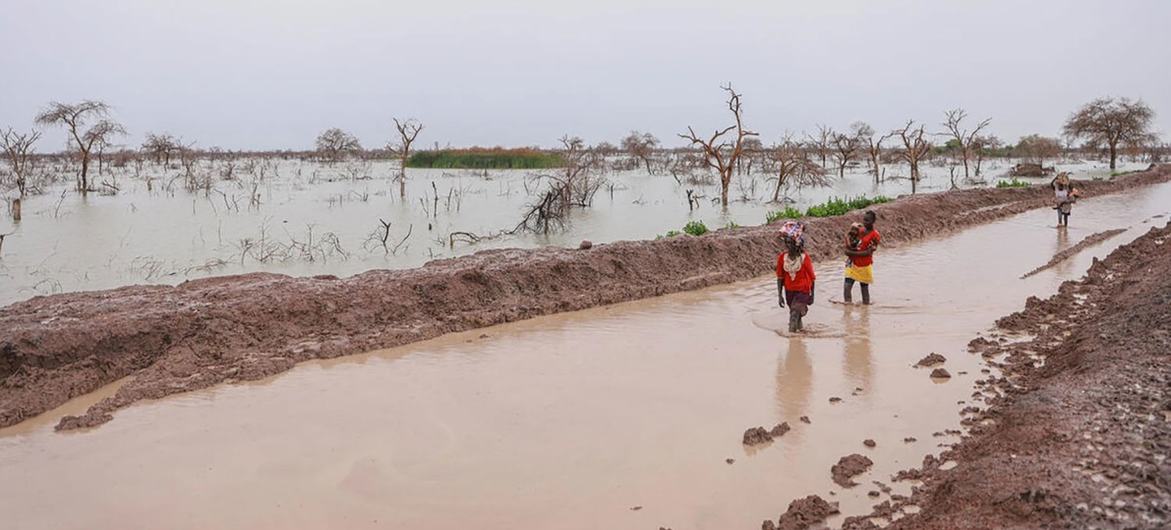
In recent weeks, widespread flooding has engulfed large parts of Jonglei, Upper Nile and Unity states in the north of the country.
The agency’s representative in South Sudan, Marie-Helene Verney, said that “if the flooding continues, up to 400,000 people are likely to be displaced by the end of the year, exceeding flood displacement levels seen in 2024.”
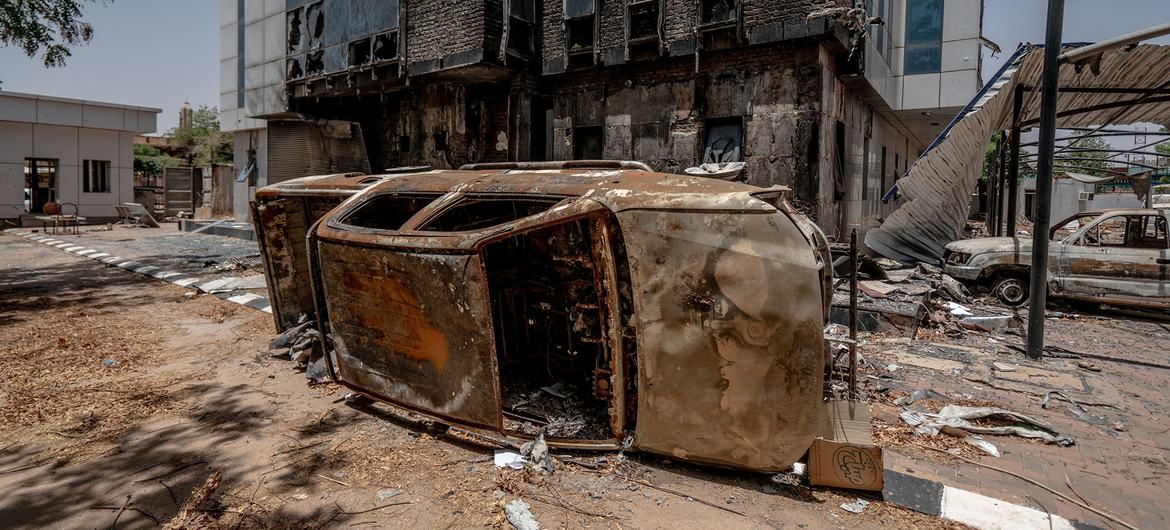
(UN News)* — A high-level independent rights probe into the brutal war in Sudan condemned the many grave crimes committed by all combatants, citing evidence indicating that civilians have been “deliberately targeted, displaced and starved”.
Shortly after presenting a mandated report to the Human Rights Council in Geneva on Tuesday [], chair of the Fact-Finding Mission on Sudan, Mohamed Chande Othman, insisted that both the Sudanese Armed Forces (SAF) and Rapid Support Forces (RSF) militia had carried out atrocity crimes.
Among the testimonies gathered for the report, survivors from RSF detention sites described the locations as “slaughterhouses”.
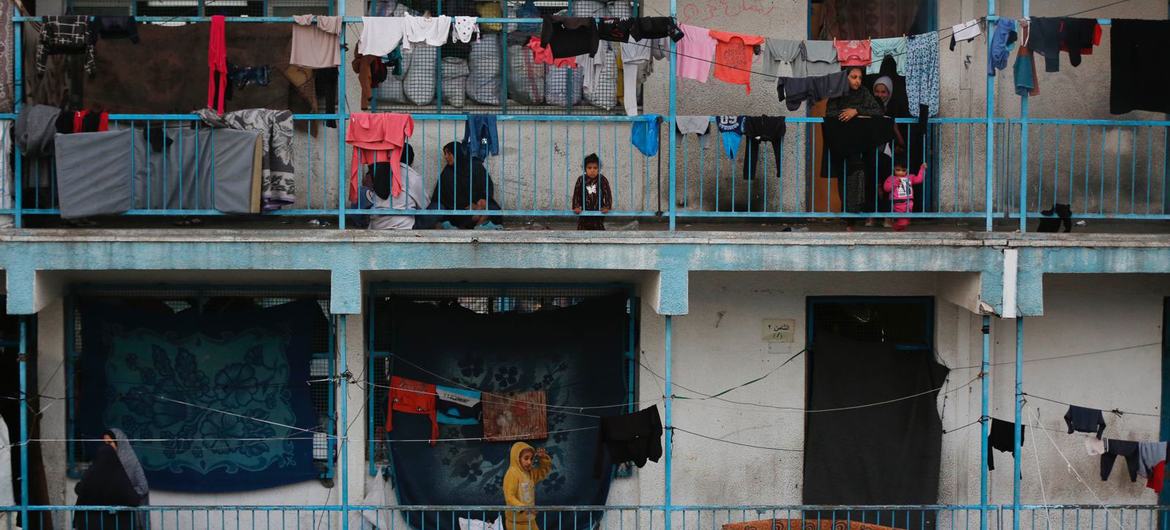
(UN News)* — Attacks on schools in conflict zones around the world have increased by a “staggering 44 per cent” over the past year according to the United Nations, resulting in the death, abduction and trauma of thousands of teachers and students.
Over 41,000 incidents of violence against school-age children were reported by the UN in 2024.
.
Countries with the highest levels of violations in were Israel and the Occupied Palestinian Territory, notably the Gaza Strip, the Democratic Republic of the Congo (DRC), Somalia, Nigeria, and Haiti.
(UN News)* — UN rights chief Volker Türk on Monday [] condemned what he called a worldwide “glorification of violence” which is underway, as well as “coordinated efforts” to undermine fundamental birthrights. “It is time for States to wake up and to act,” he insisted.
Dakar –In sub-Saharan Africa, approximately three out of four working women (76 percent) are employed in agrifood systems, and women make up 49 percent of the agrifood systems workforce.
Within agrifood systems, women’s employment in off-farm segments – such as production, processing, distribution, consumption and packaging – is increasing across the region, rising to 29 percent in 2022 from 21 percent in 2005.
Millions of women and girls worldwide still cannot afford menstrual products or access water and sanitation facilities to manage their menstrual health and hygiene.
Periods make them miss school, work, and negatively impact their health, but it does not have to be that way.
Image
In Sitamarhi State, Bihar, India, in 2022, women hold sanitary pads during an awareness campaign as part of a menstrual hygiene management program organized by UNICEF. Photo: UNICEF/Priyanka Parashar


 ©FAO
©FAO
 HUMAN WRONGS WATCH