NEW DELHI, India, Jul 2 2021 (IPS)* – Two Indian women, one Muslim and the other Dalit (former untouchables), separated by culture and geography, have found common ground in leading change in conflict-torn South Sudan.
Rama Hansraj
Rama Hansraj, a Dalit, grew up in a humble railway colony in Secunderabad. Huma Khan, a Muslim, born and raised in the controversial north Indian city of Faizabad, now Ayodhya, home to the demolished Babri Masjid.
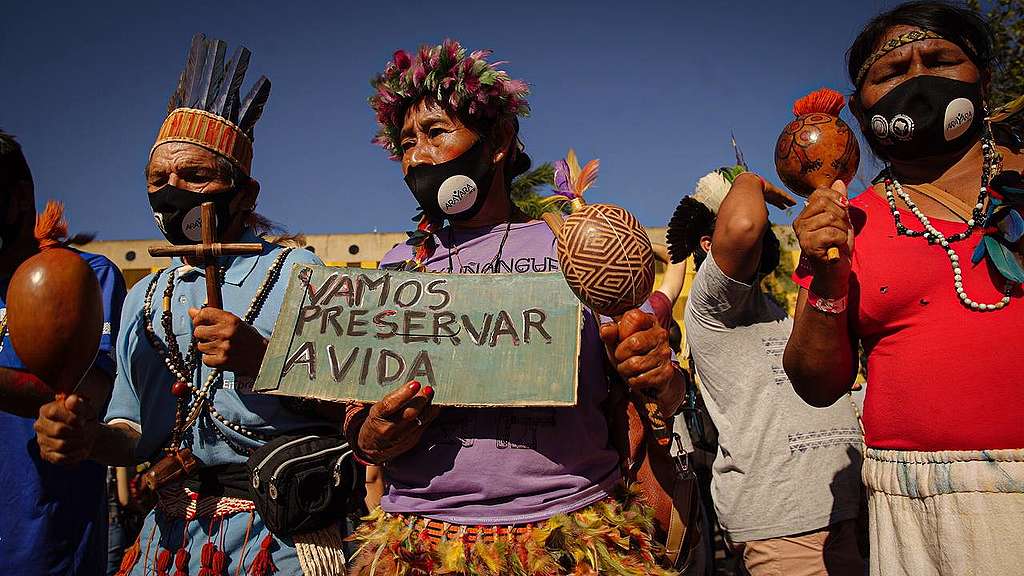
(Greenpeace International)* — After living on and fighting for their lands for centuries, the rights of Indigenous Peoples in Brazil are endangered by a legal loophole called Marco Temporal that could legalize theft of their lands—unless the Brazilian Supreme Court stops it.
2 July 2021 (UNEP)* — The world’s first-ever international Food Systems Summit is slated for September 2021 and seeks to galvanize a global commitment and action to transform our food systems.
With almost 690 million people going hungry in 2019, and most current farming practices driving biodiversity loss and global heating, there is an urgent need to take stock and change direction.
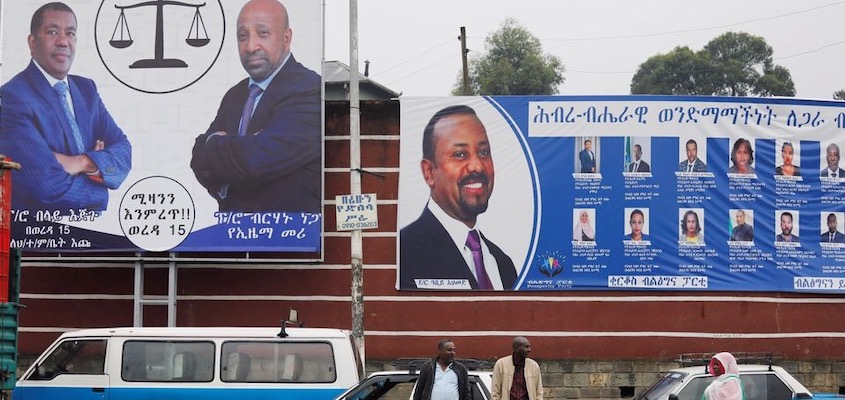
Ethiopia, Eritrea and Somalia are now alarming US political and military elites by forming an alliance and threatening to chart an independent path in the Horn of Africa. Many Ethiopians expressed enthusiasm for what they consider the country’s first real, competitive election.
On Monday, June 21st, Ethiopians went to the polls to select a parliament, which will elect a prime minister, even though US officials told them not to, warning of chaos and violence. Maybe they think it’s arrogant of the United States to presume to be the global arbiter of peace, justice, and democracy.
Latest estimates reveal that 3 in 10 people worldwide could not wash their hands with soap and water at home during the COVID-19 pandemic.
UNICEF/UN0388486/Panjwani
GENEVA/NEW YORK, 1 July 2021 (UNICEF)* – Billions of people around the world will be unable to access safely managed household drinking water, sanitation and hygiene services in 2030 unless the rate of progress quadruples, according to a new report from WHO and UNICEF.
AMBOVOMBE, MADAGASCAR, 27 June 2021 – The World Food Programme Executive Director, David Beasley, is urging the world to step-up and take action after bearing witness to the invisible crisis enveloping Southern Madagascar, where whole communities are teetering on the edge of starvation.
WF1240263 | Drought and severe hunger in Southern Madagascar
A new ILO report estimates that between 2017 and 2019 the number of international migrants has increased from 164 to 169 million.
.
GENEVA, 1 July 2021 (ILO)* – The number of international migrant workers globally has risen to 169 million, a rise of three per cent since 2017, according to the latest estimates from the International Labour Organization (ILO).
.
The share of youth migrant workers (aged 15-24) has also increased, by almost 2 per cent, or 3.2 million, since 2017. Their number reached 16.8 million in 2019.
Cultural evolution depends on the non-genetic storage, transmission, diffusion and utilization of information.
John Scales Avery
The development of human speech, the invention of writing, the development of paper and printing, and finally, in modern times, mass media, computers and the Internet: all these have been crucial steps in society’s explosive accumulation of information and knowledge. Human cultural evolution proceeds at a constantly-accelerating speed.
Our modern civilization has been built up by means of a worldwide exchange of ideas and inventions. It is built on the achievements of many ancient cultures.
China, Japan, India, Mesopotamia, Egypt, Greece, the Islamic world, Christian Europe, and the Jewish intellectual traditions, all have contributed.
Potatoes, corn, squash, vanilla, chocolate, chili peppers, and quinine are gifts from the American Indians.
By Catherine Wachiaya in Tunaydbah refugee settlement, Sudan*
Ethiopian refugee Mihret hid in the bush for days without food or water, to escape the Tigray conflict. Now safe in Sudan, she is using her engineering skills to assist her community. | Français
30 June 2021 (UNHCR)* — Mihret, 25, will never forget that day in November 2020 when her entire world was upended after violence erupted in her hometown in Tigray.
(UN News)* — The impact of the COVID-19 pandemic on tourism could result in a more than $4 trillion loss to the global economy, UN trade and development body UNCTAD on 30 June 2021 said in a report issued jointly with the UN World Tourism Organization (UNWTO).
United Nations/Katya Pugacheva | A lone passenger rides an escalator on the New York City subway at one of the network’s busiest stations. The city’s tourist industry is likely to be decimated by COVID-19 for the rest of 2020.
The estimate is based on losses caused by the pandemic’s direct impact on tourism and the ripple effect on related sectors, and is worse than previously expected.






 HUMAN WRONGS WATCH