1 May 2021 (UNEP)* — It’s a phrase that’s been on the lips of scientists, officials and environmental activists a lot in the last few months: ecosystem restoration. This year, 5 June, World Environment Day, marks the official launch of the UN Decade on Ecosystem Restoration, a 10-year push to halt and reverse the decline of the natural world.
Photo by UNEP/ Lisa Murray / 30 Apr 2021
You might be wondering: what exactly is an ecosystem and how do you restore one?
To answer the first question an ecosystem is a place where plants, animals and other organisms, in conjunction with the landscape around them, come together to form the web of life.
(UN News)* — The United Kingdom’s intention to cut 85 per cent of its contribution to a flagship UN family planning programme this year, will have devastating consequences for women and girls and their families across the world, the UN sexual and reproductive health agency (UNFPA) said on Thursday 29 April 2021.
.
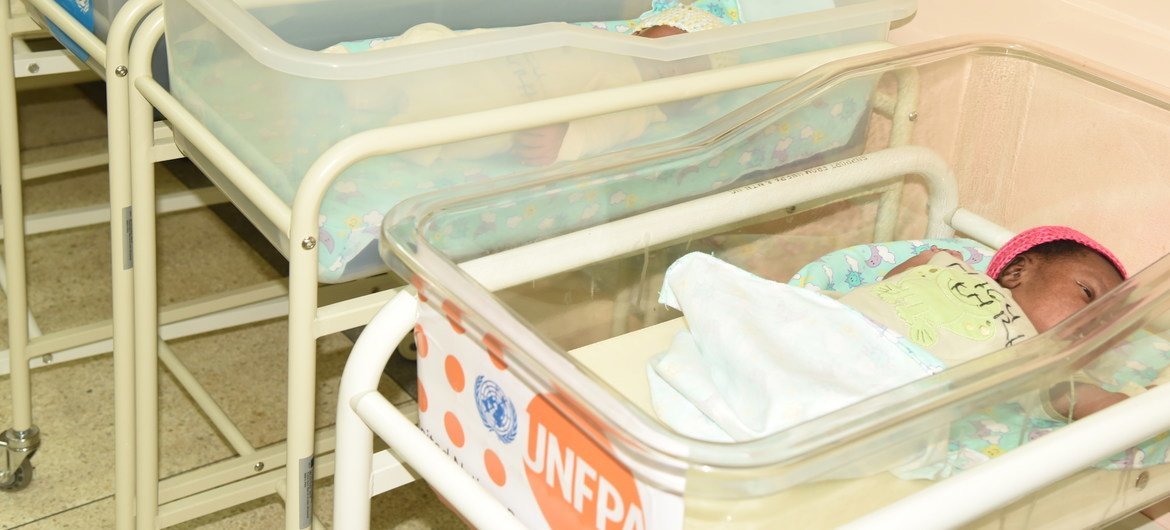
UNICEF/Catherine Ntabadde | Babies at a neonatal intensive unit at a hospital in Kampala, Uganda, which was refurbished with support from UNFPA.
“When funding stops, women and girls suffer”, UNFPA Executive Director Dr. Natalia Kanem, said in a statement, “especially the poor, those living in remote, underserved communities and through humanitarian crises.”
Politically savvy individuals know that democracy has rarely existed and probably never outside small groups of humans who deliberately organize themselves to share power or grant it temporarily to one or a small number of people for a particular purpose. In most contexts, ‘democracy’ is simply a label used to deceive the unwary into believing that ordinary people have a say in how we are governed. But this has never been the case in any political framework on a larger scale.
Robert J. Burrowes
Whatever victories have apparently been achieved in the long struggle to achieve political representation, human rights, dignity, economic justice, cultural and gender identity, ecological sustainability and other causes dear to the hearts of those who have struggled, the elite (local, national or global) has always retained control and merely surrendered the minimum necessary to keep the bulk of the human population submissive.
27 April 2021 (Wall Street International)* — Due to the current Covid-19 lockdown, educational and many other institutions are turning to surveillance tools in unprecedented numbers, under the banner of “proctoring”.
(UN News)* — The “three planetary crises” of climate change, biodiversity loss and pollution are reinforcing each other and driving further damage to the environment and to our health, the UN Environment Programme (UNEP) said on Tuesday 27 April 2021.
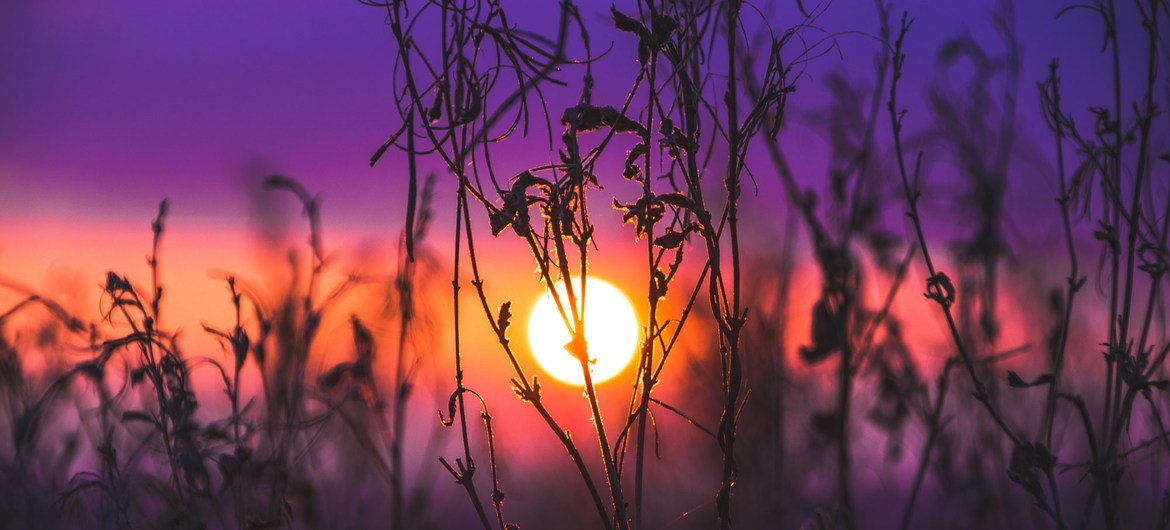
Unsplash/Jack B | Sunset over a field in the English countryside.
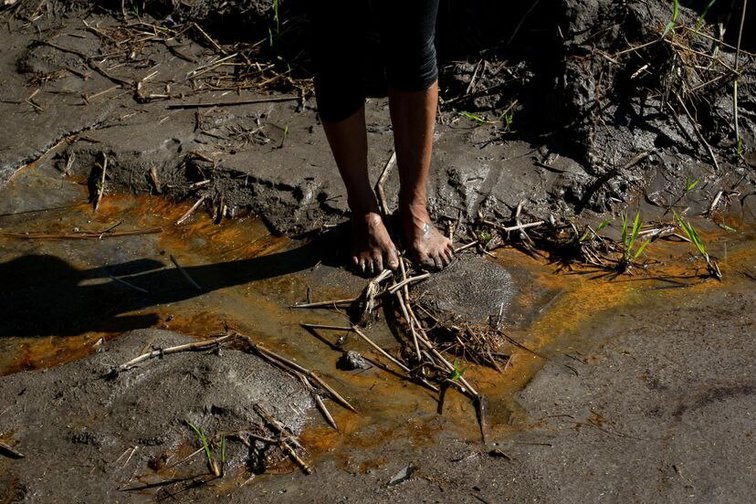
A year on from a devastating oil spill, many Indigenous communities are still without clean water, and contaminated soil means they cannot grow crops
Monitoring of oil pollution on the Coca River | Ivan Castaneira, Agencia Teganta / Lanceros digitales
26 April 2021 (openDemocracy)* — On 7 April 2020 in the Ecuadorian Amazon, the Napo and Coca rivers flowed dark with oil and fuel.
The spill, caused by three ruptured pipelines, triggered the worst environmental disaster to hit Ecuador in the past 15 years. Some 15,000 gallons of oil and fuel spilled into the rivers, affecting 35,000 people directly and more than 120,000 indirectly, many of them Kichwa Indigenous people from 105 communities.
UNITED NATIONS, Apr 26 2021 (IPS)* – The United Nations– which is desperately seeking funds to help developing nations battling a staggering array of socio-economic problems, including extreme poverty, hunger, economic inequalities and environmental hazards– has continued to be one of the strongest advocates of disarmament.
SIPRI’s research on arms and military spending has been the core of the Institute’s work since its foundation in the 1960s. Credit: Stockholm International Peace Research Institute (SIPRI)
The world body has relentlessly campaigned for reduced military spending in an attempt to help divert some of these resources into sustainable development and humanitarian assistance.
But according to a new report released April 26 by the Stockholm International Peace Research Institute (SIPRI), world military expenditure rose to nearly $2 trillion in 2020, an increase of 2.6 percent, in real terms, from 2019.
23 April 2021 (IWGIA)* — Aboriginal incarceration rates are much higher than the general Australian population. Moreover, Indigenous women represent 34% of the total number of inmates. As if this wasn’t enough, the legal and welfare systems are removing Indigenous children from their families and culture, serving as a mechanism of forced assimilation.
.
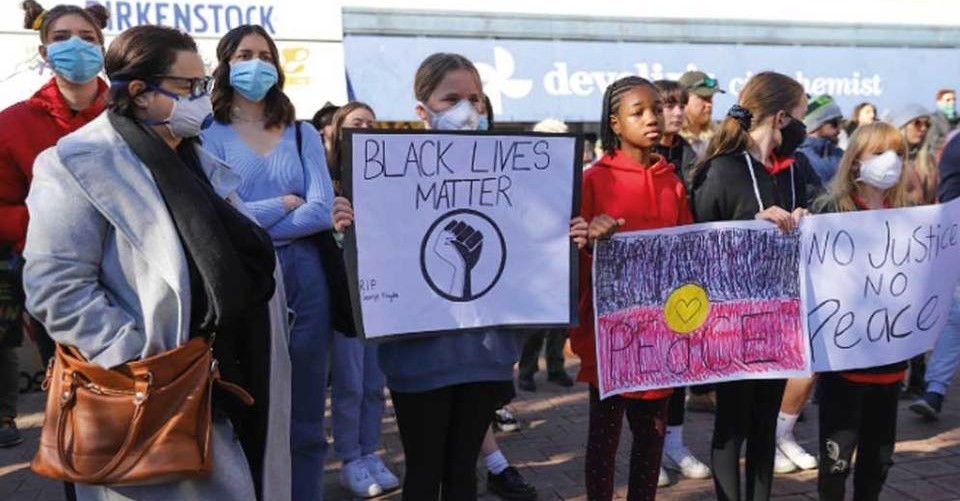
Protests by the Black Lives Matter international movement in front of Sydney’s Town Hall. / Credit: Télam.
Dunghutti man David Dungay Jr died on December 29, 2015, aged 26 calling for breath in a cell in Sydney’s Long Bay prison as he was held face down by prison guards attempting to sedate him.
The harrowing plea “I can’t breathe” recorded in the last moments of George Floyd’s life on 25 May 2020, as he struggled under the weight of a Florida police officer’s knee, remind all First Nations peoples in Australia of the tragic death of David Dungay, and the deaths of so many Aboriginal people while in custody.
New FAO research focuses on contributions of farmers with fewer than two hectares
A farmer in Ghana.
ROME, 23 April 2021 (FAO)* – The world’s smallholder farmers produce around a third of the world’s food, according to detailed new research by the Food and Agriculture Organization of the United Nations (FAO).
Five of every six farms in the world consist of less than two hectares, operate only around 12 percent of all agricultural land, and produce roughly 35 percent of the world’s food, according to a study published in World Development.
Smallholders’ contributions to food supply varies enormously between countries, with the share as high as 80 percent in China and in the low single-digits for Brazil and Nigeria.






 HUMAN WRONGS WATCH