International Day for Tolerance – 16 November 2020
15 November 2020 (UNESCO)* — “Tolerance is respect, acceptance and appreciation of the rich diversity of our world’s cultures, our forms of expression and ways of being human.” UNESCO’s 1995 Declaration of Principles on Tolerance.
In 1996, the UN General Assembly adopted Resolution 51/95(link is external) proclaiming 16 November as International Day for Tolerance. This action followed the adoption of a Declaration of Principles on Tolerance by UNESCO’s Member States on 16 November 1995. Among other things, the Declaration affirms that tolerance is neither indulgence nor indifference.
Civil war broke out in Ethiopia, the French government doubled down on Islamophobia and Tanzania returned to ‘de-facto one party rule,’ say openDemocracy editors around the world.
Emmanuel Macron with Donald Trump in 2018 | The White House, Public Domain,
13 November 2020 (openDemocracy)* — People across the globe have been mesmerised by the US elections, horrified by Trump’s failure to concede, and entertained by a certain landscape gardening business. I asked my colleagues what we’d all missed in the rest of the world.
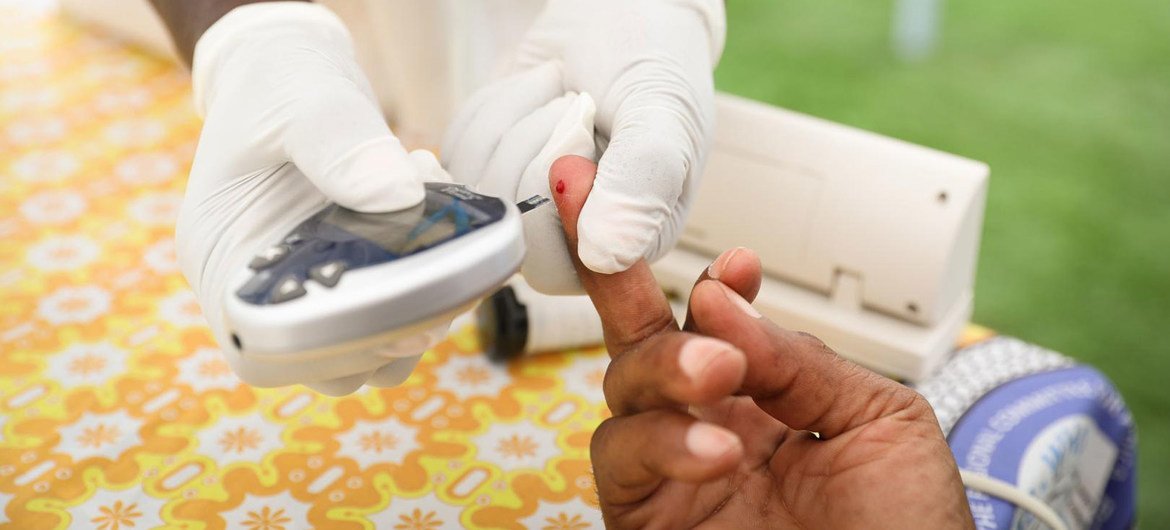
13 November 2020 (UN News)* — As the number of people with diabetes surges, many are at “increased risk of severe disease and death from COVID-19”, the UN chief said in his message for World Diabetes Day, on Saturday [13 November 2020].
World Health Organization | Nearly one in five COVID-19 deaths in the African region is linked to diabetes, according to the World Health Organization.
“Many efforts have been made to prevent and treat diabetes”, but the disease continues to rise rapidly in low and middle income countries, those “least well-equipped with the diagnostics, medicines, and knowledge to provide life-saving treatment”, said UN Secretary-General António Guterres.
A gloomy picture
Globally, some 422 million adults are living with diabetes (latest figures from 2014), according to the World Health Organization (WHO), compared to around 108 million in 1980 – rising from 4.7 to 8.5 per cent in the adult population.
14 November 2020 (UN News)* — If just two per cent of the Ocean were to be sustainably farmed, the world could easily be fed, according to experts. In the first story of a two-part series looking at the opportunities and challenges facing Ocean farming, we take a look at the huge potential role of seaweed in mitigating climate change, cutting marine pollution, and achieving the UN goal of Zero Hunger.
.
Unsplash/Shane Stagner | Kelp, a type of seaweed, can be fed to animals and could help to reduce greenhouse gas emissions.
‘We are still hunter-gatherers’
“When it comes to the ocean, we are still hunter-gatherers”, says Vincent Doumeizel, a senior advisor on ocean-based solutions at the UN Global Compact, and an evangelist for seaweed.
Last September, European Union President Ursula Von der Leyen announced that by 2030, she wants Europe carbon-neutral, to reduce its greenhouse gas emissions (GHGs) by 55%, and to spearhead a digital revolution. In the U.S. that same month, California’s Governor Gavin Newsom announced that the state will reduce its GHGs by prohibiting sales of new gas-powered vehicles beginning in 2035.
13 November 2020 (FAO)* — “This is the first time seeing such a scary situation ever since I was born here. Nothing else can compare to such a serious threat,” said farmer Fabian Sisamu. “It is the worst situation ever; we are fearful of the future,” his friend Ian Mubita adds, disheartened by what may lay ahead.
“Early studies of weather, seasonality, and environmental influences on COVID19 have yielded inconsistent and confusing results. To provide policy-makers and the public with meaningful and actionable environmentally-informed COVID-19 risk estimates, the research community must meet robust methodological and communication standards,” state the paper’s authors.
13 November 2020 (UNEP)* — The 2020 consultations between the five Nordic countries – Denmark, Finland, Iceland, Norway and Sweden – and the United Nations Environment Programme (UNEP) generated substantial and frank discussions on issues like climate change, nature and sustainable development, say participants.
(UN News)* — The fifth anniversary of the Paris Agreement and the adoption of the Sustainable Development Goals (SDGs) “go hand in hand”, the UN chief told a major development bank conference on Thursday [12 November 2020].
“The decisions we make now will determine the course of the next 30 years and beyond: Emissions must fall by half by 2030 and reach net-zero emissions no later than 2050 to reach the 1.5C goal”, Secretary-General António Guterres said in his message to the virtual Finance in Common Summit.
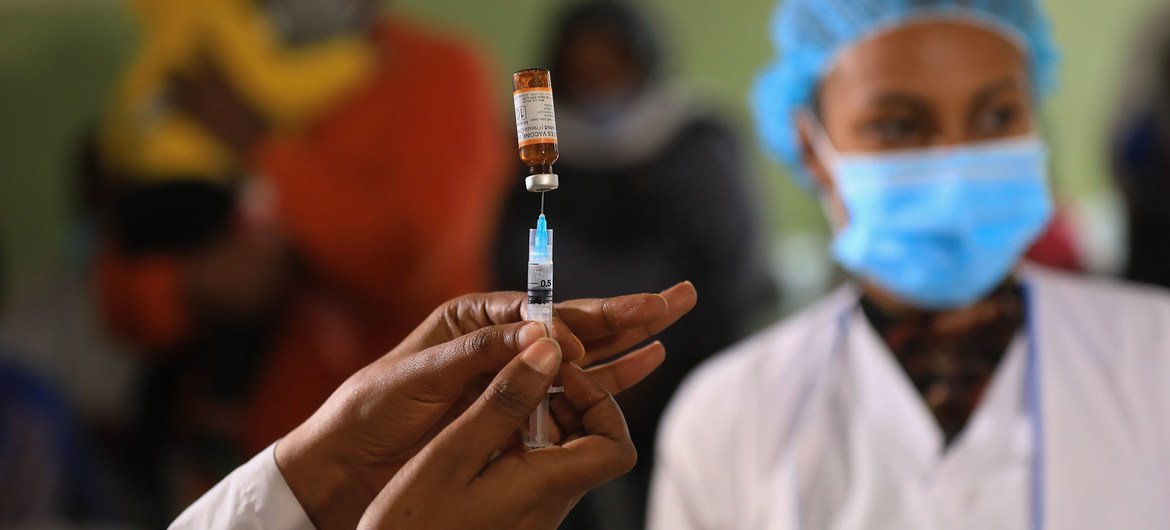
(UN News)* — Measles killed an estimated 207,500 people last year after a decade-long failure to reach optimal vaccination coverage, resulting in the highest number of cases for 23 years, the World Health Organization (WHO) and US Centers for Disease Control (CDC) said in a joint report on Thursday [12 November 2020].
UNICEF/Nahom Tesfaye | In June 2020, a measles vaccination campaign targeting 14 million children was launched in Ethiopia.
The death toll in 2019 was 50 per cent higher than a historic low reached in 2016, and all WHO regions saw an increase in cases, adding up to a global total of 869,770.




 HUMAN WRONGS WATCH