19/07/2025
PORTLAND, USA, Jul 16 2025 (IPS)* – To be, or not to be, an undocumented migrant, that is the question for millions of men, women and children in many less developed countries.

The chance of dying during the first year of life in the least developed countries is ten times higher than in the more developed countries. Credit: Franz Chávez/IPS
“Whether ‘tis nobler in the mind to suffer the slings and arrows of outrageous fortune, or to take arms against a sea of troubles and by opposing end them” for a better life as an undocumented migrant in a foreign land.
read more »
Posted in Africa, Asia, Climate carnage, Latin America & Caribbean, Market Lords, Middle East, Migrants and Refugees, Mother Earth, Others-USA-Europe-etc., The Peoples, War Lords |
Leave a Comment »
19/07/2025
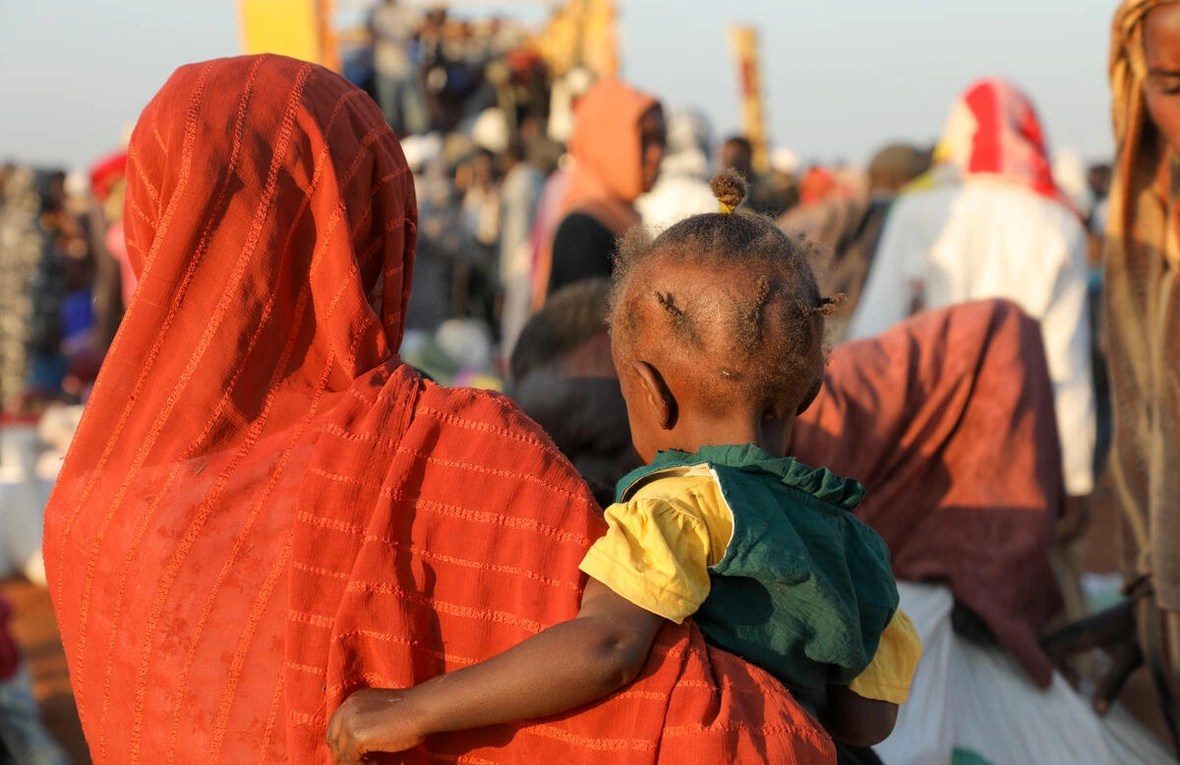
GENEVA – Following major cuts to humanitarian budgets, up to 11.6 million refugees and others forced to flee risk losing access this year to direct humanitarian assistance from UNHCR, the UN Refugee Agency, according to a report published on 18 July 2025.
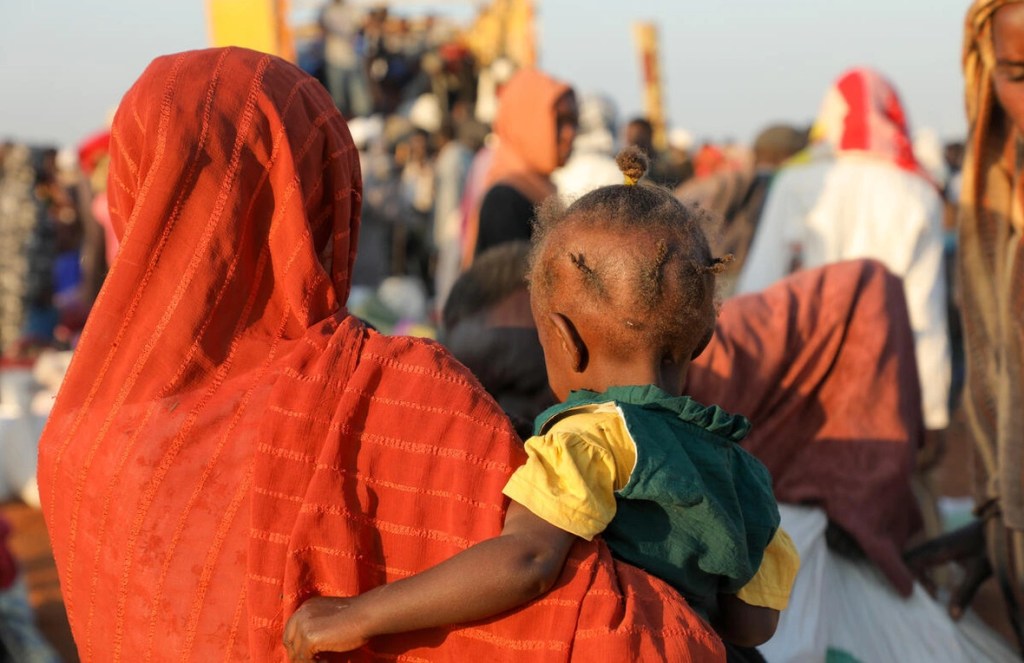 Caption: Families who fled the conflict in Sudan wait to be relocated from the overcrowded Renk border point in South Sudan. © UNHCR/Reason Moses Runyanga
read more »
Posted in Africa, Asia, Climate carnage, Latin America & Caribbean, Market Lords, Middle East, Migrants and Refugees, Mother Earth, Others-USA-Europe-etc., The Peoples, War Lords |
Leave a Comment »
18/07/2025
KUALA LUMPUR, Malaysia, Jul 15 2025 (IPS)* – Trump’s billionaire cronies want more monopoly profits, not competition. With more policies crafted for them, wealth concentration is set to become greater than ever.

Jomo Kwame Sundaram
Neoliberalism?
There is no clear consensus on what neoliberal economics stands for now. Many who claim to be liberal economists have different, even contradictory views.
Some demand market competition and oppose monopolies and oligopolies. For others, property rights are crucial, typically strengthening monopoly rights.
Many avowed neoliberals deemphasise competition and hesitate to insist on antitrust action or opposition to abuses of market power.
Property rights confer monopoly or exclusive ownership rights to an asset, typically denying access to others except for payment. Many such rights are recent.
read more »
Posted in Africa, Asia, Latin America & Caribbean, Market Lords, Middle East, Migrants and Refugees, Mother Earth, Others-USA-Europe-etc., The Peoples, War Lords |
Leave a Comment »
17/07/2025
“These figures represent a continuing and massive transfer of wealth from taxpayers to fund war and weapons manufacturing,” said the project’s director.
.
 .
.
8 Jul 2025 – Less than a week after U.S. President Donald Trump signed a budget package that pushes annual military spending past $1 trillion, researchers today published a report detailing how much major Pentagon contractors have raked in since 2020.
read more »
Posted in Africa, Asia, Latin America & Caribbean, Market Lords, Massacre, Middle East, Migrants and Refugees, Mother Earth, Others-USA-Europe-etc., The Peoples, War Lords |
Leave a Comment »
16/07/2025
A Q&A with Robert Kelley, a Distinguished Associate Fellow at SIPRI.
read more »
Posted in Africa, Asia, Climate carnage, Genocide, Latin America & Caribbean, Market Lords, Middle East, Migrants and Refugees, Mother Earth, Others-USA-Europe-etc., The Peoples, War Lords |
Leave a Comment »
15/07/2025
World’s nuclear arsenals being enlarged and upgraded
(Stockholm) The Stockholm International Peace Research Institute (SIPRI) on 16 June 2025 launched its annual assessment of the state of armaments, disarmament and international security.

SIPRI Yearbook 2025. Photo: SIPRI.
Key findings of SIPRI Yearbook 2025 are that a dangerous new nuclear arms race is emerging at a time when arms control regimes are severely weakened.
Nearly all of the nine nuclear-armed states—the United States, Russia, the United Kingdom, France, China, India, Pakistan, the Democratic People’s Republic of Korea (North Korea) and Israel—continued intensive nuclear modernization programmes in 2024, upgrading existing weapons and adding newer versions.
read more »
Posted in Africa, Asia, Climate carnage, Genocide, Latin America & Caribbean, Market Lords, Middle East, Migrants and Refugees, Mother Earth, Others-USA-Europe-etc., The Peoples, War Lords |
Leave a Comment »
15/07/2025
BRUSSELS, Belgium / MONTEVIDEO, Uruguay, Jul 14 2025 (IPS)* – Donald Trump’s bullying tactics ahead of NATO’s
annual summit, held in The Hague in June, worked spectacularly.

Credit: Piroschka Van De Wouw/Reuters via Gallo Images
By threatening to redefine NATO’s article 5– the collective defence provision that has anchored western security since 1949 – Trump won commitments from NATO allies to almost triple their defence spending to five per cent of GDP by 2035.
European defence budgets will balloon from around US$500 billion to over US$1 trillion annually, essentially matching US spending levels.
read more »
Posted in Africa, Asia, Climate Crisis, Latin America & Caribbean, Market Lords, Middle East, Migrants and Refugees, Mother Earth, Others-USA-Europe-etc., The Peoples, War Lords |
Leave a Comment »
15/07/2025
10 July 2025 — In 2017, extreme violence erupted in northern Mozambique’s Cabo Delgado province, and spread to other areas. The conflict, along with two major cyclones in two years, has driven hundreds of thousands of people away from their homes.
“I came from Chiure with my husband and three children in March 2024 because of the conflict. I don’t plan to stay here forever, but I can’t go back home either,” says Virivir, 64. Photo: Karl Schembri/NRC
Yet, Mozambique’s crisis has unfolded largely outside the spotlight, as competing global crises have diverted attention and resources elsewhere. In 2024, Mozambique was third on NRC’s list of the world’s most neglected displacement crises.
Here’s what you need to know.
read more »
Posted in Africa, Climate carnage, Market Lords, Migrants and Refugees, Mother Earth, Others-USA-Europe-etc., The Peoples, War Lords |
Leave a Comment »
14/07/2025
By Ashfaq Khalfan, Climate Justice Director, Oxfam America*
Mega rich oil, gas and coal companies, described as the ‘Godfathers of climate chaos’, are driving humanity to the edge of destruction and earning billions in doing so. For decades, they’ve spread lies and disinformation about the climate crisis and lobbied to create fossil-fuel driven economies.
They’ve received billions in government subsidies and as energy prices soared, instead of investing in renewable energy, enriched their shareholders to the tune of $403 billion in 2024 alone.
read more »
Posted in Africa, Asia, Climate carnage, Latin America & Caribbean, Market Lords, Middle East, Migrants and Refugees, Mother Earth, Others-USA-Europe-etc., The Peoples |
Leave a Comment »


 HUMAN WRONGS WATCH
In January this year, a nuclear trafficking case made the international news headlines. The United States Department of Justice announced that Takeshi Ebisawa, an alleged Japanese gangster, had pleaded guilty to charges of major narcotics trafficking as well as conspiring to traffic nuclear materials.