Human Wrongs Watch
— A future repetition of the current COVID-19 pandemic is preventable with massive cooperation on international and local levels and by ensuring biological diversity preservation around the world, experts recently said.
'Unseen' News and Views
— A future repetition of the current COVID-19 pandemic is preventable with massive cooperation on international and local levels and by ensuring biological diversity preservation around the world, experts recently said.
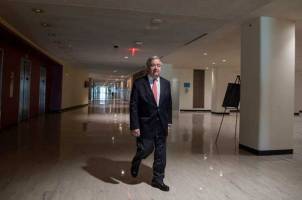
UN Photo/Marvin Bolotsky | Working from the office could become a relic of the past in the post-COVID-19 world.
UN News spoke to Susan Hayter, a Senior Technical Adviser on the Future of Work at the Geneva-based International Labour Organization, about how COVID-19 could change our working lives.

By Carla Henry, Senior Technical Specialist, ILO Research Department*
25 May 2020 (ILO)* — As economies ease restrictions on businesses, many workers will be called back to work but those deemed to be at elevated health risks may be asked to stay away for longer or to not return.
Older persons, defined as those aged 55 and over, are considered a high-risk category because they might develop medical complications or take longer to recover.
Governments and employers both have a responsibility to ensure that older workers do not face employment discrimination due to their age and perceived vulnerability to the effects of the COVID-19 virus.
What policies and actions can reduce the risk to older workers becoming unemployed or cushion their transition to new sources of employment during and after the pandemic?

Cuban doctors held over five thousand consultations in Italy and discharged 210 Covid-19 patients after the severe outbreak in March.

Homage to Cuban doctors in Plaza Duomo, Crema, Italy. May 23rd, 2020. | Photo: Twitter/@BrunoRguezP
IPS– As a spiraling financial crisis threatens to undermine the UN’s day-to-day operations worldwide, a proposal being kicked around, outside the empty corridors of the UN, has triggered the question: will senior officials, including the Secretary-General, the Deputy Secretary-General (DSG), Under-Secretaries-Generals (USGs), including 60 heads of UN agencies, Funds and Programs, and Assistant Secretaries-Generals (ASGs), volunteer to take salary cuts— even as a symbolic gesture?
Insolvent Wall Street banks have been quietly bailed out again. Banks made risk-free by the government should be public utilities.

Ellen Brown
When the Dodd Frank Act was passed in 2010, President Obama triumphantly declared, “No more bailouts!” But what the Act actually said was that the next time the banks failed, they would be subject to “bail ins” – the funds of their creditors, including their large depositors, would be tapped to cover their bad loans.
Then bail-ins were tried in Europe. The results were disastrous.
Many economists in the US and Europe argued that the next time the banks failed, they should be nationalized – taken over by the government as public utilities. But that opportunity was lost when, in September 2019 and again in March 2020, Wall Street banks were quietly bailed out from a liquidity crisis in the repo market that could otherwise have bankrupted them.
About 85 other migrants were arrested earlier by the Libyan coastguard, bringing to more than 1,000 the number of people who have attempted the crossing this month.
The IOM’s estimated death toll among migrants who have tried to cross the Mediterranean Sea since 2014 surpassed 20,000. | Photo: AFP
– While it attempts to cushion the effects of the coronavirus pandemic, the Latin American and Caribbean region also faces concerns about the future of the energy transition and state-owned oil companies.
.